








Should I Use a Microbrush or a Lip Wand to Apply Lash Products?

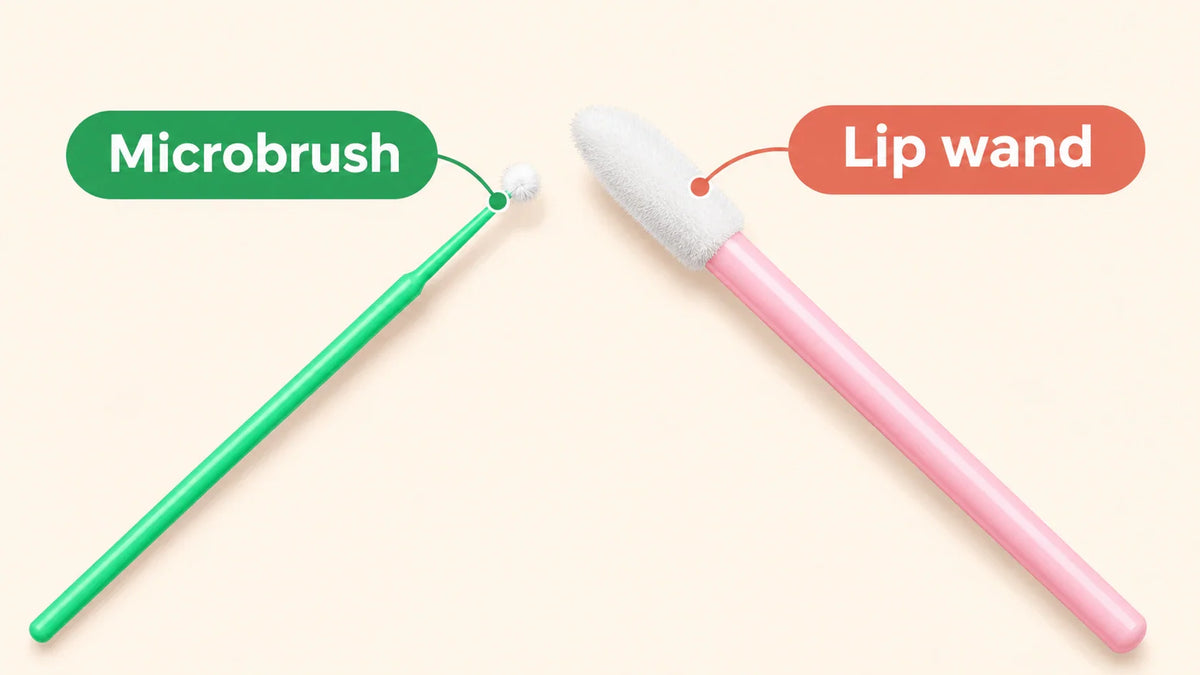
Choose a microbrush for a fine line or small target and a lip wand with a broader working tip for a wider permitted area, provided the lash product’s directions allow that tool. The useful difference is the area the tip touches at once: a smaller footprint suits a narrow boundary, while a broader footprint covers more area per pass.
Compare the working tip with the target
The contact footprint is the area of the applicator tip that touches the intended surface at one time. Compare that working surface—not the handle or the tool’s name—with the area the product directions tell you to cover.
A smaller footprint gives you more room to stay within a narrow target. The tradeoff is coverage: the same small tip needs more passes to span a wider area. A broader footprint reverses that tradeoff. It covers more area per pass, but it may extend beyond a narrow boundary.
Lip wands do not need to have one standardized shape or size for this comparison to be useful. Look at the actual tip you have; the broader-tip recommendation applies when its working surface is broader than the microbrush you are comparing it with.
| Selection question | Microbrush with a smaller footprint | Lip wand with a broader footprint |
|---|---|---|
| Where does it fit best? | A fine line or selected small area | A wider area permitted by the product directions |
| What does that footprint help with? | Keeping contact within a narrow boundary | Covering more area per pass |
| What is the tradeoff? | More passes across a broad target | Less room to stay inside a narrow target |

Choose from the permitted placement
Start with the product directions. If they specify an applicator, use that applicator. If they permit a choice, use the intended coverage area to decide between tips. A name such as “conditioner” or “cleanser” does not, by itself, tell you how wide the target should be.
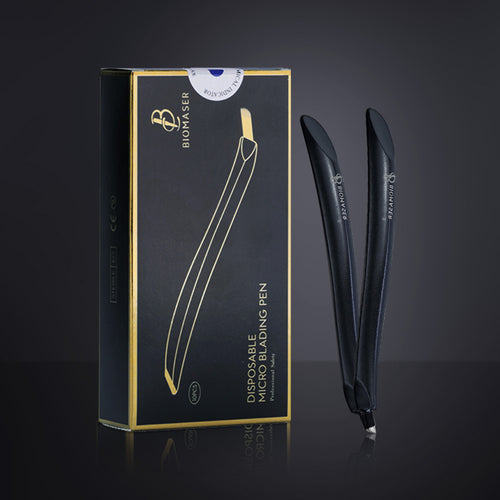
For a conditioner intended for a fine line along the lashes, a microbrush’s localized contact is relevant. Biomaser disposable microbrushes absorb eyelash conditioner for fine-line application and come in a 100-piece pack. That fine-line function matches the narrow-target side of the comparison.
For a wider permitted surface, a lip wand whose working tip fits within that area may offer more useful coverage per pass. A broad target does not make every lip wand a good fit: its actual footprint still needs to suit the boundary.
Recognize when to change tip size
Judge fit by the relationship between the tip and the target, without widening the product’s intended placement to accommodate the tool.
- Choose a smaller footprint when the tip spans beyond the boundary. For example, if the intended target is a fine line and the lip-wand tip is wider than that line, a smaller microbrush better matches the available space.
- Consider a broader footprint when coverage is the limiting factor. If the permitted target is wide and a tiny tip would require many narrow passes, a broader permitted applicator may fit the task better.
- Keep the smaller tip when the boundary remains narrow. The need for more passes does not justify switching to a tip that extends outside the intended area.
The deciding question is whether the working tip fits the permitted target while providing useful coverage—not whether one applicator is always better for lash products.
FAQs
Should I use a microbrush or a lip wand to apply lash products?
If the lash product specifies an applicator, use that tool. When its directions permit a choice, use a microbrush for a fine line or small target, or a lip wand with a broader working tip for a wider permitted area. The working tip should fit within the intended placement boundary.
Does every lip wand cover more area than a microbrush?
Compare the actual working tips, because lip wands vary in shape and size. A lip wand covers more area per pass when its contact footprint is broader than that of the microbrush you are comparing it with.
Should I switch to a lip wand if a microbrush needs too many passes?
Consider a broader lip-wand tip if the product directions permit it and the tip fits within the wider intended area. If the target remains narrow, keep the smaller tip even if it requires more passes; do not widen the product’s placement to accommodate a broader applicator.
