







Long-Form Case Studies vs Quick Reels for PMU Portfolio Depth

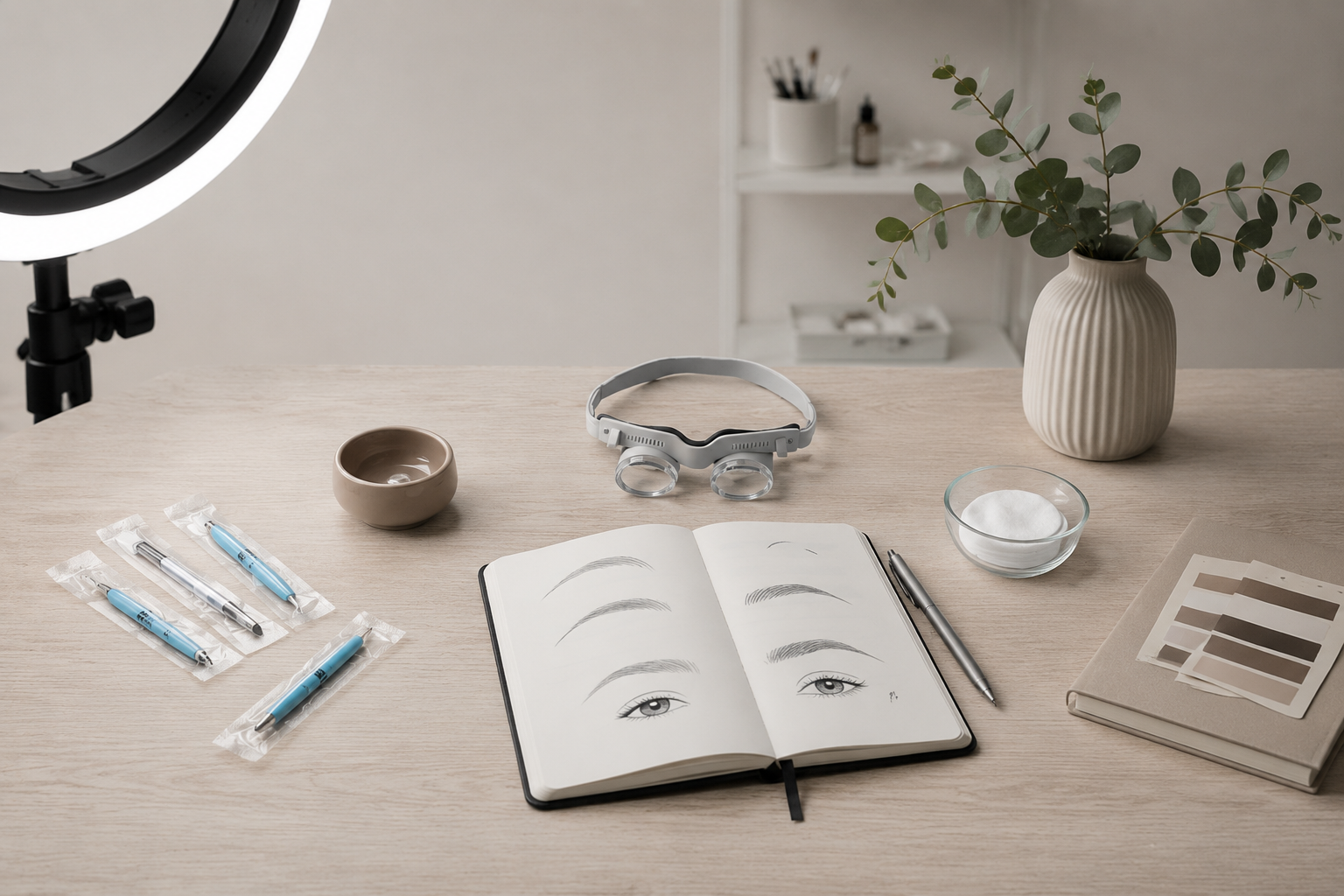
Use both, but assign them different jobs. Quick Reels help prospective clients discover your work, visual style, and approach. Long-form case studies provide the context that helps an appropriate client decide whether to request a consultation: the starting point, plan, image timing, healed outcome, touch-up context, and realistic limitations.
For a PMU artist with limited time, the stronger system is usually to build a small library of consented, healed-result case studies first. Then turn each documented case into several concise Reels that lead viewers toward the full proof and a screened consultation.
What Each Format Does for a PMU Portfolio

A Reel is a discovery asset. It can quickly show a healed-result reveal, a design decision, a calm procedure-day moment, or one useful explanation about your process. It gives a viewer a reason to stop, visit your profile, and learn more.
A case study is a proof asset. It gives a prospective client enough context to understand what they are looking at and why the treatment plan made sense.
| Quick Reels Can Communicate | Long-Form Case Studies Can Establish |
|---|---|
| Your visual style and studio tone | The client's visible starting point and stated goal |
| A brief process or design moment | The consultation-led plan and design rationale |
| A clearly labeled healed-result reveal | Whether images are immediate, healed, or post-touch-up |
| One educational insight | Relevant prior work or outcome-affecting context that can be shared appropriately |
| A reason to visit your website or inquiry form | Follow-up, touch-up, and realistic-result context |
This distinction matters most for work that requires more client confidence and clearer planning, such as previous-PMU work, corrective cases, mature skin, scar camouflage, or other situations where a single before-and-after image leaves too much unexplained.
A strong portfolio page should make clear who created the work, how it was documented, and why the page exists: to help a prospective client understand the work rather than simply create attention. That aligns with Google's people-first content guidance.
Build Case Studies Around Client Decision-Making

A case study does not need to be long or overly clinical. It needs to answer the questions a careful prospective client is already asking.
A Reusable PMU Case-Study Template
For each published case, include:
-
The client goal and visible starting point Describe the desired direction and show the starting condition with consented, non-identifying images.
-
Relevant context that can be shared appropriately Note prior PMU, asymmetry, existing shape, or other visible considerations when relevant to the plan. Do not publish private health information or present your page as a candidacy assessment.
-
The treatment plan and design rationale Explain the planned outcome in plain language. For example: preserving a soft existing shape, adjusting saturation gradually, or working around previous pigment.
-
Clearly labeled procedure-day images Label these as "immediately after" or "procedure day." They are not healed results.
-
Healed images with timing State when the healed image was taken. If a touch-up occurred, identify the image as post-touch-up rather than implying it is a first-session outcome.
-
Follow-Up and Realistic Expectations Briefly explain the follow-up stage, what the case demonstrates, and what it does not promise for every future client.
The goal is not to overwhelm visitors with every detail from your records. It is to give them enough truthful context to assess your judgment, aesthetics, and communication style.
Use Reels for Discovery, Not as a Booking Metric
A Reel can make the best part of a case easy to find. It might feature a healed-result clip, a short explanation of why you chose a certain design direction, or a comparison between immediate and healed appearance.
Each Reel should have one clear next step:
- Read the full case study.
- Review your consultation criteria.
- Complete an inquiry form.
- Request a consultation for a specific service.
Do not treat views as evidence of studio growth. Reel plays can include repeat plays by the same account. Accounts reached is an estimate of unique accounts that saw the Reel at least once. Average watch time measures viewing behavior, and follows show that someone followed after seeing the Reel; none of those measures establishes that a person completed a consultation, placed a deposit, or was suitable for the service.
Track platform behavior, but connect it to business outcomes:
- Reel reach, watch behavior, and profile actions
- Visits to the case-study page
- Inquiry or consultation-form completions
- Completed consultations
- Consultation-to-booking rate
- The proportion of inquiries that fit the services you want to provide
A Reel with modest reach may still be useful if it brings well-informed inquiries for the work you want to be trusted with. Conversely, a widely viewed Reel that produces unsuitable requests may expose a weak path between attention and qualification.
Document Once and Produce Both Assets
The most sustainable approach is not to create separate content projects for your website and Instagram. Document one selected case carefully, then repurpose approved assets.
A Simple Five-Step Workflow
-
Obtain content permission before capture. Use a documented release appropriate to your studio and jurisdiction, covering the intended use of photographs, video, testimonials, and identifiable details.
-
Capture a consistent image set. Gather approved baseline, procedure-day, healed, and touch-up images where applicable. Keep timing and status attached to each asset so labels remain accurate during editing.
-
Write the case study after healed follow-up. Lead with the client goal, planning decision, image timing, healed result, and any relevant limitations.
-
Create Two or Three Reels From the Same Case. One Reel can focus on the starting point, another on a design choice, and another on the healed result. Keep each Reel focused on a single truthful point.
-
Route Every Asset to the Appropriate Next Step. Link or direct viewers to the full case study, consultation criteria, or booking process---not merely to "DM for details."
This approach favors fewer, better-documented cases over a high volume of thin posts. The portfolio should help visitors understand what was done and what consultation is for, not chase attention for its own sake.
Publish Visual Proof Without Misleading Expectations

Before publishing a case study, Reel, testimonial, or paid promotion, use a final review gate.
Pre-Publish Checklist
- Permission: Does the client-approved release cover this exact use?
- Privacy: Have you minimized names, identifying details, and unnecessary personal information?
- Image Integrity: Are lighting, cropping, color correction, and editing faithful to the visible result? Avoid filters or retouching that materially change how the outcome appears.
- Timing Labels: Is every image accurately identified as before, immediately after, healed, or post-touch-up?
- Outcome Context: Does the caption avoid presenting one client's result as a universal or typical outcome?
- Testimonial Accuracy: Does any testimonial reflect the client's honest experience?
- Connection Disclosure: If a client, creator, employee, family member, or collaborator has a material connection that could affect credibility---such as payment, a free service, or another benefit---consider whether disclosure is required. When a disclosure is required, endorsement guidance describes it as clear, conspicuous, and placed with the endorsement rather than hidden only in a profile bio.
- Booking Path: Does the post direct the right viewer to a full case study, consultation criteria, or inquiry process?
If you promote content as a paid ad, review current platform policies and applicable local rules before submitting it. Paid-ad review is separate from publishing an organic Reel or website case study.
Start with One Case, Not a Content Calendar
This week, choose one client result that represents work you want more of. Build a concise, consent-supported case study with clearly labeled healed images and touch-up context. Then create two or three Reels from that same asset set:
- A Reel showing the visible starting point and planned direction
- A Reel explaining one design or planning decision
- A Reel showing the healed result with an accurate timing label
Build a small library of detailed, healed-result case studies for the services and client situations you want to be trusted with. Use Reels to surface one truthful insight from each case and send prospective clients toward fuller proof and an appropriately screened consultation.
Legal Disclaimer
This article is provided for general informational and educational purposes only and does not constitute legal, tax, insurance, regulatory, or professional advice. Requirements may vary by jurisdiction and change over time. Consult a qualified local attorney, licensed insurance professional, accountant, or relevant regulator for advice tailored to your studio and circumstances.
