




Can PMU Cleanser Remove Pigment, or Only Surface Residue?

PMU cleanser is for surface residue cleanup, not a treatment for removing implanted pigment. If you need to see your work clearly, use a cleanser only as its directions allow. Color coming away on a wipe shows that color has been collected; it does not establish that pigment inside the skin has been removed. If your goal is to change the implanted color or shape, further cleansing is not a removal plan.
What surface pigment cleanup helps you see
In permanent makeup (PMU), surface residue is excess color left on top of the skin. Implanted pigment is color placed inside the skin during the procedure. The distinction is about where the color is, even when both came from the same pigment bottle.
Surface cleanup helps reveal the developing or finished work without a layer of excess color obscuring it. Its purpose is visibility: you can inspect the work after clearing the residue. A cleaner surface does not, by itself, tell you how much pigment remains inside the skin.
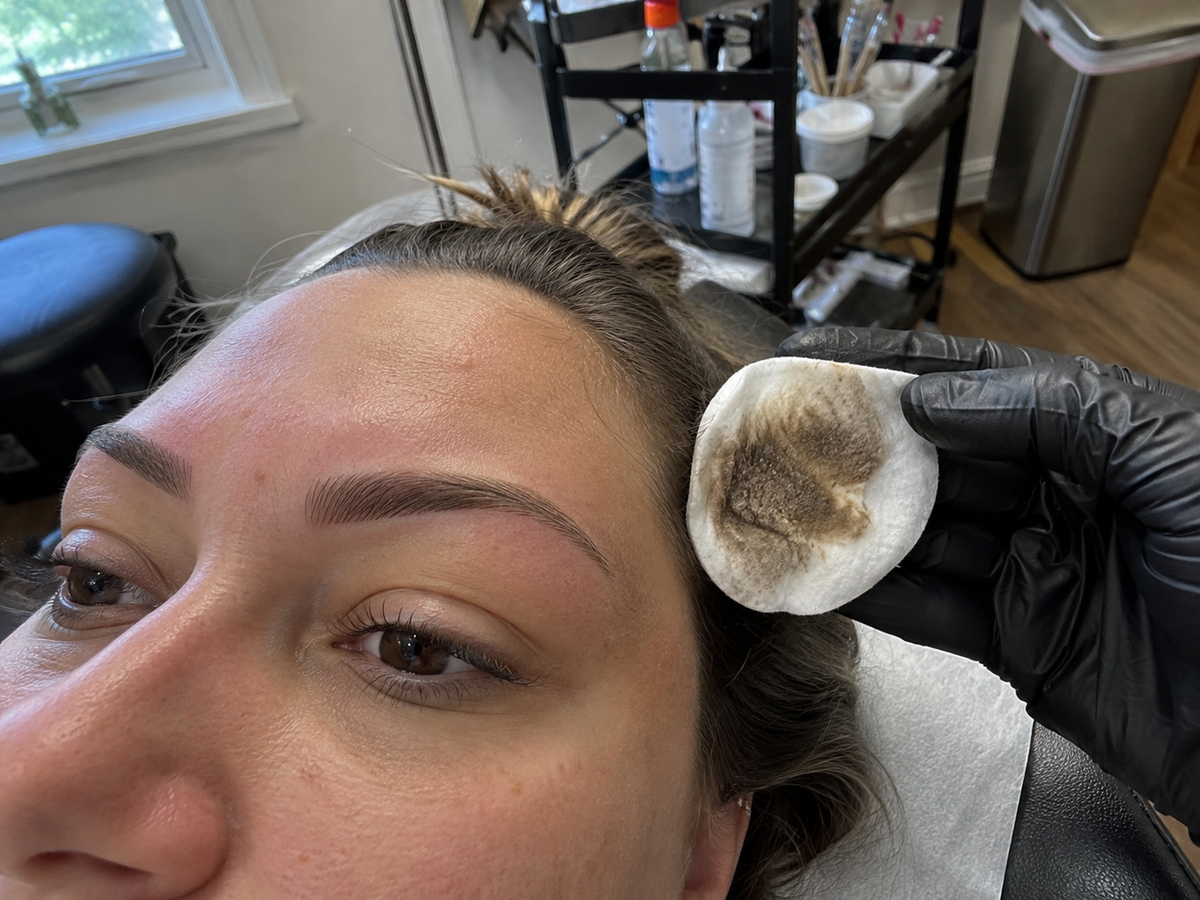
For an illustrative example, imagine a brown smear around a newly worked brow. After appropriate surface cleanup, the smear is gone and the brow outline is easier to see. That observation demonstrates cleanup of the visible smear. It does not measure a change in implanted pigment.

For professional surface color cleanup, BIOMASER All PMU Foam Cleanse is a cleaning mousse intended for PMU procedures. It is suitable for clearing surface color residue and keeping developing or finished work visible. Choose it for that cleaning task, and follow its directions for the treatment area and stage of the procedure. Its role here is surface cleanup, not implanted-pigment correction.
Why a colored wipe does not prove pigment removal
A wipe collects material from the surface. Seeing pigment on it does not identify how much color was implanted, how much remains, or whether the intended result has changed. Even if the area looks lighter after cleaning, that appearance alone cannot separate cleared surface residue from a change in implanted color.
Actual tattoo-pigment removal concerns pigment located below the surface: FDA explains that topical tattoo-removal creams cannot reach pigment in the deeper dermis. This is a different task from clearing excess color from the skin's surface.
If a healed brow still has an unwanted shape or shade, there is no surface-cleanup result that establishes correction of that implanted mark. Do not increase rubbing or cleanser exposure in an attempt to erase it. Seek an assessment from a qualified medical professional experienced in tattoo or PMU removal; the American Academy of Dermatology recommends consulting a board-certified dermatologist before laser tattoo removal.
The practical distinction is simple: cleanser removes the loose color obscuring the work, while changing pigment that remains in the skin requires a separate correction or removal assessment.
