




Tattoo Practice Skin vs. Real Skin: How Similar Do They Feel?

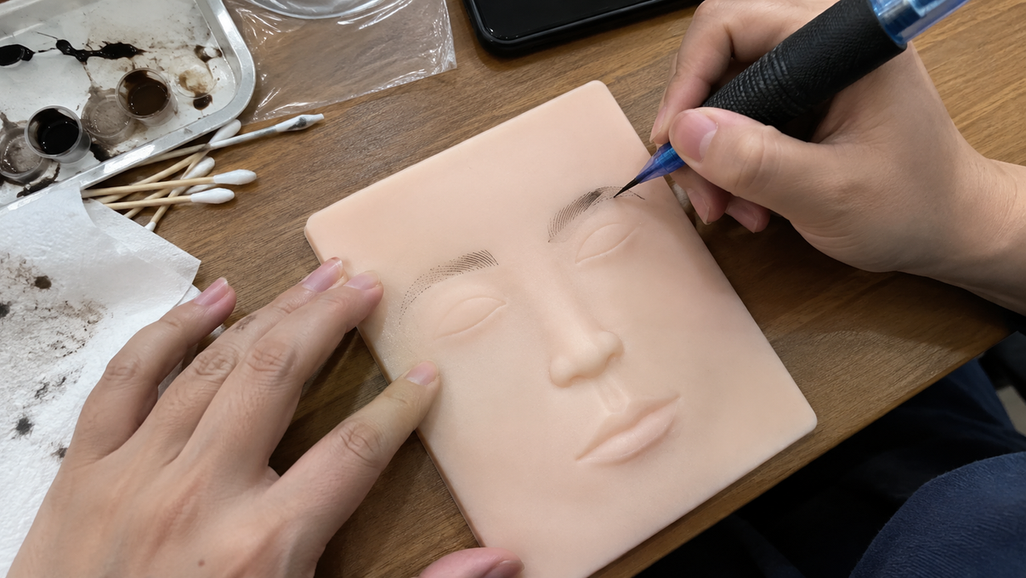
Tattoo practice skin can feel skin-like, but it does not feel exactly like living skin. Start by pressing, pinching, and stretching your practice piece: if it rebounds evenly everywhere, expect consistent resistance that is useful for repetition but unlike the changing feel of a person's body. Use it to build controlled hand movement, not to decide that the same pressure, depth, or machine setting will work on a person.
Surface texture can be convincing without being identical
Soft silicone can resemble the smooth, flexible surface of skin when you touch or stretch it. A softer, thicker, or more flexible practice piece can feel less like a hard rubber sheet than a thin, firm piece. Even so, the material stays cooler, drier, and more uniform than living skin.
A flat practice sheet also lacks the small changes created by body shape and the tissue beneath the skin. You may get nearly the same feel from one edge of the sheet to the other. On a person, the working surface can change as you move across a curved, bony, soft, or tightly stretched area.
That distinction matters because surface softness alone does not prove that a material will respond like living skin under a needle. Two sheets can feel similar to a fingertip yet offer noticeably different resistance during lining or shading.
Needle resistance depends heavily on the practice material
The needle feel depends on the practice material's thickness, firmness, and softness. A medium-thickness silicone piece can provide a consistent surface for comparing hand movement, but it should not be treated as a ranking of how closely one material reproduces living skin.
If your sheet is thin or firm, it may resist the needle more sharply or transfer the feel of the hard table beneath it. A very soft or easily cut practice piece may offer less resistance or show cuts more readily. These responses describe the practice material; they do not establish a pressure, depth, or machine setting for living skin.
Living skin is less predictable. Resistance changes with the body area, the tension applied to the skin, and the support underneath it. That variation is one reason a clean result on practice skin does not establish safe depth or pressure for a person.
Stretch and tactile give change with shape and support
Practice skin usually stretches and rebounds in a regular way. A flat sheet on a firm surface gives your hand stable support, which is helpful when repeating lines and basic shading motions. However, the table also influences what you feel through the material.
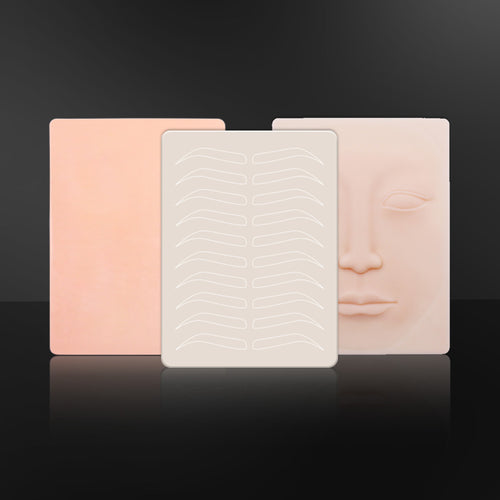
A shaped silicone piece changes the exercise. Curves make you reposition your hand and maintain control when the surface is not flat. The Biomaser 3D practice skin is a silicone training surface intended for tattoo, permanent makeup, and microblading practice. It is suitable when you want to work around a three-dimensional form rather than only on a flat sheet. It still cannot reproduce the warmth, movement, sensitivity, or changing support of living tissue.
When comparing products, use “skin-like” to mean that the material is soft and stretchable enough for useful practice. Do not read it as a promise that the material reproduces every tactile response of a person.
What the feel can—and cannot—teach you

Practice skin is well suited to repeated hand movements. You can use it to make line starts and stops more deliberate, keep curves smooth, and see whether your hand motion remains consistent. A shaped piece can also expose awkward hand positions that a flat sheet hides.
Visible marks can show how a particular practice material responds, but they should be read as material-specific feedback rather than as a direct guide to living skin. A clean or imperfect result on the sheet does not establish the pressure, speed, machine output, or depth that another surface requires.
Practice skin cannot reproduce pain or the skin responses that can follow tattooing, including bleeding, swelling, and healing. For background on reactions and other considerations involving tattooed skin, see the FDA tattoo and permanent makeup fact sheet. Practice skin therefore cannot tell you by itself whether you are ready to tattoo a person. That transition belongs in supervised training with proper infection-control practices and guidance from an experienced professional.
The realistic expectation is simple: good practice skin can teach controlled movement on a skin-like surface, while living skin requires a new level of judgment and adjustment. If the material helps you repeat clean movements without forcing excessive pressure, it is doing its job—even when it does not feel perfectly real.
