








How to Choose Realistic Practice Skin for PMU Training

Choose a surface that gives slightly under your tool, stays stable, and lets you distinguish controlled marks. Start with a light test on soft silicone: if the material tears or buckles, compare a thicker or more stable option; if the marks are difficult to distinguish, compare surface finishes or contrast. Change to a shaped surface only when the movement you are training involves a contour, edge, or specific facial area.
Check how the surface responds to your hand
Realistic feel is not the same as softness alone. Place the skin on a stable, smooth work surface and make a few slow lines with the tool you normally use. A useful practice surface should offer some resistance while allowing controlled movement. It should not feel like a rigid sheet, collapse under light pressure, or stretch so much that your line changes when you lift the tool.
“Realistic” should describe useful training feedback rather than an exact copy of living tissue. For a clearer baseline, compare how practice skin and real skin differ in feel, resistance, and give.
Look for three visible responses:
- Controlled give: the surface yields slightly instead of stopping the tool abruptly.
- Stable recovery: it returns to shape after light stretching rather than staying warped.
- Readable marks: lines, dots, or shading remain visible without the material swallowing the result.
Match the shape to the movement you are training
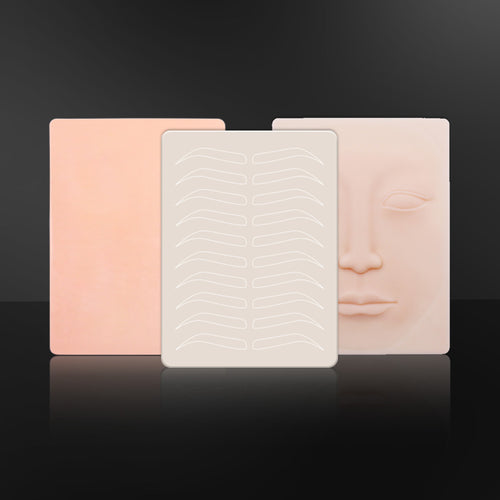
A flat sheet works well when your goal is to repeat fine lines, spacing, pressure, or shading. It gives you a consistent surface and makes it easier to compare one attempt with the next.
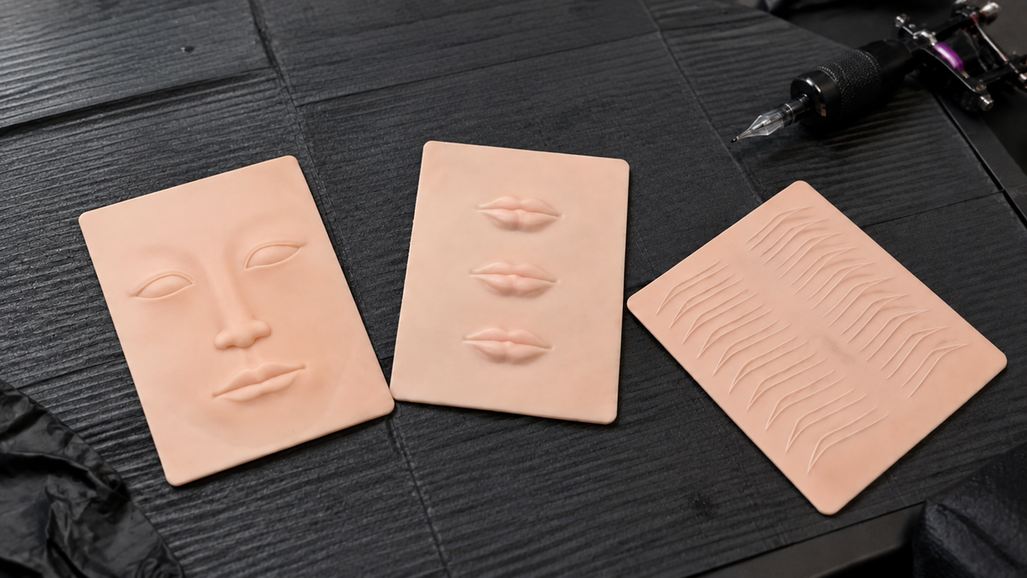
Choose a shaped surface when curvature is part of the lesson. A 3D face or lip form can make contour, symmetry, and movement around an edge more relevant than a flat sheet. For brow work, a brow-focused surface helps when you are practicing hair-stroke direction and spacing. For lip work, a lip-shaped variant is more useful because the contour changes how your hand travels.
If you are training several techniques at once, a general 3D surface can be more useful than a specialized shape. If you are correcting one narrow movement, a simpler flat or targeted surface may make the result easier to read.
Shape is only one part of the decision. If you are still choosing the base material, compare silicone, rubber-based, and vinyl practice skins by stretch, rebound, surface friction, and consistency.
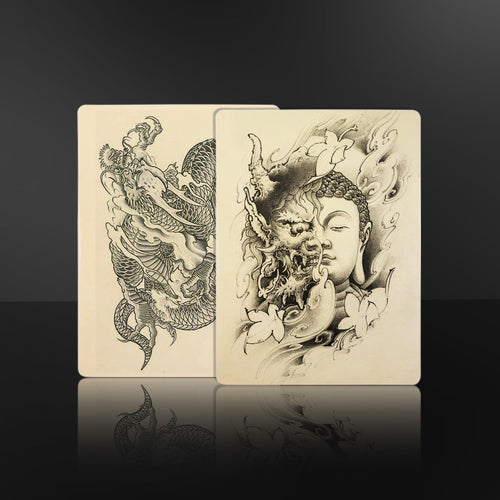
For one option spanning these needs, the Biomaser 3D Practice Skin comes in general 3D, lip, and white versions. Use the general version for broad brow and fine-movement training, choose the lip version when curved lip movement is the main lesson, and consider the white version when mark contrast matters more than a skin-tone appearance. Confirm the version and its current details on the product page before ordering.
Choose thickness based on buckling and pressure feedback
Treat thickness as something to compare through a controlled sample test rather than as a guarantee of how the material will behave. Place each option on the same stable surface and make the same slow line. If a sample buckles or folds under the light pressure you intend to practice, set it aside and compare a thicker or more stable option. If it stays flat, check whether deliberate changes in hand pressure remain visible in the resulting marks.
Start with the option that stays flat during this test. Consider a thinner or more flexible sample only if it also remains stable and makes pressure changes easier for you to distinguish. Base the decision on the response you observe rather than on the thickness label alone.
For example, if a brow stroke widens while the sample folds, repeat the same slow stroke on a more stable sample before treating it as a technique problem. If the sample remains flat and the line changes when you deliberately vary pressure, it can provide readable feedback for that drill.
Check surface finish and mark visibility
Test whether the surface lets you see the mark clearly without the tool skating during a slow line. If glare obscures the result or the tool slips during the test, compare a less glossy or less slippery finish.
