






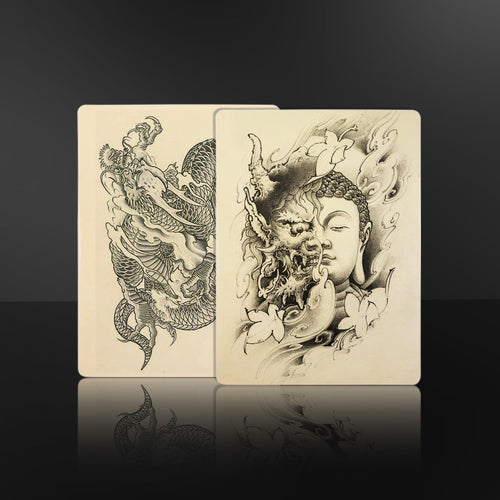
Silicone, Rubber, or Vinyl: Which Practice Skin Feels Most Like Real Skin?

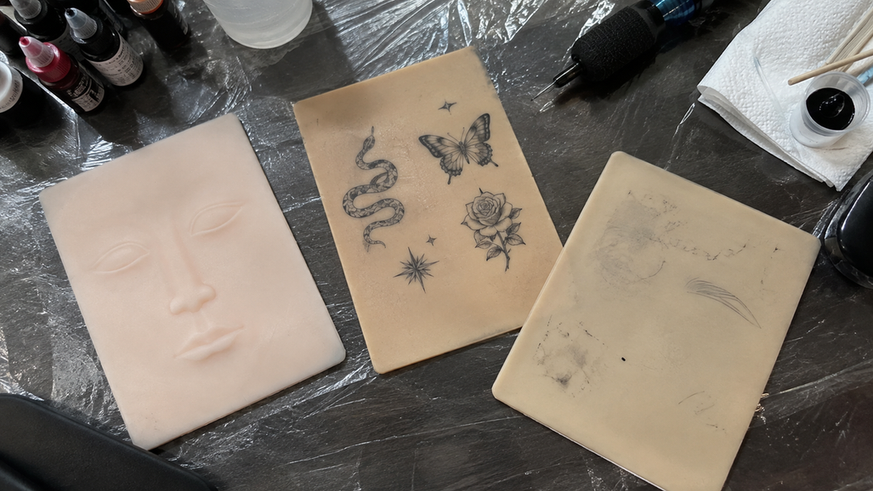
If your priority is softness, controlled stretch, and rebound, a well-made silicone practice skin is usually the most practical place to start. However, silicone is not automatically realistic, and material labels alone cannot determine how a sheet will behave. Human skin has direction-dependent mechanical properties, so any synthetic sheet approximates only part of its response. Press, stretch, and mark the actual product before choosing, then compare its resistance, recovery, surface friction, mark visibility, and consistency.
Silicone vs rubber-based vs vinyl practice skin

| Material | Practical starting point | What to verify |
|---|---|---|
| Silicone | Usually the first option to test when softness, controlled stretch, and rebound matter | Whether it feels overly soft, gummy, slick, or slow to recover |
| Rubber-based material | The label covers different blends, so performance must be checked on the individual sheet | Firmness, rebound, surface consistency, and response to repeated handling |
| Vinyl | It may be rigid or flexible depending on its formulation | Flexibility, surface friction, mark visibility, and thickness consistency |
These are starting points for comparison rather than guarantees. Silicone includes polymers made in forms ranging from fluids and resins to elastomers, so formulation affects how a silicone sheet behaves. Likewise, polyvinyl chloride can be made rigid or flexible, which is why a vinyl product should be judged by its actual response rather than its category name alone.
Why silicone is a practical starting point
Silicone is a practical first material to test when softness, controlled stretch, and rebound are the main priorities. A sheet that deforms under pressure without collapsing, stretches without feeling loose, and returns toward its original shape can provide a useful baseline for comparing other options.
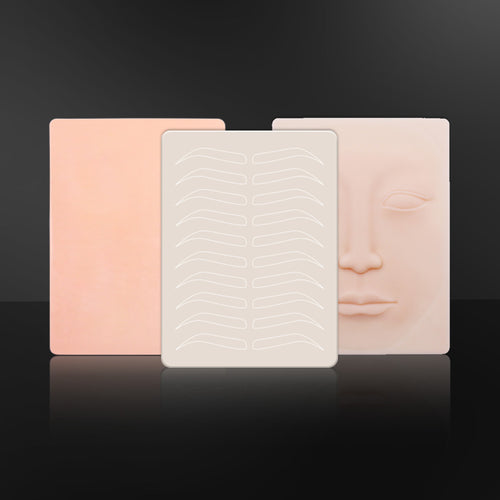
For permanent makeup, microblading, or tattoo drills on a shaped surface, the Biomaser 3D silicone practice skin is a relevant option. Its soft, stretchable silicone and three-dimensional format suit practice where contours matter. It is not a substitute for supervised work on live skin, which also involves movement and biological responses that a synthetic surface cannot reproduce.
Silicone is not automatically realistic. A very soft pad can accept pressure without giving useful resistance, while a tacky surface can drag the hand. Look for a piece that feels pliable rather than mushy and elastic rather than loose. This makes silicone a useful starting point, not a guaranteed winner; a poorly formulated silicone sheet may feel less realistic than a well-made alternative.
Do not judge rubber-based or vinyl sheets by the label alone
"Rubber-based" does not identify a single formulation. Test the individual sheet for firmness, rebound, surface consistency, and its response to repeated handling. Without product-specific evidence, do not assume that the label makes it better suited to linework, shading, or machine-control drills.
The vinyl label also cannot establish how a practice skin will feel or what exercise it suits. Because vinyl can be rigid or flexible, check the actual sheet's flexibility, surface friction, mark visibility, and thickness. Do not assume that every vinyl sheet is appropriate for stencil placement, design layout, or hand-position drills.
Compare all three materials with the same simple test: press each sheet, stretch it gently in two directions, make a controlled mark, and check whether it returns without warping. The most useful option is the specific sheet that responds consistently to the movement you are practicing, regardless of the material name printed on the package.
Check quality before trusting the material name
Press a thumb into the surface, stretch it gently in two directions, and let it go. A more useful practice skin should compress without collapsing, stretch without whitening or distorting sharply, and return without staying loose. Reject pieces with bubbles, thin patches, oily residue, torn edges, or major changes in thickness across the working area.
Thickness also changes the experience. A pad should be thick enough for the intended needle exercise without exposing the table or backing beneath it. Surface consistency matters just as much: uneven texture changes drag and can make one area behave differently from the next.
