




Skin Cooling Strategies During Laser Tattoo and PMU Removal

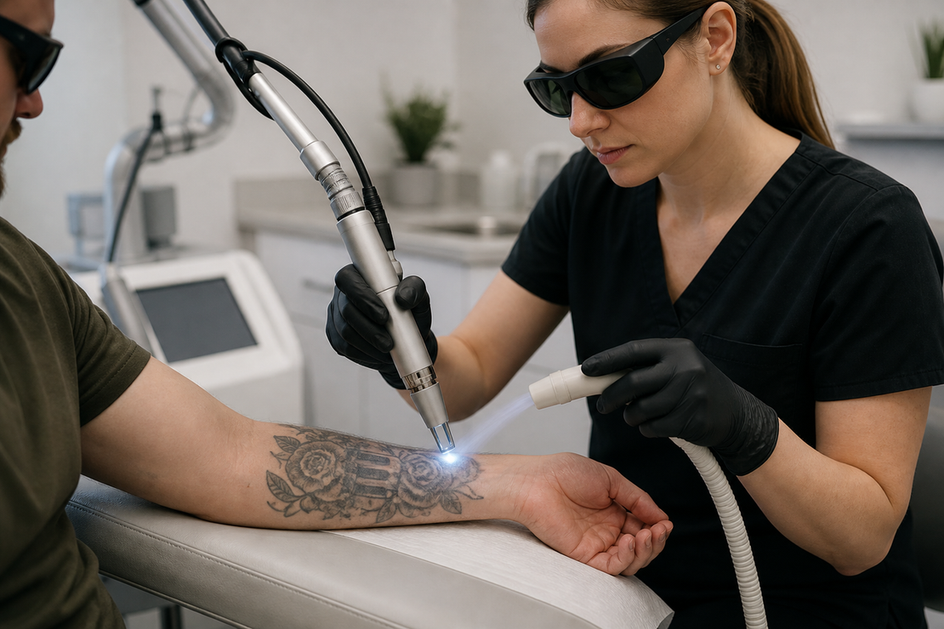
During laser tattoo or permanent-makeup removal, clinician-controlled cooling may reduce discomfort and support protection of the skin's outer layer. Cooling can be used before, during, or after laser passes, but it is an adjunct to---not a replacement for---appropriate laser selection, conservative treatment planning, qualified assessment, and individualized aftercare.
Cooling should not be treated as a promise of painless, risk-free removal or faster pigment clearance. Its role is to help manage heat and comfort while the provider performs the removal procedure.
What Cooling Does During Laser Removal
Laser treatment aims to affect the target pigment while limiting unnecessary injury to surrounding skin. In laser practice, cooling is used to support epidermal protection and may reduce pain and visible redness. A review of laser cooling devices and methods describes three points at which cooling may be used:
- Pre-cooling: applied before the laser pass.
- Parallel cooling: used during treatment, alongside the laser passes.
- Post-cooling: used immediately after treatment.
The exact sequence, intensity, and duration should be determined by the treating provider. Tattoo pigment, PMU pigment, treatment area, laser system, skin characteristics, and the skin's response during the session all affect the plan.
Cooling does not establish that a treatment will clear pigment more effectively, prevent every blister or pigment change, or make laser removal appropriate for every client.
How in-Clinic Cooling Methods Differ

Cooling methods are broadly divided into contact and non-contact approaches. Neither category is automatically "best" for every tattoo or PMU removal session.
| Cooling Category | Contact With Skin | Practical Role During Removal |
|---|---|---|
| Non-contact cold air | No | A clinician-directed stream of chilled air can cool the treatment area without blocking the laser beam or the provider's view of the skin. |
| Contact cooling | Yes | A cooled surface or other clinician-controlled contact method cools the skin directly as part of the treatment setup. |
| Post-treatment cooling | Varies | The provider may specify a protected cooling approach after the session as part of written aftercare. |
Some clinical cold-air devices can produce continuous chilled airflow with adjustable settings. That does not make a home fan, loose ice, or a consumer cooling product an equivalent substitute. In-clinic cooling is selected around the laser device, treatment workflow, patient comfort, and the provider's ability to monitor the skin response.
Ask the provider what cooling method they use and why it suits your treatment area. This is especially useful for small or anatomically sensitive PMU sites, where access and visibility matter as much as comfort.
Cooling and Numbing are Separate Decisions
Cooling and anesthesia may be used together, but they are not interchangeable. Topical anesthesia is one of several pain-control options used for laser procedures; other options may include local anesthesia, nerve blocks, oral sedation, or intravenous anesthesia in appropriate clinical contexts. A general laser-procedure anesthesia overview identifies topical anesthesia, sometimes used with ice, as a common option.
Do not self-apply a numbing product, use occlusion, or alter a provider's cooling plan unless the treating clinician has specifically instructed you to do so for that appointment.
Situations to Discuss Before Treatment
Tell the laser-removal provider about:
- Eyebrow, eyeliner, lip blush, or other facial PMU removal, particularly near the eye or lip area.
- A history of pigment changes after inflammation or previous laser procedures.
- Darker skin tones or previous uneven lightening or darkening after skin injury.
- Reduced sensation, circulation concerns, Raynaud phenomenon, cold urticaria, or unusual reactions to cold.
- A history of delayed healing, significant scarring, or unexpected reactions after cosmetic procedures.
- Any plan to use numbing cream, ice, gel packs, or other cooling products before or after treatment.
These details help the provider decide whether cooling, numbing, treatment intensity, and aftercare need to be adjusted.
Do Not Turn Aftercare Cooling Into DIY Treatment

Home aftercare is not the same as the cooling used during a laser session. Follow the written instructions from the treating provider rather than improvising with direct ice, prolonged cold exposure, pressure, or heavily fragranced "soothing" products on freshly treated skin.
More cooling is not always better. Excessive cold-air exposure can carry a frostbite risk, and continuous cold-air cooling has been associated with post-inflammatory hyperpigmentation in laser practice. That is one reason cooling should remain controlled, limited, and specific to the provider's plan.
Clear any aloe, essential oils, herbal gels, arnica products, or other topical remedies with the treating clinician before using them on recently lasered tattoo or PMU skin.
Seek Prompt Assessment for Concerning Symptoms
Do not attempt to manage a suspected burn, infection, or severe reaction by intensifying cooling. Seek prompt clinical assessment if you develop:
- Severe or escalating pain
- Marked paleness of the treated skin
- Extensive blistering
- Increasing swelling
- Spreading redness
- Pus, fever, or other signs of infection
- Delayed healing or a reaction that seems to worsen rather than settle
Questions to Bring to Your Consultation
Use these questions to make cooling part of an informed removal plan:
- Which cooling method will you use before, during, and after my laser passes?
- How will you monitor my skin response during treatment?
- Is topical numbing appropriate for my treatment area and history?
- Are there added considerations for my PMU location, skin tone, or prior pigment changes?
- What written aftercare instructions should I follow at home?
- Which symptoms mean I should contact the clinic or seek prompt medical assessment?
Cooling is one useful part of a qualified laser-removal protocol, not a DIY solution. Bring these questions to your consultation, follow the provider's individualized aftercare plan, and seek prompt assessment for concerning symptoms before considering another removal session or future PMU rework.
