










Tracking Cost per Service Without Enterprise Software

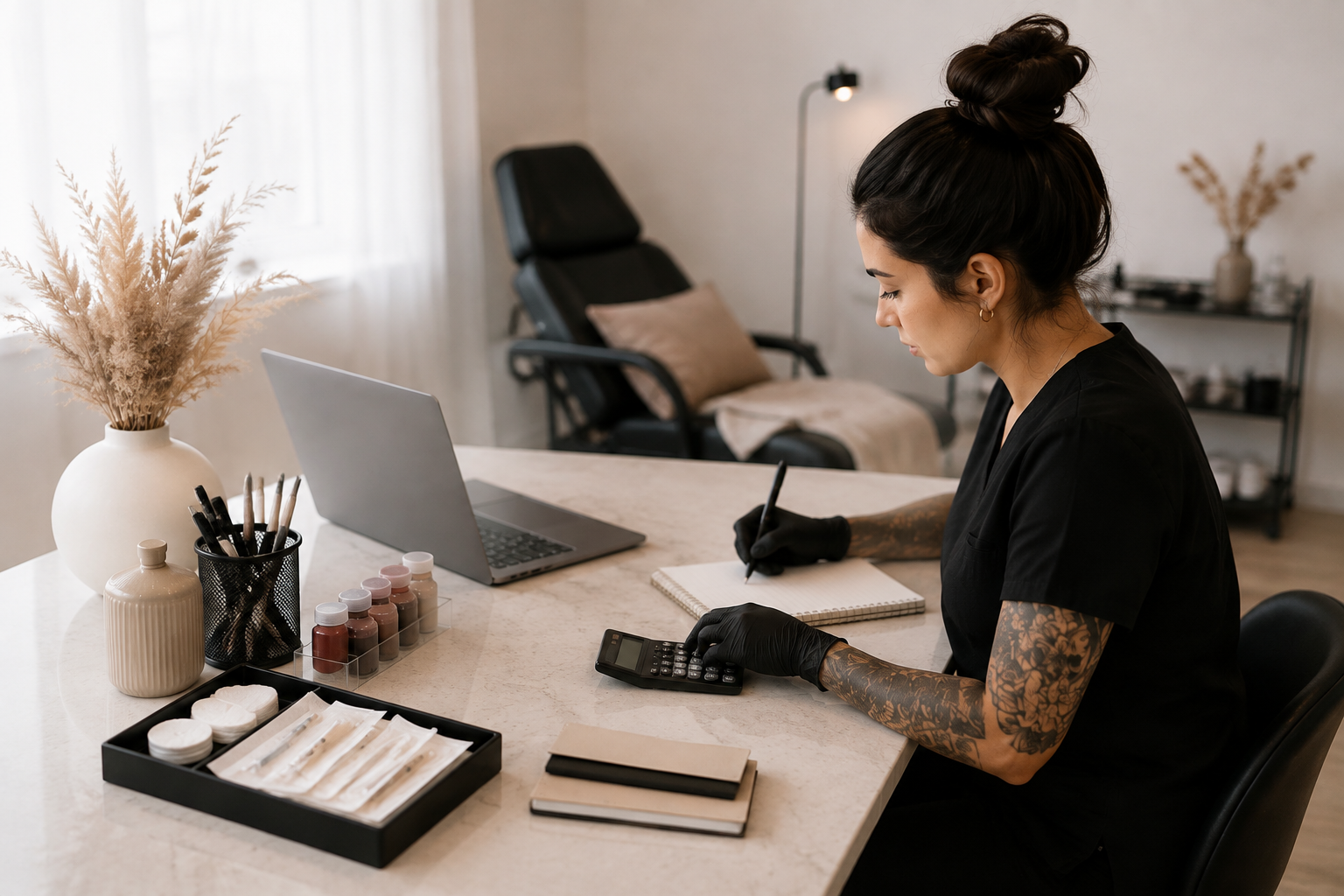
A solo PMU artist can track the true cost of each service with one spreadsheet. For every completed appointment, record the money actually kept, direct consumables, artist time, payment costs, a consistent share of studio overhead, and any expected follow-up or exception cost. Keep purchase invoices, processor reports, booking records, and refund documentation behind the entries so the sheet can be checked and updated.
A simple worksheet is a management tool, not a substitute for bookkeeping, payroll, tax, licensing, or local compliance advice. Still, a spreadsheet can be an appropriate recordkeeping system when it clearly shows income and expenses and is supported by source documents. The IRS recordkeeping guidance notes that businesses may use a system suited to their operations and should retain records long enough to substantiate reported income or deductions.
Build One Row for Each Completed Appointment

Start with one row per completed powder-brow, lip-blush, eyeliner, removal, corrective, or paid consultation appointment. Do not begin with a complicated dashboard. The goal is to make each row complete enough that you can compare services after a month of real bookings.
Use these columns:
| Column Group | What to Record |
|---|---|
| Appointment | Date, client reference, service, booked time, completed time |
| Revenue | List price, discount, deposit applied, additional amount collected, refund or adjustment |
| Payment Costs | Card-processing fee, payment-link fee, chargeback or refund-related cost if applicable |
| Direct Supplies | Cartridge or blade, pigment, numbing products, disposables, PPE, sanitation supplies, aftercare |
| Time | Artist hours, consultation time, procedure time, cleanup and documentation time |
| Overhead | Allocated room or booked-treatment-hour share of monthly operating costs |
| Follow-Up and Exceptions | Included touch-up reserve, redo reserve, corrective-work reserve, no-show or late-cancellation result |
| Output | Net collected revenue, total service cost, contribution, contribution per booked hour |
For planning purposes, net collected revenue is the amount retained from that completed appointment after discounts, refunds, and payment costs. Total service cost includes direct supplies, time, overhead, and the follow-up reserve. Contribution is what remains after those costs.
This structure prevents a high-ticket appointment from looking stronger than it is simply because the pigment and cartridge total appears low.
Price Supplies by Actual Use

A bulk purchase is not the cost of one service. Convert it into a usable unit cost before entering it into appointment rows.
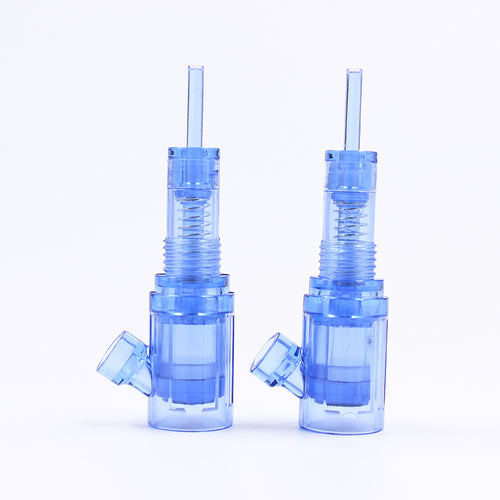
For a box of cartridges, divide the usable purchase cost by the number of usable cartridges in the box. Then assign the cost of the number used in the procedure.
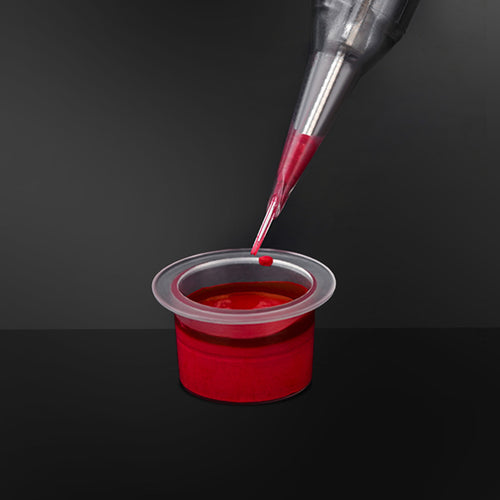
For pigment, use a practical expected-use assumption. Divide the purchase cost by the number of services you realistically expect to complete from that bottle, allowing for your normal waste, expiry, or protocol-related loss. Enter the resulting per-service amount only for services that use that pigment.
For shared consumables, such as PPE, barrier materials, sanitation supplies, mapping items, or aftercare, use either:
- a per-client unit cost when you can count usage, or
- a standard per-service allowance based on your documented protocol.
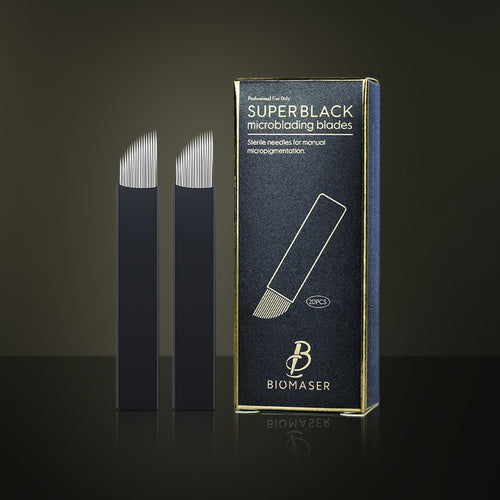
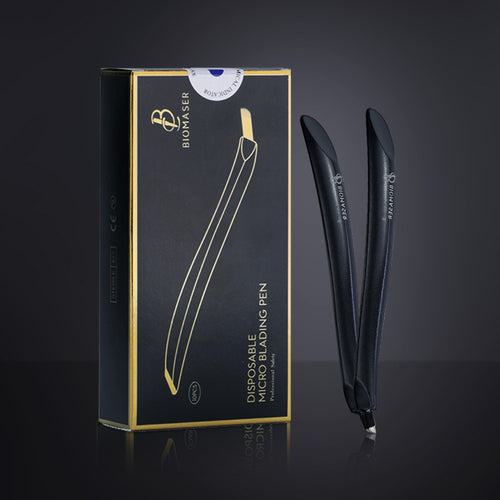
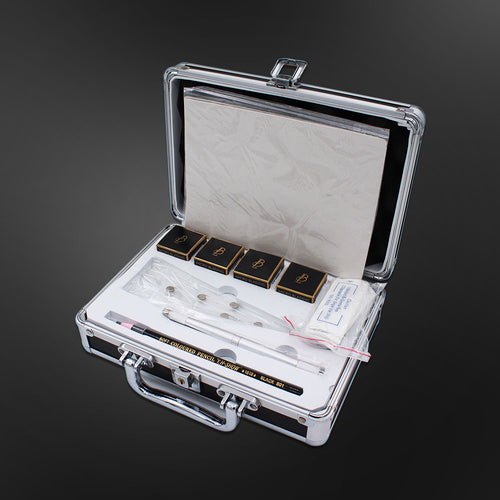
PMU supply tracking commonly includes cartridges or blades, pigment, numbing products, and disposables. Your own sheet should reflect what is actually used in your studio rather than assuming every procedure uses the same items.
Keep the assumptions beside your supply list: purchase date, pack size, purchase price, expected usable units, and the services that use the item. Update those assumptions when you replenish stock, change protocol, switch suppliers, or notice a different level of waste.
Treat Your Time as a Cost Input
Artist time should not disappear because you are self-employed. Add an hourly owner-time value or paid labor cost to each appointment so you can see whether a service supports the time it occupies.
Include more than needle-on-skin time:
- consultation and consent review
- mapping and setup
- procedure time
- photography and documentation
- cleanup and room reset
- immediate aftercare discussion
- follow-up communication when it is routinely part of the service
For an owner, this hourly figure is a planning input for judging service sustainability. It does not determine payroll treatment, worker classification, or tax treatment.
Allocate Overhead Without Hiding Exceptions
Direct supplies are easy to see. Monthly costs are easier to overlook.
Create a separate monthly-overhead tab for costs such as rent, utilities, insurance, booking tools, cleaning, laundry, and other recurring studio operating expenses. Then choose one allocation driver and use it consistently.
For a solo PMU studio, booked treatment hours or realistic completed appointment capacity are usually clearer than simply dividing costs by every calendar opening. A longer powder-brow appointment should generally carry more room overhead than a short consultation because it occupies the treatment space for longer.
Do not silently spread every unusual cost across standard appointments. Keep these visible as separate lines or service categories:
| Cost Type | Better Tracking Method |
|---|---|
| Consultation or patch-test time | Track as its own appointment or attach its time cost to the service policy that includes it |
| Complimentary touch-up | Add an expected touch-up reserve to the original service and track actual touch-up appointments separately |
| Redo or corrective work | Record separately so it does not distort standard-service supply costs |
| No-show or late cancellation | Record what was actually retained, refunded, or lost |
| Refund or chargeback | Record against the affected appointment or an exception log |
| Equipment replacement planning | Keep as a planned operating-cost category rather than disguising it as pigment cost |
Some booking platforms offer cancellation-policy and no-show-fee features, but the useful number is still what your studio actually collected or lost. A policy on paper does not make a missed appointment profitable.
Build a Follow-up Reserve From Your Own History
An included touch-up is not free just because the client does not pay separately. It may require room time, artist time, supplies, payment processing, and follow-up communication.
After you have enough completed appointments, review a service's actual follow-up pattern. Estimate a reserve from the average cost of included touch-ups and other normal follow-up obligations. Apply that reserve consistently to new appointments of the same service, then revise it when the underlying service pattern changes.
Corrective work, refunds, chargebacks, and unusual redos should remain visible as exceptions. They are important for decision-making, but they should not be disguised as a normal cartridge or pigment cost.
Turn the Sheet Into a Monthly Decision Routine
At the end of each month, compare at least three core services---for example, powder brows, lip blush, and eyeliner---using:
- average net collected revenue
- average direct supply cost
- average artist and room time
- allocated overhead
- follow-up and exception burden
- contribution per booked hour
Contribution per booked hour is especially useful when comparing a shorter service with a higher-priced but longer procedure. A service can produce more revenue while contributing less after time, overhead, touch-ups, and payment costs are included.
Use the results to review one decision, not to rebuild your entire business at once. The decision might involve:
- adjusting a price
- changing the deposit or cancellation policy
- revising what an included touch-up covers
- shortening a workflow that consistently runs over
- reducing availability for a low-contribution service
- giving more booking space to a service with stronger contribution per hour
These results are studio-specific planning evidence, not proof that a service is universally profitable or that another artist should charge the same price.
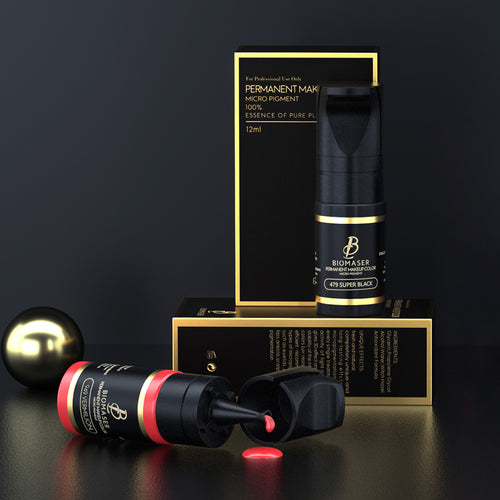
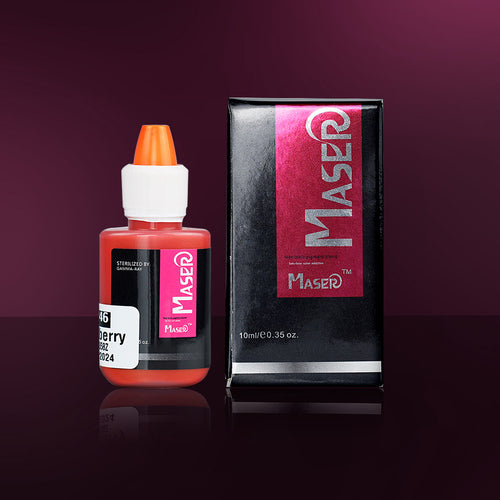
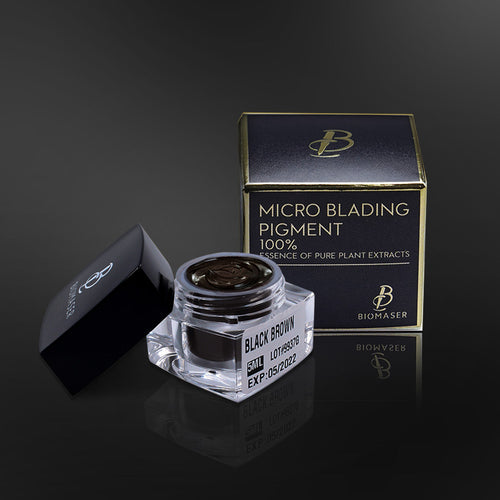
For the next 30 days, track every completed appointment across three PMU services. Compare contribution per booked hour and follow-up burden, then make one evidence-based price or policy review. When updating supply inputs, use current product pages only to verify the pack size, specifications, and purchase price of the supplies you actually use, such as a PMU pigment product listing.
Legal Risk Disclaimer
This article is provided for general informational purposes only and does not constitute legal, regulatory, tax, insurance, medical, or other professional advice. Requirements, rights, and obligations vary by jurisdiction and can change. Before acting on this information, confirm the rules that apply to your business with the relevant regulator and obtain advice from a qualified local professional.
