











Waiting Area Layout That Supports Consent and Consultation Privacy

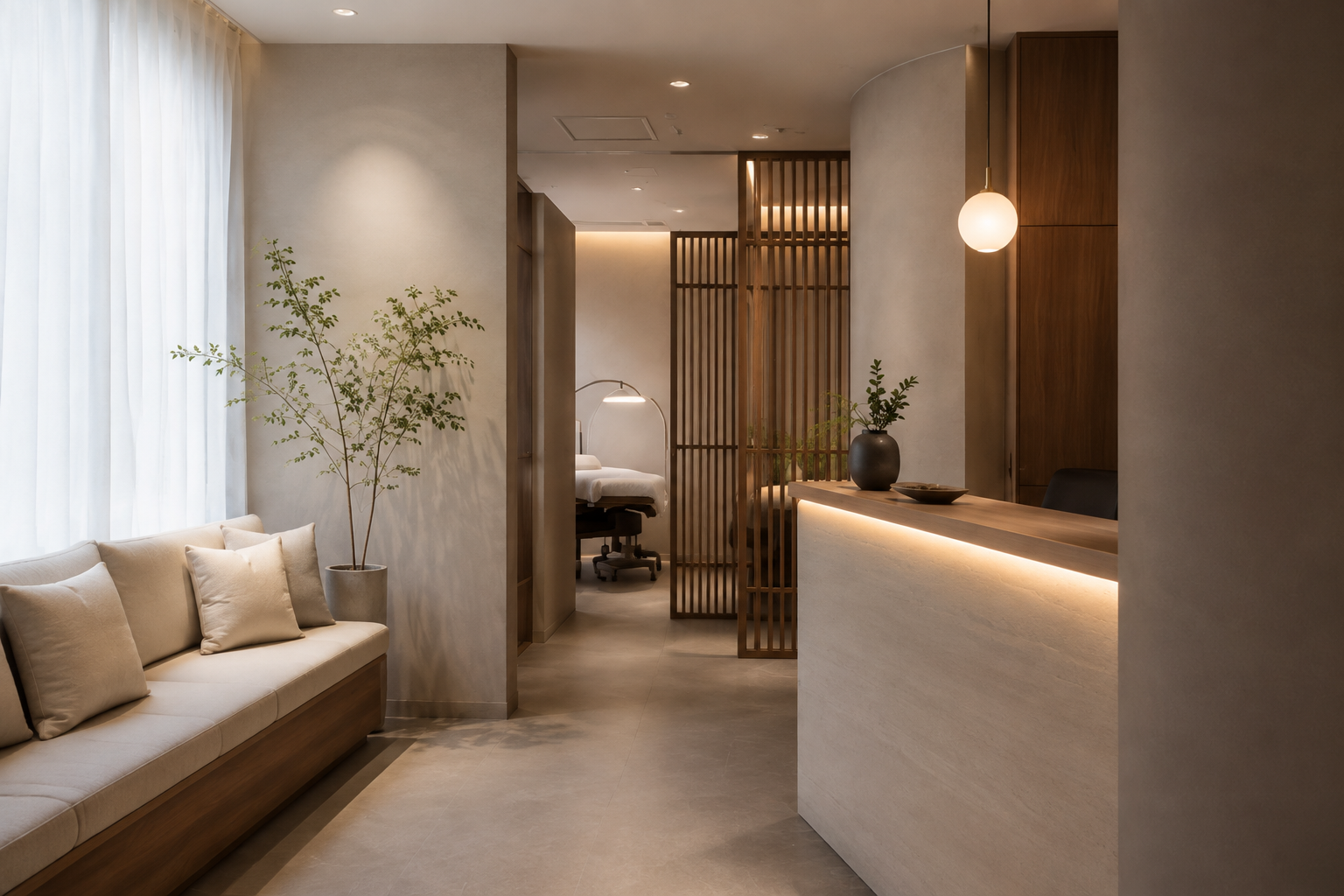
A PMU waiting area should function as a low-disclosure arrival zone, not as the place where clients discuss health history, treatment suitability, consent questions, detailed pricing, or sensitive payment matters. Use reception for a welcome, appointment confirmation, and routing; move personal conversations and document review to a private consultation space. Then confirm your final layout with the local body-art, building, fire, and accessibility authorities before opening or remodeling.
Separate the Client Journey Into Privacy Zones

A small studio does not need a large lobby to support privacy. It needs a deliberate flow from entry to consultation, treatment, payment, and exit.
Think of the space in three zones:
- Public arrival zone: Entrance, greeting point, and a small waiting area.
- Semi-private operations zone: Reception work surface, scheduling tools, and staff-only record handling.
- Private consultation zone: A room or enclosed area for intake review, consent questions, treatment discussions, and any conversation a client would not reasonably want another visitor to hear.
At reception, keep the exchange brief. A simple "Welcome, I'll let the artist know you've arrived" reveals far less than asking a client to explain their procedure, medical history, prior PMU experience, or payment issue within earshot of others.
The consultation area should be the default place for:
- Health-history or contraindication discussions
- Treatment suitability and expectations
- Consent review and client questions
- Before-and-after image review when it identifies the client
- Detailed pricing, deposits, corrections, or disputes
- Identity-document review
- Sensitive payment conversations
This distinction improves the quality of consent as well as privacy. A client is more able to ask questions, pause, or decline a service when they are not speaking across a reception desk in front of other clients.
Position Furniture to Reduce Visual and Audible Exposure
Start by standing at the entrance, then at every waiting chair. From each position, ask: What can a visitor see? What can they hear?
Useful layout choices include:
- Place waiting seats away from the reception work surface rather than directly facing it.
- Angle the reception desk and monitor away from the entrance and visitor seating.
- Keep completed forms, IDs, appointment lists, and payment devices off open counters.
- Avoid placing waiting chairs immediately beside a consultation doorway.
- Create a clear route from reception to the private consultation point so clients do not need to discuss details while standing in the waiting area.
- Use doors, partitions, shelving, or other sightline breaks to reduce direct views into staff work areas.
A partition can block a view, but it does not automatically solve overhearing. Likewise, a quieter waiting area does not make an open desk appropriate for confidential conversations. Furniture, sound control, and staff workflow need to work together.
When planning seating and circulation, include accessibility in the early layout review rather than treating it as a final furnishing decision. The Americans with Disabilities Act protects people with disabilities from discrimination in many areas of public life. Your specific premises may require review of access, service-animal accommodation, mobility-device use, and effective communication; do not assume a layout is compliant based on appearance alone.
Make Reception a Routing Point, Not a Consultation Desk
For a solo artist, the practical challenge is often managing arrivals without a receptionist. The answer is usually workflow discipline, not trying to conduct every task at the desk.
Before the Appointment
Send routine appointment information and forms in advance when that fits your process. This can reduce the amount of time a client spends handling paperwork in the waiting area.
However, advance forms should not replace a private opportunity to review the service, ask questions, and discuss personal information. Plan time for that conversation before treatment begins.
At Check-In
Use neutral language that confirms arrival without inviting disclosure. For example:
- "Thank you for coming in. Please have a seat and I'll be with you shortly."
- "I'll bring you to the consultation area in a moment."
- "We'll review your paperwork together privately before we begin."
Keep appointment screens turned away from visitors. Do not leave clipboards, signed consent forms, ID copies, or client notes on the reception surface while you step away.
In the Private Consultation Space
Review intake answers, consent, procedure expectations, and questions here. The client should have enough privacy to raise concerns without another client listening from the waiting area.
For entities subject to the HIPAA Privacy Rule, medical records and other individually identifiable health information require appropriate privacy safeguards under the HIPAA Privacy Rule guidance. That does not create a universal PMU reception-layout specification, but it reinforces the value of separating sensitive information from public arrival activities.
Handle Paper, Screens, and Payment with the Same Privacy Standard
Paper and digital systems can both expose client information when the workflow is careless.
For paper records:
- Bring out only the documents needed for the current client.
- Review forms in the consultation space rather than at a public counter.
- Return completed documents to their designated secure storage location promptly.
- Avoid using reception surfaces as temporary record storage.
For digital systems:
- Position screens so waiting clients cannot read them.
- Close client records before greeting the next visitor.
- Avoid discussing information visible on a monitor while another client is nearby.
- Treat phones, tablets, and booking screens as part of the reception privacy plan.
For payments, a quick transaction may occur at reception, but disputes, financing questions, detailed pricing conversations, or discussions about a client's treatment plan belong in a private setting.
HIPAA does not automatically apply simply because a studio collects health-related intake information. The rules apply to covered entities and business associates, and a studio's status depends on its actual role and relationships, as explained in HHS guidance on HIPAA covered entities. Regardless of that status, a professional PMU workflow should avoid unnecessary public disclosure.
Use Low-Cost Improvements Before Considering Renovation
Many privacy gaps can be reduced this week without changing the lease or rebuilding the studio.
| Change This Week | Plan Before Build-Out |
|---|---|
| Move waiting chairs away from the desk and treatment-room doors. | Decide whether a private consultation room or enclosed consultation point is needed. |
| Reorient monitors and remove client paperwork from public surfaces. | Map sightlines from the entrance, seating, and hallways. |
| Use short, neutral check-in language. | Review accessibility, occupancy, egress, sanitation, and local body-art requirements for the premises. |
| Stagger appointments to limit overlap between arriving and departing clients. | Confirm whether facility plans or approvals are required before renovation or opening. |
| Schedule private consultation time before treatment. | Determine where records, IDs, and digital devices will be handled and stored. |
Local requirements vary. Georgia, for example, makes a Body Art Studio Plan Review Checklist available among its body-art studio resources. That does not establish a universal room configuration, but it is a useful reminder to check with the authorities that govern your own studio before finalizing plans.
Audit One Client Visit Before You Commit

Walk through one complete appointment as if you were the client: arrival, check-in, waiting, consultation, consent, treatment, payment, and departure. Mark every point where another visitor could see a screen, read a form, overhear a question, or learn more than they need to know.
Choose the highest-impact fix first---often a private consultation routine, better seating placement, or a new reception script---then verify the final arrangement with the local authorities responsible for your studio. For help refining the client-facing part of that workflow, review how a permanent makeup artist can communicate with customers.
Legal Risk Disclaimer
This article is provided for general informational purposes only and does not constitute legal, regulatory, tax, insurance, medical, or other professional advice. Requirements, rights, and obligations vary by jurisdiction and can change. Before acting on this information, confirm the rules that apply to your business with the relevant regulator and obtain advice from a qualified local professional.
