





PMU M1 Cartridge Sizes Explained: How to Compare Diameter and Needle Grouping
Key Takeaways
- M1 identifies a needle configuration, not the full size of a cartridge.
- Needle diameter and needle count describe two different features.
- Grouping design, taper, and machine compatibility also affect cartridge selection.
- Check the complete product code and manufacturer specifications before purchasing.
Two PMU M1 cartridges can carry the same label but have different diameters, needle counts, and designs. Knowing how to read these details helps artists compare products and select suitable equipment for their work. This starts with identifying the M1 configuration, then checking the specifications that affect its working characteristics.
What Is an M1 PMU Cartridge?
M1 is a common needle configuration used for shading and color filling.
What Does M1 Mean?
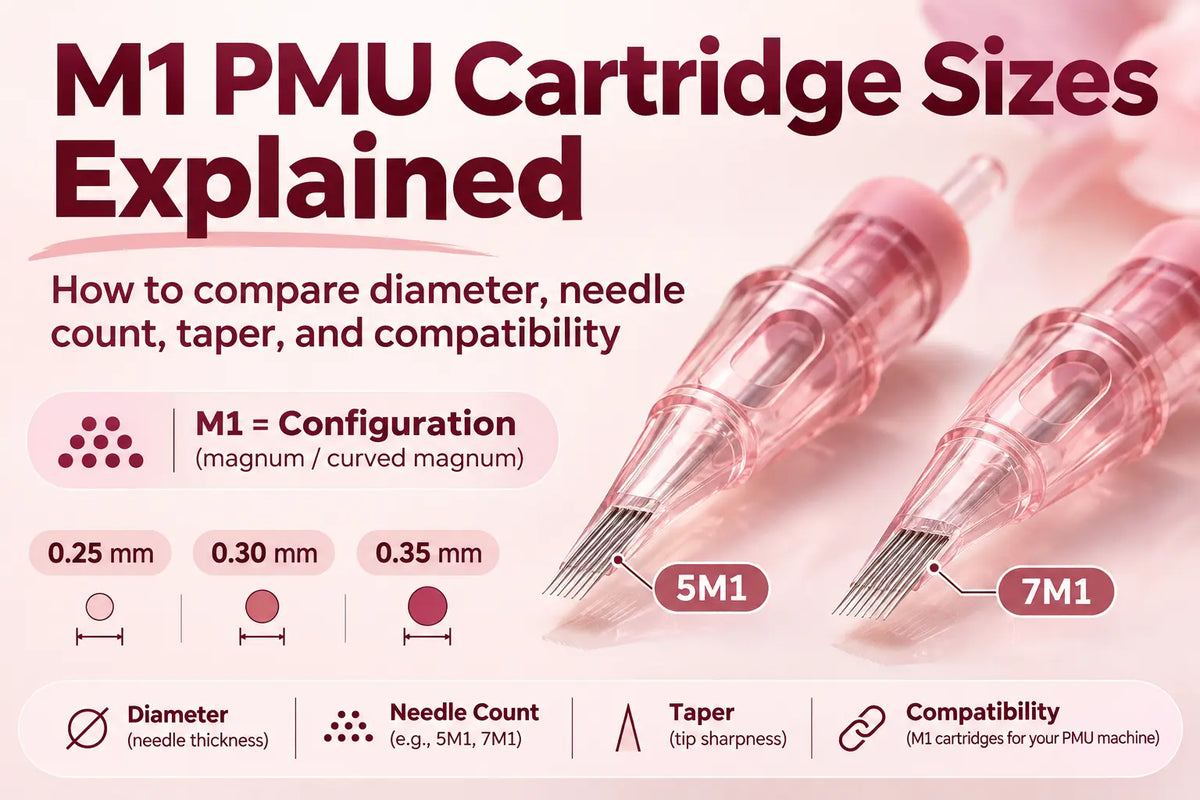
M1 commonly refers to a Magnum needle configuration. It uses multiple needles arranged in a grouping designed to cover a wider area than a single needle. This makes it useful for shading and filling work.
The exact structure can vary across manufacturers. Some product lines use M1 for a specific flat Magnum arrangement, while other naming systems may describe the grouping differently. Artists should check the manufacturer's description rather than rely on the code alone.
M1 describes the needle configuration, not the needle diameter, total width, or taper. These details require separate checks when comparing a PMU cartridge M1 with another model.
Where Are M1 Cartridges Commonly Used?
M1 cartridges are commonly associated with shading and color filling in permanent makeup. Depending on the specific design and the artist's technique, they may be used for:
- Powder brows: Building a soft, shaded appearance across the brow.
- Ombré brows: Creating a gradual change in color intensity.
- Selected lip shading techniques: Applying pigment across a broader area of the lips.
Not every M1 cartridge is suitable for every procedure. The needle configuration, diameter, device, and artist's training all affect the selection. Artists should follow the manufacturer's intended-use instructions and their professional training.
How to Read M1 Cartridge Size Specifications
The markings on cartridge packaging can look confusing at first. Breaking them into diameter, needle count, grouping, and taper makes it easier to compare cartridge needle sizes without relying on a single number.
Needle Diameter: What Do 0.25 mm, 0.30 mm, and 0.35 mm Mean?
Needle diameter describes the thickness of an individual needle, usually measured in millimeters. Common examples in PMU products include 0.25 mm, 0.30 mm, and 0.35 mm, although availability depends on the product line.
These sizes describe different needle thicknesses:
- 0.25 mm: A relatively fine needle diameter.
- 0.30 mm: A middle option between the two examples above and below.
- 0.35 mm: A thicker needle diameter than 0.25 mm or 0.30 mm.
Diameter can influence needle rigidity and pigment-transfer characteristics. Still, a larger diameter does not automatically produce darker results, deeper pigment placement, or longer-lasting color.
The best comparison considers diameter alongside needle count, taper, grouping design, and the manufacturer's specifications. Artists should not select a diameter based on skin type alone.
Needle Count: What Do 5M1 and 7M1 Indicate?
In common cartridge naming systems, the number before M1 indicates the needle count. A 5M1 typically has five needles, while a 7M1 typically has seven.
| Feature | 5M1 | 7M1 |
|---|---|---|
| Typical needle count | 5 | 7 |
| Individual needle diameter | Check the product label | Check the product label |
| Potential coverage | Depends on grouping design | May be wider under comparable conditions |
| Actual grouping width | Verify manufacturer data | Verify manufacturer data |
A higher needle count can change the width and distribution of the grouping. It does not guarantee a wider final pigment area or better results in every application.
The spacing between needles, individual needle diameter, and arrangement all affect the overall dimensions. For an accurate comparison, look for a published grouping width rather than estimating it from the needle count alone.
How Do Gauge Numbers and Cartridge Codes Work?
Some manufacturers use gauge-related numbers or coded product names to describe needle specifications. Common examples include #08, #10, and #12, which may correspond to nominal diameters of 0.25 mm, 0.30 mm, and 0.35 mm in certain product systems.
These mappings are not universal. A code may also include the needle count, configuration, or taper.
For example, a product label might include a diameter code, a number for the needle grouping, and the letters M1. Other products may use a different order or add a suffix for a specific design. Check the manufacturer's size chart to confirm each part of the code.

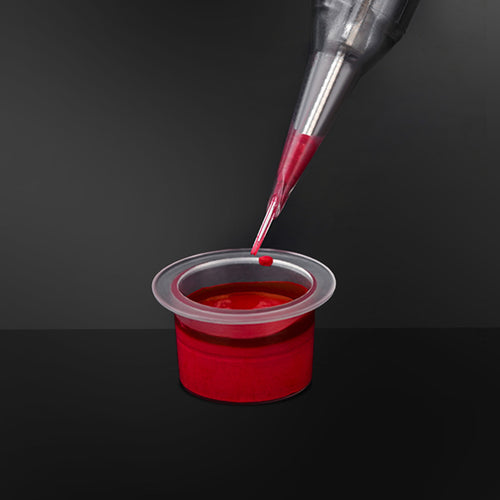
M1 Mangum ThunderlordPower Tattoo Universal Cartridge Needle for standard tattoo pen machine
How Do Diameter and Needle Grouping Affect PMU Cartridge Performance?
Specifications help artists compare cartridge designs, but they do not predict every result. Understanding the role of each feature makes it easier to judge the differences without relying on broad claims about performance.
How Needle Diameter Influences Rigidity and Pigment Transfer
Needle diameter affects the thickness and rigidity of each needle. Other design features, including taper and grouping, also influence how the needle performs during use.
A finer needle and a thicker needle may behave differently, but diameter alone cannot predict pigment retention, skin response, or the finished appearance.
When comparing permanent makeup needles, look at the full specification rather than assuming that a thicker needle always deposits more pigment. Machine settings, technique, pigment properties, and the intended procedure also contribute to the outcome.
How Needle Count and Grouping Design Affect Coverage
Needle count and grouping design determine how multiple needles are arranged within the cartridge. Under comparable conditions, a grouping with more needles may cover a wider area, but the exact dimensions depend on the design.
Three measurements should remain distinct:
- Needle diameter: The thickness of an individual needle.
- Grouping width: The physical width of the assembled needle group.
- Application width: The area affected during a pass, which also depends on technique and operating conditions.
These measurements are related, but they are not interchangeable. A 7M1 cartridge does not always produce a wider application area than every 5M1 cartridge. Different needle spacing or construction can change the comparison.
Why Taper Matters When Comparing Similar M1 Cartridges
Taper describes the shape and length of the transition from the needle shaft to its pointed tip. Some manufacturers classify taper as short, medium, long, or extra long.
Taper can affect needle behavior and pigment-transfer characteristics. Two cartridges with the same diameter and needle count may still perform differently if their taper designs differ.
How to Compare M1 Cartridges Before Buying
Clear specifications make it easier for artists to compare cartridges side by side and narrow their options.
Compare the Full Specifications Side by Side
Use a comparison table to record the details of each cartridge under consideration.
| Specification | Cartridge A | Cartridge B |
|---|---|---|
| Full model code | Check label | Check label |
| Needle diameter | Record in mm | Record in mm |
| Needle count | Confirm | Confirm |
| Grouping configuration | Confirm M1 design | Confirm M1 design |
| Taper | Check manufacturer data | Check manufacturer data |
| Grouping width | Record if published | Record if published |
| Machine compatibility | Verify | Verify |
| Sterility and single-use labeling | Verify packaging | Verify packaging |
This method is useful when comparing cartridge needles for PMU from different product lines. It also helps identify missing information that may require confirmation from the supplier.
Check Machine Compatibility and Cartridge Construction
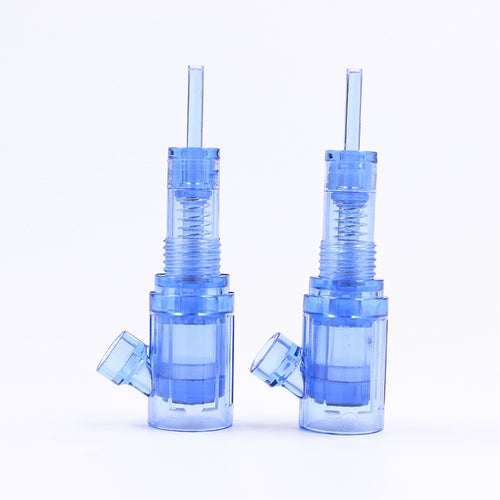
Not every cartridge fits every PMU machine. Check the cartridge connection, the device manufacturer's compatibility instructions, and any limits listed in the product documentation.
Cartridge construction also deserves attention. Some designs include a membrane intended to help prevent fluid backflow into the device. Check the manufacturer's information to confirm the design and its intended function.
Match the Specifications to the Intended Technique
The appropriate cartridge depends on the planned procedure, desired working characteristics, device, and the artist's training. A cartridge selected for shading may not be the best option for a different technique.
Artists should also check the sterile packaging and single-use labeling. Use a new sterile cartridge for each client and dispose of used needles in an appropriate sharps container under applicable local requirements.
The FDA warns that unsterile tattooing equipment and needles can transmit infections. It also notes that contaminated tattoo inks can cause infections, even when other hygiene practices are followed. Cartridge selection should therefore include hygiene and product handling, not just size and performance.


Compare the Complete M1 Cartridge Specifications
M1 identifies a needle configuration, but it does not describe every feature that affects cartridge selection. Diameter, needle count, grouping design, and taper each provide different information.
Before purchasing, compare the complete model code, confirm machine compatibility, and check the manufacturer's specifications. A clear comparison helps PMU artists choose equipment that fits their intended technique and professional requirements.
FAQs About PMU M1 Cartridge Sizes
Q1: Are M1 Cartridges Compatible With All PMU Machines?
No. Compatibility depends on the cartridge connection and the machine's design. Check the device manufacturer's instructions and confirm that the specific cartridge model is supported.
Q2: What Is the Difference Between M1 and RM or CM Cartridges?
M1 commonly refers to a Magnum grouping, while RM or CM often identifies a curved Magnum design. The curved edge changes the needle arrangement, but naming conventions vary by manufacturer. Check the product specifications to confirm the exact construction.
Q3: Can M1 Cartridges Be Used for Lip Blush?
Some M1 designs may be intended for selected lip-shading techniques, but not every configuration is suitable for lip blush. Artists should follow the cartridge manufacturer's intended-use instructions, their training, and the requirements of the procedure.
Q4: How Should PMU Cartridge Needles Be Stored and Disposed Of?
Keep sterile cartridges in their original packaging according to the manufacturer's storage instructions. Check package integrity before use, never reuse a single-use cartridge, and place used needles in an appropriate sharps container. Follow local rules for sharps disposal and infection control.
