






How to Clean Excess Pigment During PMU Without Smearing or Losing the Outline

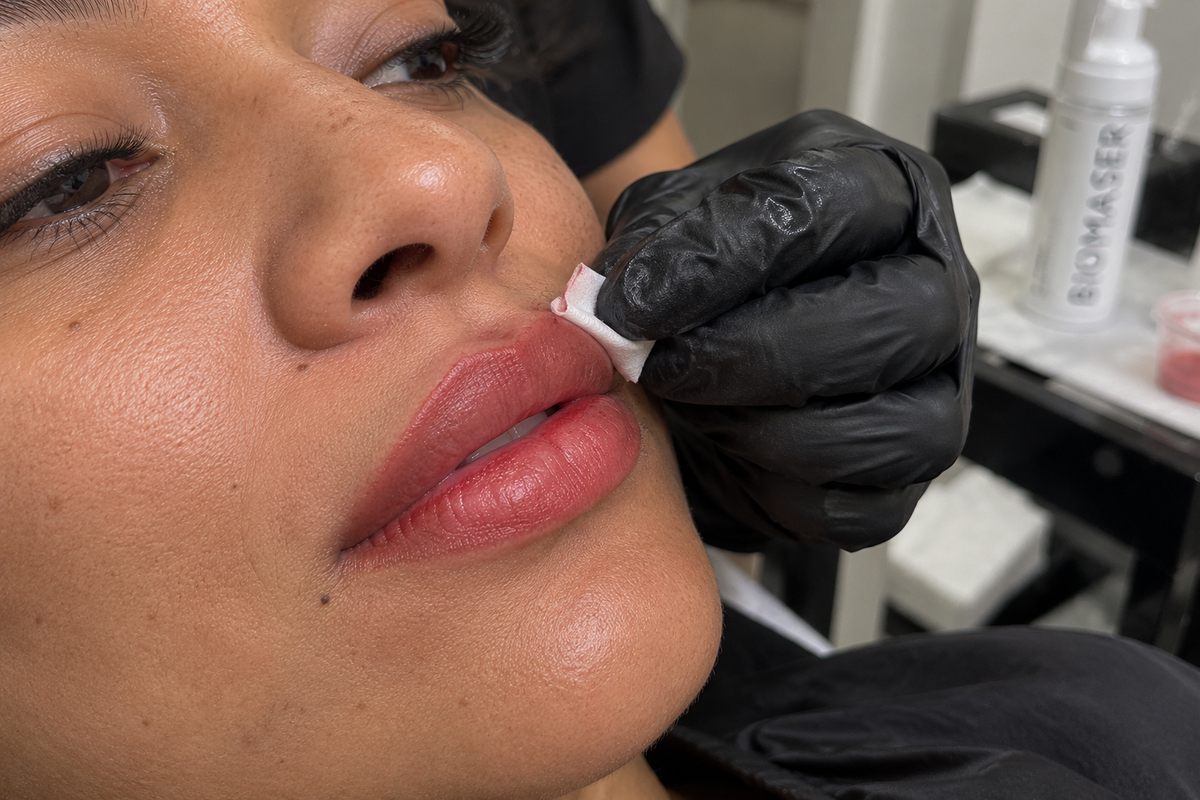
When excess PMU pigment obscures your work, pause pigment application and lift the surface color with a fresh disposable wipe and a controlled amount of PMU cleanser. Work in small sections, replace the wiping surface as it becomes loaded, and check the outline after each pass. If color smears or liquid runs, use less cleanser and shorten the movement.
Choose a cleanser intended for use during PMU
Choose a cleanser intended for use during PMU on the treatment area, then consider which texture is easiest to control. A product described only as a makeup remover, skin-preparation product, or home aftercare cleanser is not automatically intended for cleanup between passes.
BIOMASER All PMU Foam Cleanse is a professional cleaning mousse intended for use before, during, and after eyebrow, eye-area, and lip PMU procedures. It is intended to remove surface color residue. It is a relevant option to consider when choosing a foam cleanser for cleanup during your session; check its application instructions before use.
Lift residue in small areas and check the outline
- Identify the boundary before touching it. Locate the visible outline and the patch of excess surface color. If the boundary is already uncertain, stop and resolve it before continuing pigmentation.
- Prepare a fresh wiping surface. Apply a small, controlled amount of cleanser to fresh gauze, a nonwoven pad, or the disposable applicator used for that area.
- Lift before wiping broadly. Start with a small blot-and-lift movement, then inspect the result. If another pass is needed, keep it short so collected pigment is not dragged across the outline.
- Change the wiping surface when it carries pigment. Use a fresh wipe rather than bringing a visibly loaded surface back across the work. Recheck the boundary after each cleanup movement.
- Stop when the working area is visible. The surface needs to be clear enough to distinguish the intended boundary from leftover color; the wipe itself does not need to come away colorless.
The goal is a visible working area, not a wipe that returns perfectly colorless. Do not keep rubbing solely because a used wipe shows pigment; the American Academy of Dermatology notes that scrubbing can irritate skin. Do not use this cleanup method to try to remove implanted color.
For example, if surface pigment covers a brow tail while the upper mapping line remains visible, a broad sideways wipe may carry color across the line. Start with a small lift over the residue and inspect the tail before making another pass.
Change the cleanup method when pigment spreads or liquid runs

If liquid drips beyond the cleanup area, use less of it. Absorb the excess, prepare a fresh wipe with a smaller amount, and keep the next application within the patch you need to clean.
If a wipe leaves a colored streak, change the loaded surface and shorten the movement. Sweeping the same pigment-covered wipe back and forth can widen the smear. Replace it, lift the localized residue, and inspect the result.
If residue remains without spreading, check the cleanser amount and removal method rather than increasing pressure. The goal is to lift surface color, not scrub the area until the wipe is clean.
If only a narrow edge needs cleaning, reduce the contact area. Use a fresh, smaller applicator and keep the movement within the residue patch instead of sweeping across the whole treatment area.
If the outline has faded or disappeared, re-establish it before continuing. The edge of a surface stain is not a reliable substitute for the intended mapping line.
