





Turning a Failed Practice Case Into a Documented Learning Log

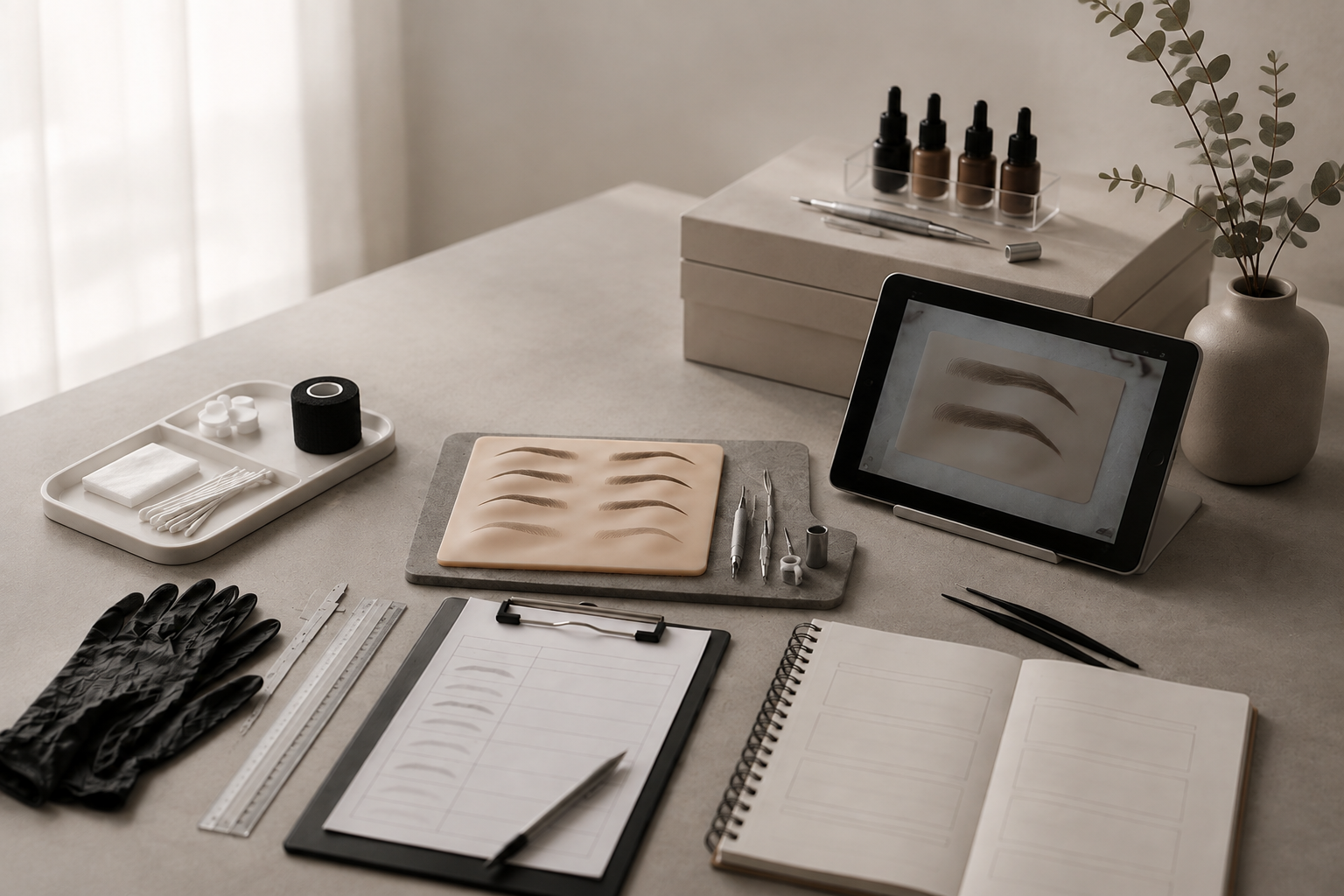
A failed PMU practice case becomes useful when you turn it into a dated evidence record: capture labeled images and settings, separate observations from possible causes, test one corrective change on the same training medium, and obtain qualified review before progressing to live-model work.
The purpose is not to make the case look successful. It is to make your next decision traceable: what happened, what you think may have contributed, what you will test next, and what feedback or sign-off is still needed.
Record the Case Before Explaining It

Complete the first part of the log immediately, while the setup and sequence are still clear. Record facts first. A visible result may suggest several contributors, but it does not prove that depth, pigment, cartridge choice, machine settings, stretch, or hand speed was the cause.
Use a consistent case label, such as Practice Case 014, so that images, mentor comments, and repeat exercises stay connected.
Core Practice-Case Record
Include the following fields:
- Case ID and date
- Practice area and exercise: brows, eyeliner, lip-blush outline, shading, stroke pattern, or another defined drill
- Medium: synthetic skin, other approved training medium, or supervised live model
- Learning objective: for example, consistent stroke spacing or cleaner lower-lash-line placement
- Reference design or mapping plan
- Machine and cartridge identifiers
- Pigment identifier
- Settings used: record the setting shown on your device rather than interpreting whether it was "too high" or "too low"
- Technique sequence: outline, first pass, shading, correction attempt, and any point where the result changed
- Images captured
- Observed result
- Variables to review
- Next controlled test
- Mentor feedback and progression decision
A concise observation is specific and non-diagnostic:
"The right-side brow exercise shows uneven spacing through the middle third. The left side appears more consistent under the same lighting."
Avoid writing:
"The pigment did not stay because the depth was wrong."
The first statement records what you can see. The second states a cause that has not yet been tested or reviewed.
Label Images for Useful Comparison

Photographs are part of the record, not decoration. Take them consistently enough that you, a trainer, or a mentor can compare one exercise with the next.
Label each image with:
- Case ID
- Medium used
- Procedure area or exercise
- View: full view, close-up, left side, right side, or detail
- Timing: before, during, immediately after, or repeat test
- Lighting condition if it changed
For example:
Case 014 / Synthetic Skin / Brow Stroke Exercise / Immediately After / Full ViewCase 014 / Synthetic Skin / Right Side Close-Up / Same Lighting
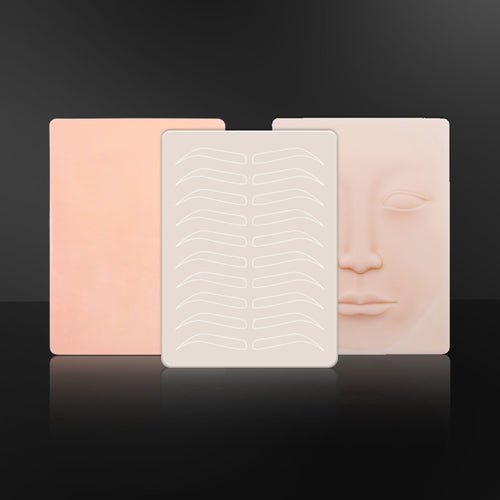
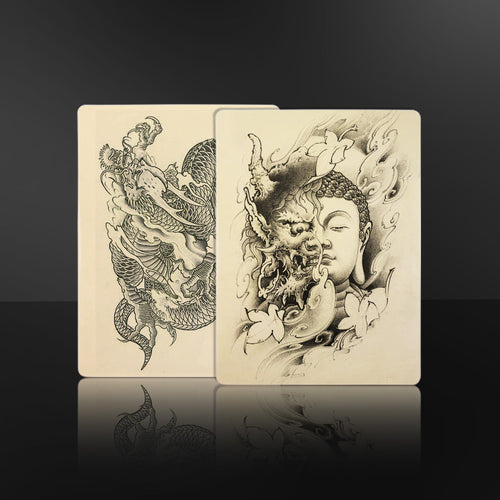
Synthetic skin can support skill development, comparison, and portfolio documentation, but it should remain clearly identified as synthetic practice. Its elasticity, texture, and ink behavior can differ from human skin, so it is not proof of healed results, client-specific performance, or readiness for a person.
Keep synthetic practice images separate from supervised live-model records. Do not present practice-skin work as though it were a healed client result.
For a real-person case, add the applicable consent and photo-authorization records, limit who can access identifiable images, and store records securely. The technical learning log should sit alongside---not replace---the documentation required by your trainer, certification provider, studio, insurer, or local authority.
Turn Observations Into a Testable Hypothesis

A disappointing case often tempts an artist to change everything at once: machine setting, cartridge, pigment, mapping, angle, hand speed, and stretch. That makes the next result difficult to interpret.
Instead, use a four-part entry:
| Log Step | What to Write |
|---|---|
| Observation | What is visibly inconsistent or different? |
| Possible Contributors | Which variables may be worth reviewing? |
| Controlled Retest | What one primary change will you test next? |
| Review Outcome | What changed, what stayed the same, and what feedback did you receive? |
Example of a Controlled Retest
Observation: Stroke spacing looks inconsistent on the right side of a synthetic brow exercise.
Possible contributors to review: Mapping, hand position, movement speed, stretch method, cartridge condition, or machine setup.
Controlled retest: Repeat the same brow-stroke exercise on the same type of synthetic skin. Keep the design, cartridge, pigment, and machine setting consistent. Change only the planned hand-position approach.
Review outcome: Compare the right-side spacing against the original case and submit both labeled images for trainer feedback.
This process does not establish a universal root-cause protocol. It simply prevents a synthetic-skin observation from being treated as proof of how the technique would perform on human skin.
Review Technical Variables Without Diagnosing From a Photo
Use the log to organize questions, not to make remote technical diagnoses. A trainer may review variables such as:
- Design placement and mapping
- Symmetry and spacing
- Machine setup
- Cartridge or needle selection
- Pigment used
- Hand angle and hand position
- Stretch or stabilization method
- Movement speed
- Pass sequence
- Medium-specific behavior
Write these as review prompts:
- "Was the mapping consistent on both sides?"
- "Did my hand position change during the middle section?"
- "Was the exercise repeated on the same medium?"
- "Which single variable should remain fixed for the next comparison?"
A failed synthetic-skin exercise can reveal where your process needs closer attention. It cannot, by itself, establish how pigment will heal on a person or how a client's individual skin will respond.
Use the Log as a Progression Gate
A learning log can strengthen mentor review, portfolio organization, and continuing education records. It is not a self-issued authorization to move from synthetic practice to live models or advanced procedures.
Before progressing, confirm that you have:
- Clearly labeled practice cases and repeat tests
- Documented observations rather than unsupported conclusions
- Evidence of more consistent results under comparable practice conditions
- Feedback from a qualified trainer or mentor where applicable
- Met your training provider's or certifier's requirements
- Met applicable local licensing, studio, consent, and recordkeeping requirements
- A separate process for sanitation, exposure control, and incident reporting when work involves a person
Do not set your own universal number of practice cases and treat it as proof of readiness. Readiness depends on documented consistency, supervision expectations, certification requirements, and local rules.
Keep Exposure Incidents Separate From Technical Learning
A poor technical result on synthetic skin belongs in a learning log. An occupational exposure incident requires a separate response and record.
For covered employers with occupational exposure to blood or other potentially infectious materials, OSHA requires a written exposure control plan. Its model guidance includes documentation of the exposure route and the circumstances in which it occurred. See OSHA's guidance on controlling occupational exposure to bloodborne pathogens.
If an exposure occurs, clean the affected area, report it immediately, and seek immediate medical attention, following the applicable workplace procedure. OSHA's Bloodborne Pathogens Standard guidance addresses this response. Do not treat an exposure record as a routine practice-case note.
Copy-and-Use Learning-Log Template
Case ID / Date: Medium: Synthetic skin / approved training medium / supervised live model Area and Exercise: Objective: Design or Mapping Reference: Machine, Cartridge, and Pigment Identifiers: Settings Recorded: Technique Sequence: Images Attached and Labels: Observed Result: Possible Contributors for Review: One Controlled Change for Next Test: What Will Stay Consistent: Mentor or Trainer Feedback: Progression Decision: Repeat practice / revise exercise / seek review / follow separate incident process
The goal is not to make a failed case look acceptable. Use this template for one controlled repeat case, obtain qualified feedback, and progress only when documented consistency, supervision or certification expectations, and local requirements align.
Legal Risk Disclaimer
This article is provided for general informational purposes only and does not constitute legal, regulatory, tax, insurance, medical, or other professional advice. Requirements, rights, and obligations vary by jurisdiction and can change. Before acting on this information, confirm the rules that apply to your business with the relevant regulator and obtain advice from a qualified local professional.
