





Handling Watermarks, Stolen Photos and Attribution Complaints

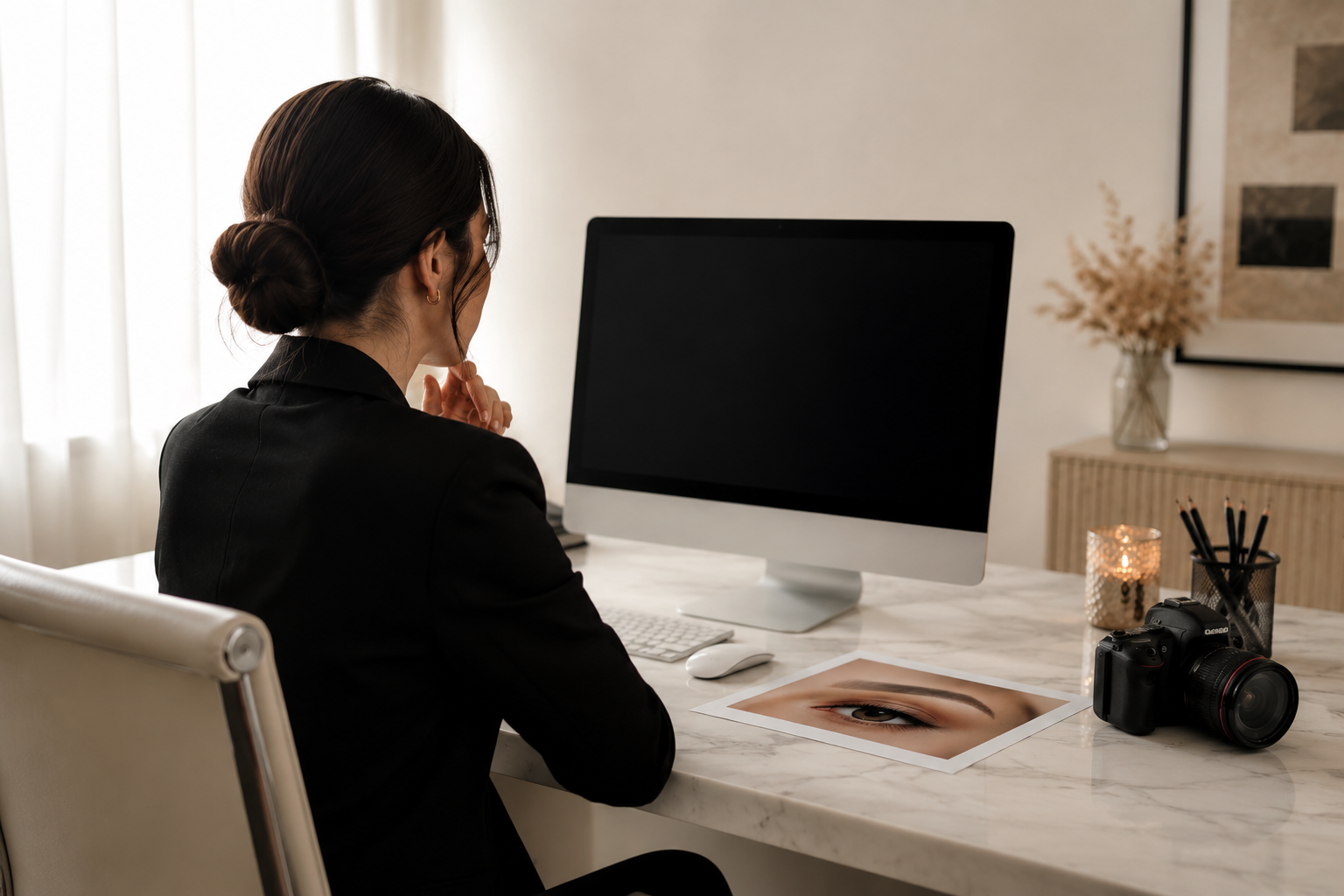
A watermark is useful identification, not complete protection. For a PMU studio, the stronger approach is to verify who can authorize each image, preserve the original files and permissions behind it, address complaints privately and factually, and use platform reporting or legal review only when the facts and business stakes justify escalation.
In the United States, original photographs can receive copyright protection once they are created and fixed, whether or not they have been published. That does not settle who owns a particular PMU image or who has permission to post it. Those questions can depend on the photographer, artist-studio relationship, client authorization, and written agreements.
Confirm Who Can Approve an Image Before You Post

Before publishing a before-and-after, healed-result photo, training graphic, or reposted artist image, pause long enough to clear three separate questions:
-
Who created the photograph or graphic? The person who performed the PMU procedure may not be the person who captured or edited the image.
-
Who has rights to use it in the studio's portfolio and marketing? Do not assume a studio owns every image made by an independent contractor, visiting artist, or outside photographer. An employee's work created within the scope of employment can qualify as a work made for hire, but employment status and scope are fact-specific. Commissioned work arrangements can also require particular conditions and written terms to qualify as work made for hire. Copyright Office work-made-for-hire guidance
-
Does the client authorize the proposed marketing use? Treatment consent and permission to use identifiable images in advertising are separate studio decisions. Use clear, understandable photo authorization where appropriate, and make sure your intended channels---such as social media, website galleries, education, or print---match what the client agreed to.
A practical studio agreement should address portfolio use before a dispute arises. For example, clarify whether an artist may keep using images after leaving the studio, whether the studio may use an artist's work in its own portfolio, and whether a photographer grants the studio a license for marketing.
For reposts, use a simple standard: credit is respectful, but it is not permission. A public account, a client relationship, or a tagged original artist does not by itself establish permission to reuse the image.
Build an Evidence File for Every Portfolio Asset
If a copied-photo complaint happens months later, you should be able to reconstruct the image's history without searching through personal phones, old messages, or disappearing stories.
For each publishable PMU asset, retain:
- The original capture file, where available
- The edited version and exported social-media version
- The date the image was created and first published
- Links or screenshots showing where the studio posted it
- The client's applicable photo authorization record
- Any photographer agreement, artist-studio agreement, license, or assignment
- Notes identifying the artist, photographer, editor, and account that posted the work
- The caption or attribution used when the image was published
Keep privacy-sensitive client and treatment records access-controlled. Your evidence file should help the studio support a legitimate claim without turning client information into a broadly shared marketing folder.
Use Watermarks for Identification, Not as a Guarantee
A restrained watermark can make it easier for viewers to identify the studio or artist behind an image. In U.S. law, identifying information about a work, its author, or its copyright owner can be copyright management information when conveyed with a display or digital copy. The statutory definition of copyright management information includes those identifiers.
Use the watermark as a consistent attribution layer:
- Place it where it does not hide brows, eyeliner, lip borders, or healed detail.
- Pair it with a clear caption naming the artist or studio when appropriate.
- Keep high-resolution originals in your records and consider lower-resolution exports for routine social posting.
- Apply the same naming and export process across artists so evidence is easier to locate later.
Do not treat a missing, cropped, or removed watermark as automatic proof of infringement. The legal meaning of altered attribution depends on the facts, including the information conveyed and the circumstances of removal.
Respond to Copying and Attribution Complaints Privately First
Public call-out posts can turn an uncertain ownership question into a larger reputational problem. Start with evidence, not assumptions.
If Someone Appears to be Using Your Image
- Capture the post as it exists. Save screenshots, the account name, URL, date, caption, comments that matter to the claim, and any visible crop or altered attribution.
- Compare it with your records. Confirm the original file, posting history, photographer or artist agreement, and client authorization.
- Contact the account privately and factually. State the image at issue, identify the requested correction---removal, replacement, or attribution---and give a clear way to respond.
- Use the platform's copyright process if needed. Instagram and Threads provide a form for reporting use of copyrighted work without permission. A report is a platform process; it does not itself determine ownership or infringement.
- Preserve the response trail. Keep copies of messages, platform reports, and any resolution.
Pinterest states that it may remove or disable access to reported content and may notify the person who saved it so they can submit a counter-notification. Removed Pins may also count as strikes under its repeat-infringer policy, subject to Pinterest's discretion. That is a reason to report only after verifying your records---not a reason to mass-report or threaten an account.
If Your Studio is Accused of Using Someone Else's Work
Treat the complaint as an evidence review, even if you believe the post was properly sourced.
- Preserve the live post and the complaint.
- Acknowledge receipt professionally without making unsupported admissions or accusations.
- Check who supplied the image, who created it, and what permission or license exists.
- Remove the post, add accurate credit, or correct the caption when your records support that action.
- If your studio has supportable permission, respond with the relevant facts rather than arguing publicly.
Avoid deleting the underlying records or turning the dispute into a comment-thread debate. A fast, factual correction is often more credible than a defensive public response.
Escalate When Ownership or Commercial Stakes are Significant
Move beyond private communication and platform tools when the dispute is repeated, commercially important, involves a former artist or photographer, affects a major campaign, or cannot be resolved from the agreements and records you have.
For U.S. works, copyright protection can exist without registration, but registration is generally required before filing an infringement lawsuit. Registration does not answer every ownership question, so obtain qualified legal advice when a contract, employment classification, or image license is disputed.
The U.S. Copyright Office presents the Copyright Claims Board as an alternative to federal court for certain copyright disputes up to $30,000. Eligibility and suitability depend on the dispute, so this is a point for jurisdiction-specific legal review rather than an automatic next step.
Reset Your Studio Photo Policy
Audit your next ten portfolio posts before they go live. For each one, confirm the source file, creator, client authorization, posting right, watermark or attribution treatment, and saved publication record.
Then assign one person to own image complaints. Give that person a written escalation path: document first, verify permissions, communicate privately, use the relevant platform process when warranted, and seek local legal guidance when ownership or commercial stakes remain unclear.
Professional PMU credibility is built through transparent consent, accurate attribution, and disciplined documentation---long before a watermark is cropped or a complaint arrives.
Legal Disclaimer
This article is provided for general informational and educational purposes only and does not constitute legal, tax, insurance, regulatory, or professional advice. Requirements may vary by jurisdiction and change over time. Consult a qualified local attorney, licensed insurance professional, accountant, or relevant regulator for advice tailored to your studio and circumstances.
