





Can You Get Tattooed Over Scars? What You Need to Know Before Booking

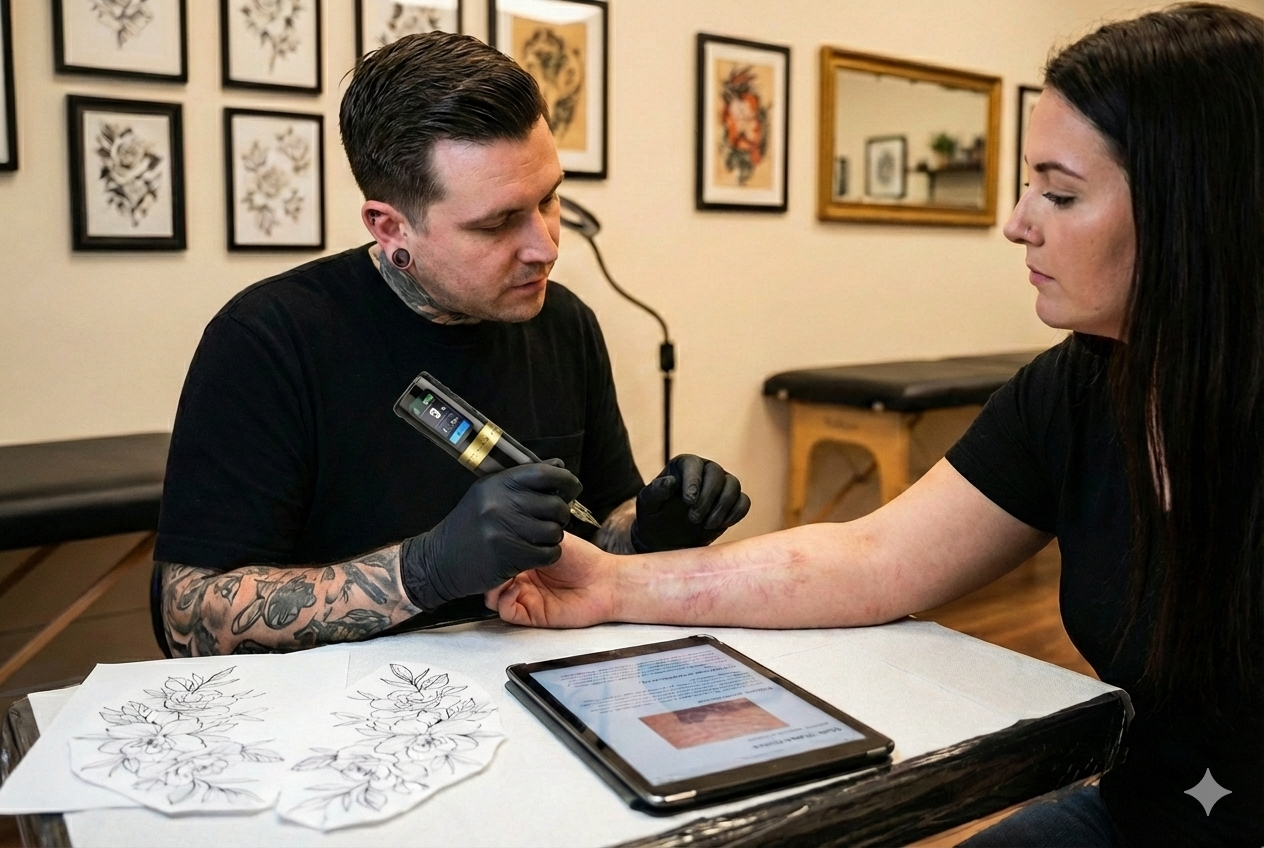
Scars carry personal stories, from surgeries to accidents. For many, covering these marks with art is a final step in reclaiming confidence. You can absolutely tattoo over most scars, but the rules for damaged skin are different. Success depends on timing and skin texture. This breakdown covers safety checklists, pain expectations, and the best design strategies to ensure your new ink looks beautiful and heals perfectly.
Quick Answer: Is Tattooing Over Scars Possible?
The short answer is yes. Most scars can be tattooed over successfully once they are fully healed. However, the texture of the tissue and the age of the mark determine how well the ink stays. Working with a specialist ensures the needle hits the right tattoo needle depth for the best result.
When Is It Safe? How Long to Wait to Tattoo Over Scar
Timing is everything. Even if the surface looks healed, deep tissue needs a year to stabilize. Tattooing too soon causes the design to warp or the ink to blur as the skin shifts. Waiting ensures the tattoo pigment stays sharp and permanent. Here is your readiness checklist.
The 12-18 Month Rule
The general rule in the industry is to wait at least one year. For deep surgical scars, two years is even better. During this time, the body is busy rebuilding collagen and blood vessels. If you interrupt this healing process, you could trigger more inflammation or even a new scar.
The Visual and Texture Check
You can often tell if a scar is "mature" just by looking at it.
- Red, Pink, or Purple: This means the scar is still active and has a high blood supply. Do not tattoo it yet. It will bleed too much, and the ink will likely reject.
- White, Silver, or Skin-Toned: This is the green light. It means the blood flow has moved away and the tissue is dormant.
- The Feel: Press on the area. It should feel stable. If it feels itchy, tingly, or painful when you apply pressure, the nerves are still repairing themselves. Wait until the sensation is neutral.
Tattoo Pain Over Scar Tissue: What to Expect
Scar tissue reacts differently to needles than healthy skin, which changes the sensation. Your experience depends on how the nerves healed after the original injury.
On a scale of 1 to 10, tattoo pain over scar tissue usually hits between a 6 and 8. For most people, this feels sharper than a standard tattoo. The intensity depends on where the scar sits on your body and how deep the original injury went.
- Nerve Sensitivity: Scars react to needles in two ways. Deep damage can sever nerves, making the area feel completely numb. In other cases, the nerves become hypersensitive. This causes a sharp, stinging sensation during the session.
- The Trauma Factor: Scar tissue is rigid and dense. This makes it difficult for the tattoo pigment to stay in place. The artist often has to work the skin harder or pass over the same spot several times. This extra work increases soreness and causes more swelling than usual.
Tattoo Over Keloid vs. Hypertrophic Scar: Identifying Your Type
Not all scars react the same way to a needle. Identifying what kind of tissue you have will determine if you can cover it directly or if you need to work around it.
Atrophic Scars (Safe)
These are sunken or pitted scars, like those from acne, chickenpox, or stretch marks. They are usually easy to tattoo over, but because the skin is thinner, there is a higher risk of "blowouts," where the ink spreads out and looks fuzzy.
Hypertrophic Scars (Caution)
These are raised and thick but stay within the boundary of the original wound. They are safe to tattoo once they are fully white and flat. However, the 3D texture will still be there; the tattoo will hide the color, but you might still see a bump in certain lighting. If stretch marks are part of the area you’re planning to cover, it’s worth to know something about it—especially around ink depth, linework choices, and what healing can look like on scarred texture.
Keloid Scars (High Risk)
Keloids are aggressive scars that grow much larger than the original injury. Tattooing over scars of this type is risky. The trauma of the needle can cause the keloid to grow even more. Most artists suggest tattooing a design around a keloid rather than directly on top of it. Always consult a dermatologist before proceeding if you have a history of keloids.
Burn and Surgical Scars
Burn scars create very thin, fragile skin that is often tight. These require an artist with a very light hand. Surgical scars, like those from a C-section or tummy tuck, are usually deep. Because they involve multiple layers of stitches, you must be certain the internal layers are fully healed before starting.
Potential Risks & Challenges of Tattooing Over Scars
Scar tissue is unpredictable because it lacks the organized structure of healthy skin. Knowing the risks of tattooing over scars helps you set realistic expectations for the final look.
Risk of Ink Blowout
In damaged tissue, the layers of skin are often loose or uneven. This makes it easier for the ink to migrate or spread deeper than intended. When this happens, the edges of your tattoo might look fuzzy or blurry, which is known as a blowout. Small, fine details are most likely to be affected by this shifting.
Uneven Color and Fading
Scar tissue is much denser than normal skin. Because of this, it can be difficult to get the tattoo pigment to settle evenly. Solid blacks may end up looking like a dark grey, or colors might appear patchy. Most people need a second "touch-up" session to pack in more color once the first layer heals.
The Physical Texture Remains
A tattoo is a great way to hide the color of a scar, but it cannot change the physical shape of the skin. If your scar is raised or indented, that 3D texture will still exist. Depending on how the light hits your body, you may still see a shadow or a bump where the scar sits under the art.
How to Choose the Right Design for Scar Camouflage
When thinking about how to choose the right design for scar camouflage, look for patterns that are organic. Natural shapes help mask the straight lines or odd bumps of a scar.
Camouflage Designs Hiding the Scar
- Floral and Botanical: Flowers and leaves are perfect. They have irregular edges and lots of detail that can follow the line of a scar perfectly.
- Animal Textures: Think of things like snake scales, bird feathers, or butterfly wings. The repetitive, busy patterns make it very hard for the eye to pick out a scar underneath.
- Watercolor Style: This style uses soft splashes of color rather than hard borders. It's great for masking the uneven edges of a large scar.
Creative Designs Using the Scar
Instead of hiding the mark, you can make it part of the art.
- Long surgical lines are perfect for "Zipper" or "Stitched" designs, making it look like a seam is opening.
- Straight scars can become the glowing blade of a lightsaber or a laser beam.
- If your scar is raised, use that 3D texture to your advantage. It can act as the rough bark of a tree trunk or winding roots, giving the tattoo a realistic feel.
The "Near, Not On" Strategy
For high-risk areas like keloids, the best approach is distraction. Place a bold, beautiful focal point right next to the scar. This draws the eye away from the mark without the risk of tattooing directly on sensitive tissue.
Designs to Avoid
To get the best result, stay away from certain styles:
- Geometric Shapes: Circles and straight lines need a flat surface. Any bump or pit in the scar will make these shapes look wobbly or crooked.
- Portraits: A scar running through a face can distort the features and ruin the person's likeness.
- Fine Line and Script: Very thin lines are fragile. In scar tissue, they are likely to blow out or disappear completely during healing.

Thunderlord Power Tattoo Ink Professional Tattoo Practice Ink Set – 5ML
Scar Camouflage vs. Tattoo Cover-Up: What's the Difference
If you prefer not to have a decorative piece of art, you can choose a more clinical approach. While both methods use needles to deposit tattoo pigment, they serve very different purposes.
| Feature | Artistic Tattoo Cover-Up | Paramedical Scar Camouflage |
| Primary Goal | To hide the scar under a beautiful picture. | To make the scar blend into the surrounding skin. |
| Ink Used | Standard colored or black inks. | Skin color tattoo ink or medical tattoo ink. |
| Best For | Hiding 3D texture and dark or uneven scars. | Flattened, white scars or stretch marks. |
| Visual Result | A visible piece of art (floral, animals, etc.). | A "natural" look where the scar becomes nearly invisible. |
| Specialist | Traditional tattoo artist. | Paramedical or medical tattoo specialist. |
The main difference lies in whether you want to make a statement or make the mark disappear.
- An artistic cover-up is great if you want to turn the area into a focal point and completely mask the skin's texture with busy patterns.
- Paramedical camouflage uses flesh colored ink tattoo techniques to match your natural skin tone. This is the best choice if you want the area to look like normal, unscarred skin rather than a tattoo.
Tips for Success: Before, During, and After Tattooing Over Scars
Taking the right steps before and after your session prevents further tattoo scarring and keeps your art looking sharp.
Preparing for Your Appointment
Finding the right artist is the most important step. Look for a specialist and ask to see their portfolio of healed scar cover-ups. If your scar is large or very sensitive, request a "patch test." The artist tattoos a small dot in a hidden spot to see how the tissue reacts over a few months. Also, start moisturizing the area daily weeks in advance to make the skin more flexible.
What to Expect During the Session
Because scar tissue is dense, be prepared for more intensity. Talk to your artist about using numbing cream or scheduling shorter sessions to manage pain. You should also be open to "freehanding." Standard stencils often don't sit flat on uneven scars, so a specialist may need to draw the design directly onto your skin to fit the 3D shape perfectly.
Proper Scar Tattoo Aftercare
Healing damaged tissue takes more effort. Expect more swelling and redness than a standard tattoo. For long-term scar tattoo aftercare, sun protection is mandatory. Scar tissue burns easily, and sun damage can cause the old scar color to reappear through the ink. Use SPF 50 daily to protect the pigment. Remember, touch-ups are normal—you will likely need a second pass to ensure the color is perfectly even.

Thunderlordpower Tattoo Ink kit 7 colors 1OZ/30ML per bottle
Healing and Reclaiming Your Skin
Choosing to ink over a scar turns a reminder of the past into a beautiful piece of art. Success comes down to patience. By waiting for the tissue to mature and picking a forgiving design, you can achieve a result that feels like a natural part of you. Find a skilled artist, follow the safety steps, and enjoy the confidence that comes with your new look.
FAQs
Q1: Can tattooing over a scar make it worse?
It can if the scar is not fully healed or if you are prone to keloids. The needle causes "micro-trauma," which can restart the inflammatory process. Always wait until the scar is white and flat.
Q2: Does tattoo ink fade faster on scars?
Yes, it can. Because the tissue is different from normal skin, the "hold" on the pigment isn't always as strong. You should expect to need a touch-up a few months after your initial healing.
Q3: Is it harder to tattoo over stretch marks?
Stretch marks are a type of atrophic scar. The skin is often very thin and "papery." While they can be covered, the artist must use a very light touch to prevent the ink from spreading too deep.
