







Why Does Permanent Makeup Change Color Over Time?

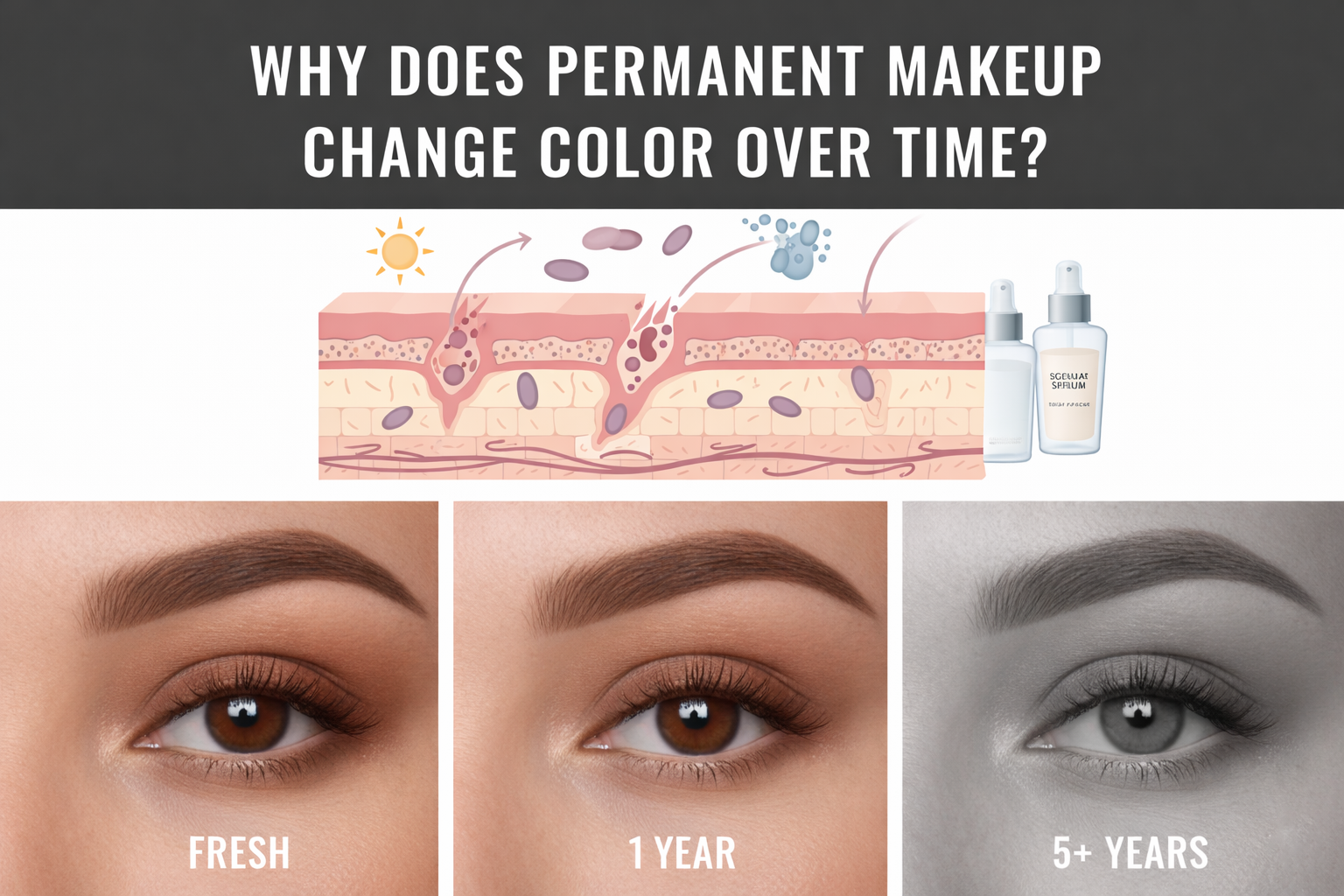
Key Takeaway
Permanent makeup changes color over time because pigments live in a changing tissue environment. Different color components fade at different speeds, the immune system slowly clears particles, and sun or skincare accelerates this shift. Initial choices like pigment formula, depth, and color selection determine if the long-term look stays natural or turns red, grey, or blue.
It helps to know that pigments for permanent makeup are not meant to stay exactly the same forever. Unlike a traditional body tattoo that uses heavy ink to stay bold for decades, PMU is designed to soften. A slight change in shade is a normal part of the process. However, there is a big difference between a soft, lighter version of your brown brows and brows that suddenly look bright orange or blue-grey. Your long-term result depends on how the pigment chemistry reacts with your unique skin and lifestyle.
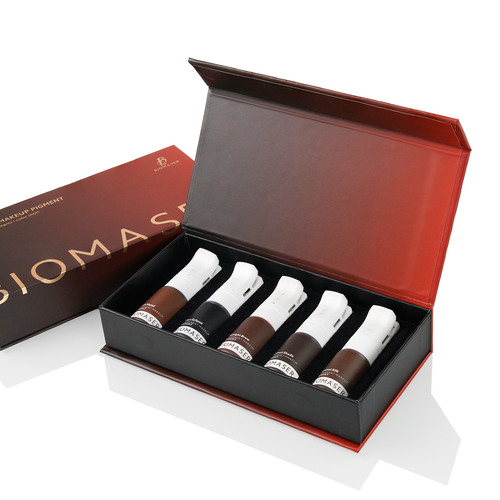
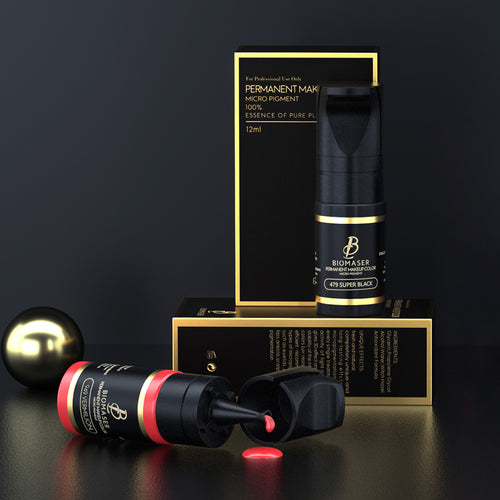
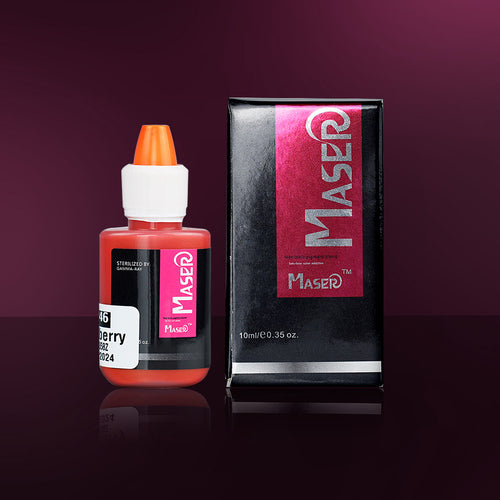
Biomaser Lips Pigment Collection
What Happens Inside the Skin After Getting PMU
Once the needle places the color into your skin, a complex biological process begins. Your body doesn't just let the pigment sit there; it immediately starts trying to clean it up.
The transition from a fresh procedure to a settled look involves several stages. Initially, the color looks dark because it is sitting in both the top layer (epidermis) and the middle layer (dermis) of your skin. As you heal, the top layer flakes off, and the color softens. Over the following months and years, your immune system's white blood cells slowly munch away at the pigment particles, carrying them to the lymph nodes. This is why the edges of a tattoo get softer and the color becomes less saturated as time goes by.
Pigment Composition: Brown Isn't Just One Color
The brown shade on your face is actually a "recipe" made of several different colors mixed together. Learning this mix helps explain why one color might disappear while another stays behind.
The Science of the Blend
Most PMU pigments used for eyebrows are created by mixing red, yellow, black, and sometimes white. These individual colors are made of different molecules. Some are small and easy for your body to break down, while others are larger and more stubborn. If the yellow and red molecules in a brown mix fade quickly, you might be left with only the black or grey parts. This is why a once-beautiful chocolate brown can start to look like a dull pencil lead color after a year or two.
Organic vs. Inorganic Components
There are two main types of PMU ink: organic and inorganic. Organic pigments are often brighter and more vivid but can be less stable under the sun. Inorganic pigments, often made from iron oxides, are more earthy and matte. They tend to be very safe for the skin but can sometimes leave a reddish or "salmon" residue as the other colors in the mix fade away. High-quality formulas try to balance these so they fade evenly, but cheaper inks or those meant for body art often shift to extreme hues like forest green or bright blue because they aren't balanced for the face.
Common Color Shifts: Why Brows Turn Red, Grey, or Blue
It can be frustrating to wake up and realize your makeup has changed its tune. These shifts usually fall into three main categories based on the chemistry of the ink and the depth of the work.
Warm Shifts: Red, Orange, and Peach
When brows turn red or orange, it usually means the cool tones in the pigment (like black or green) have faded away, leaving the warm iron oxides behind. This happens often with certain pigment lines or if an artist adds too much "warmth" to a mix to prevent it from looking grey. If a technician tries to do a PMU color correction by just layering more warm color over an old tattoo, it can sometimes make the orange hue even more stubborn and difficult to fix later on.
Cool Shifts: Grey and Ashy Tones
Ashy or "charcoal" brows are very common. This happens for two reasons. First, the warm tones (yellow and red) often fade faster than the carbon black base. Second, if the pigment is placed too deep in the skin, the light has to travel through more layers of tissue to reach it. This creates a "Tyndall effect," where the skin acts like a blue filter, making even a warm brown look cold and grey.
Blue and Green Tones
If eyeliner or brows look distinctly blue or green, the pigment was likely placed too deep or the artist used a low-quality ink with a heavy carbon base. Carbon black is a very small molecule that stays in the skin a long time. Without enough warm orange or red mixed in to balance it, it will eventually look like a blue ink stain. These cases are the hardest to fix and usually require laser or saline removal.
External Factors That Speed Up Color Changes
Your daily habits play a huge role in how long your makeup stays true to its original color. External elements act like a "bleach" on the pigment in your dermis.
- The sun is the biggest enemy of permanent makeup. UV rays break down the chemical bonds in the pigment, causing them to shatter and fade. This is why people who spend a lot of time outdoors without a hat or sunscreen see their PMU turn grey or red much faster.
- Your skin type also matters; oily skin tends to "blur" the pigment faster as the excess oil moves through the pores.
- High-end skincare is great for your complexion but tough on PMU. Ingredients like retinol, Vitamin C, and exfoliating acids (AHAs/BHAs) speed up cell turnover, which pulls the pigment to the surface and makes it disappear or shift colors prematurely.
- Active lifestyles can also impact your look. Frequent swimming in chlorinated pools or salt water can leach the color from your skin. Similarly, heavy sweating and regular sauna use open your pores and push the pigment out.
How the Artist's Technique Shapes Long-Term Color
The skill used during your appointment sets the stage for how your makeup ages. It involves the physics of your skin, not just the artistic design.
Proper Implantation Depth
If the needle goes too deep, the color looks dull and often turns a permanent, muddy blue or grey that is very hard to remove. If the work is too shallow, the pigment sheds away too quickly, leaving behind patchy and uneven spots.
Pigment Selection and Mixing
Using pigments for permanent makeup is different than using standard tattoo ink. PMU formulas are made specifically to fade softly over time. When an artist respects the manufacturer's chemistry instead of over-mixing different colors, the results stay predictable. Heavy manual mixing disrupts the formula balance and leads to strange color shifts as the ink ages.
Layering and Touch-ups
Every time you add a new layer of color, the structure inside your skin changes. Adding more ink to "fix" a color shift without diagnosing the root cause can lock in an unattractive grey or purple tone. In many cases, lightening the old pigment is a better choice than simply adding more layers to a saturated area.
What Is "Normal" vs. When to Worry
It is important to have realistic expectations about how your face will age. Not every change is a "botched" job; most are just part of the biology of tattooing.
- Normal evolution looks like a soft, lighter version of your original color. It might look a little cooler or a little warmer, but it still blends in with your hair and skin.
- You should start to worry if the color becomes a primary hue, like bright pumpkin orange, sky blue, or dark charcoal, or if the color becomes very patchy and uneven within the first year. If you see these drastic changes, a consultation for PMU color correction is a better move than simply trying to tattoo over it with more dark ink.
How to Keep Your Color Looking Fresh
Following a few simple rules can save you from needing expensive corrections later.
- For clients, the best thing you can do is practice good PMU aftercare and long-term protection. Always apply SPF over your healed brows or lips. Keep your "active" skincare—like your night creams with retinol—away from the treated area.
- For artists, the focus should be on choosing stable, well-researched pigments and controlling the depth of the needle. Instead of waiting until the color is completely distorted, most professionals recommend a "color boost" every 1 to 3 years to refresh the tones and keep the shape looking sharp.

FAQs about Permanent Makeup Color Changes
Q1: Is it normal for my permanent makeup to change color after a year?
Yes. Because the skin is a living organ, the permanent makeup is constantly being processed by your immune system and exposed to the environment. A gradual softening or a slight shift in tone is expected.
Q2: Why did my brows turn red or grey instead of just getting lighter?
Brown is a mix of colors. If the black part of the mix fades, the red stays (red brows). If the red and yellow parts fade, the black stays (grey brows). Sunlight and skin chemistry usually dictate which color leaves first.
Q3: Can skincare products make my PMU change color?
Yes. Skincare products that exfoliate the skin, like retinol or glycolic acid, speed up how fast your skin sheds. This can strip away the balancing colors in your PMU and reveal the more stubborn undertones underneath.
Q4: How do I fix PMU that has changed color?
Depending on how dark the old color is, an artist can use a "neutralizer" (a specific counter-color) to balance the tone. If the color is too dark or saturated, you may need a few sessions of removal before starting fresh.
