














How to Build a Professional PMU Workspace Setup

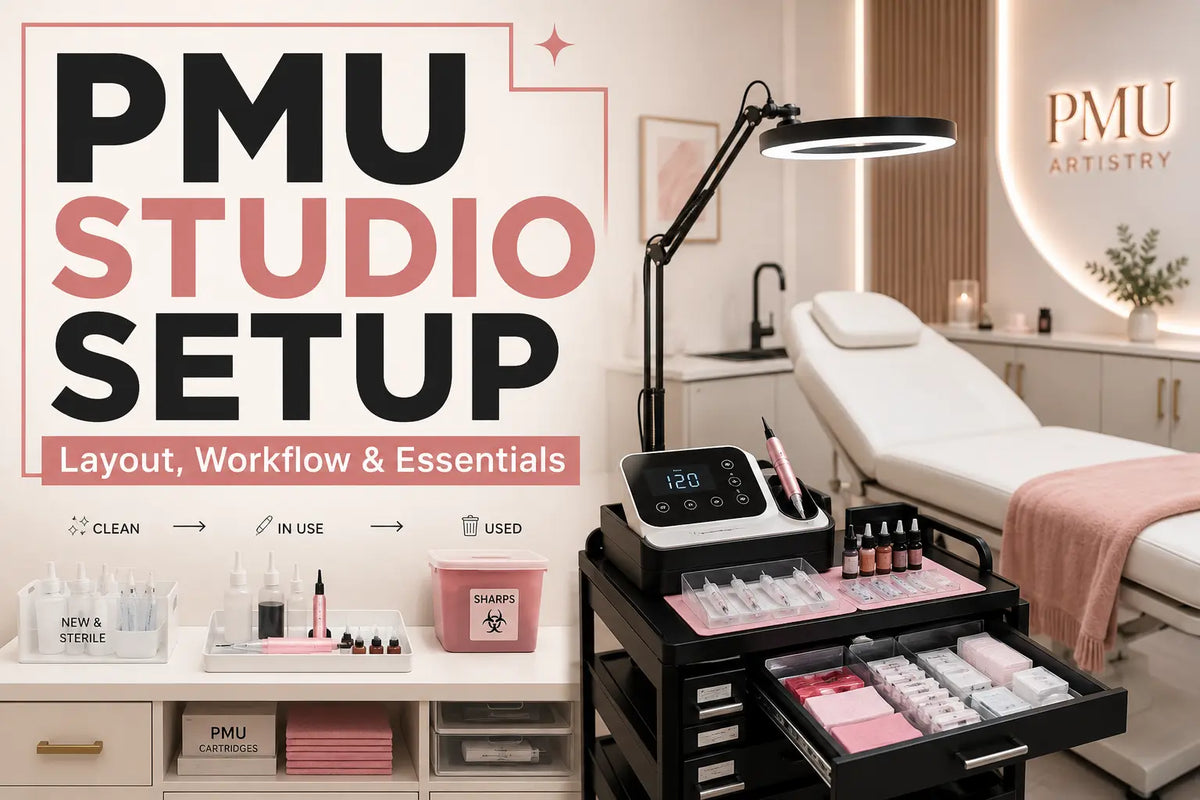
A professional PMU studio should make one complete appointment easy to set up, perform, document, reset, and restock. Start by mapping treatment, artist access, clean supplies, hand hygiene, used-item handling, documentation, storage, and entry and exit points. Then buy only the permanent makeup supplies and equipment that support your current service menu. Keep specialty items in reserve, separate clean and used flows, and adapt the layout to your room and facility responsibilities.
Map Your PMU Studio Workspace Before You Buy Equipment
The first step in a professional PMU workspace setup is a room map, not a shopping list. Trace one appointment from entry to exit and assign every function a location before adding furniture or equipment.
- Trace the complete appointment path. Mark where the client enters, waits, sits for treatment, reviews documentation or aftercare information, and exits. Include your own movement during preparation, treatment, documentation, cleanup, and restocking. A body-art facility planning framework similarly organizes the room around setup, treatment, storage, teardown, contamination prevention, and sharps or waste handling, so use that complete appointment cycle as your planning framework, not as proof of local approval.
- Mark the working points. Identify the treatment position, artist side, clean-supply location, hand-hygiene point, used-item area, documentation space, protected storage, and entry and exit paths. Place these points so the client-facing area stays calm and you can reach current-service supplies without searching.
- Separate material flows. Give unused supplies, active materials, used items, records, and replenishment stock distinct locations. The used-item path should never depend on placing something temporarily beside clean supplies.
- Test the map before purchasing. Walk the route with empty containers or placeholders. Note every unnecessary reach, blocked drawer, crossed path, client departure, or unclear handoff. Remove purchases that have no defined location and job.
This PMU studio layout gives you a practical starting point for a home room, salon suite, or dedicated studio. Facility details such as handwashing, waste handling, and permitted use can change the final arrangement, so treat the map as a planning tool and resolve local requirements before opening.
Build the Active Station Around Your Service Menu
Keep the active station limited to the categories used for the services you currently perform. The table below separates point-of-use items from reserve inventory so your station stays easier to inspect, reset, and restock.
| Function | Keep at the active station | Keep in reserve |
|---|---|---|
| Procedure delivery | The machine or manual-tool category required for the current service, plus compatible working supplies | Specialty tools and equipment for future services |
| Client positioning | The positioning and support items needed for the appointment | Additional positioning options without a current use |
| Visibility | Task lighting positioned for the treatment area | Backup lighting or specialty lighting |
| Surface control | A smooth, nonporous, easily cleanable work surface and appropriate surface protection | Extra protection materials and replacement supplies |
| Clean supply access | The current service's unopened or otherwise appropriately protected supplies | Duplicates, backup stock, and supplies for other procedures |
| Documentation | Current records, consent or service paperwork, and aftercare materials | Extra forms and archived records in protected storage |
| Used-item handling | The designated container or handling equipment required by your applicable process | Backup containers and replenishment stock stored separately |
Favor smooth, nonporous, easily cleanable surfaces in the procedure area and protected storage for clean supplies. These are conservative body-art control principles, while the exact standard depends on your jurisdiction. Model body-art guidance also connects procedure surfaces and storage with cleaning and maintenance decisions.
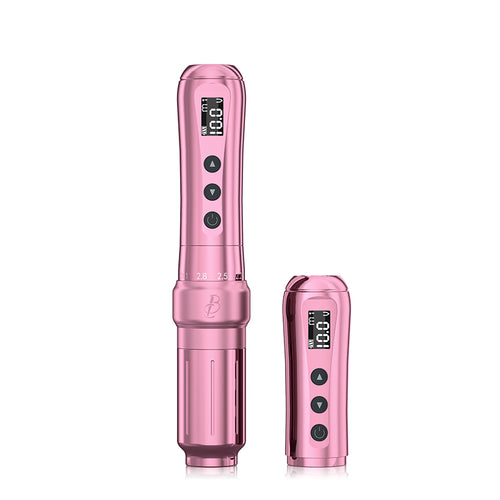
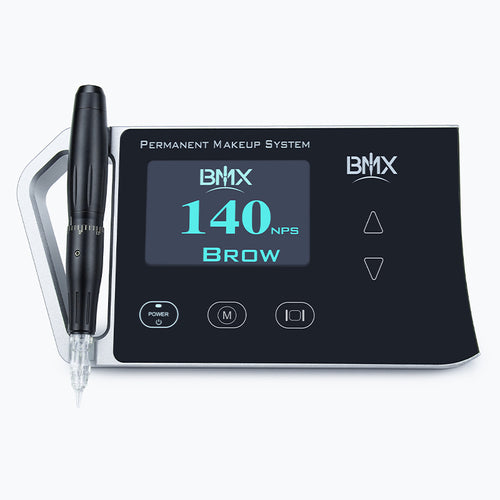
Match every machine, PMU cartridge, pigment, manual tool, and accessory to the service menu and the manufacturer's current instructions. For more focused buying criteria, review PMU machines selection priorities separately from compatibility decisions.
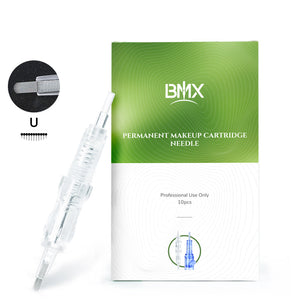
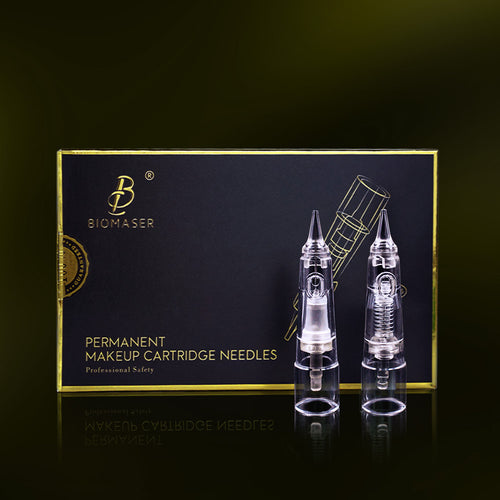
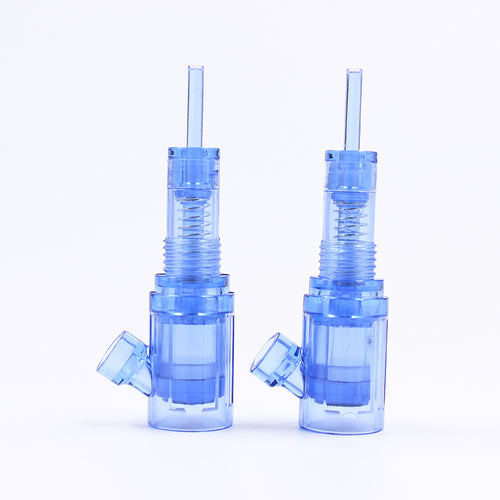
0411U-0.18mm U FLAT BMX Screw SMP Permanent Makeup Cartridge Needles for BMX Permanent makeup Machine 10PCS
Design the Clean-to-Used Workflow and Turnover
A controlled station has a visible path from clean supplies to active use to used-item handling, followed by reset and replenishment. Keep the sequence service-specific and separate from any claim that the workflow alone proves sanitation, licensing, or compliance.
Separate Clean Supplies From Used Items
Use three distinct working areas: protected clean storage, the active footprint, and a designated used-item or disposal path.
- Keep unopened or otherwise clean supplies in labeled, protected storage rather than on every available surface. Bring forward only what the current service needs.
- Keep active materials within reach of the artist without placing them in the clean backup area. This is the practical core of PMU workstation organization.
- Move used items directly into the handling or disposal path required by your local rules and the manufacturer's instructions. Do not return used items to clean storage.
Plan accessible hand hygiene and a nearby sharps container as part of the station map. Sink placement, equipment-cleaning arrangements, waste handling, and facility responsibilities vary by jurisdiction and room model. For example, Washington body-art guidance describes specific sink and workstation arrangements, which is useful as a reminder to resolve the rules for your own location rather than copy a state-specific requirement nationwide.
Make Turnover a Repeatable Routine
Write the reset sequence for each service and rehearse it before opening. A written routine can cover cleaning, storage, used-item handling, disposal, setup, and teardown, but it remains an operational aid rather than proof of compliance.
- Prepare the active station and documentation before the appointment begins.
- Complete the service while keeping clean supplies, active materials, and used items in their assigned locations.
- Finish documentation and aftercare preparation, then move used items through the applicable handling and disposal process.
- Restore the working surface and return clean backup stock to protected storage according to your facility process and product instructions.
- Replenish the active categories and record any item that was difficult to reach, missing, or unnecessary.
Keep a concise permanent makeup safety considerations reference nearby for general risk context, but use local authorities, facility policies, and manufacturer instructions for requirements that govern your workspace.
Match the Layout to Your Room and Business Model
The basic workflow stays the same, but the best PMU studio layout changes with household separation, shared-facility responsibilities, service breadth, and appointment volume. Choose the smallest arrangement that preserves treatment, movement, clean-supply access, used-item handling, privacy, and storage.
Small Home PMU Room
Use a compact active station with closed or vertical storage so current-service items remain accessible without taking over the room. Separate treatment and client activity from household activity as meaningfully as the space allows, including a defined path for supplies and used items. A home room can look polished and still be unsuitable for the intended use, so resolve permitted-use and facility requirements before opening.
If the room repeatedly forces you to cross household paths, search for supplies, or improvise used-item handling, fix that bottleneck before adding more equipment. A broader permanent makeup gear by service selection only becomes useful when your service menu justifies the added categories.
Salon Suite or Shared Beauty Space
Prioritize self-contained, labeled storage and a controlled way to move supplies between storage and the suite. Before opening, clarify who is responsible for cleaning, waste handling, handwashing facilities, records, shared surfaces, and access to common areas. The operator's facility policy may affect your setup as much as the furniture inside your room.
Keep your active station independent enough that shared storage or common-area traffic does not become part of the appointment path. If a responsibility is unclear, resolve that specific facility question before buying equipment intended to depend on it.
Dedicated Studio or Higher-Volume Practice
Use dedicated replenishment paths and more storage only when service breadth or appointment frequency creates a recurring retrieval, positioning, storage, or turnover bottleneck. A larger room does not require a larger active station. Keep reserve inventory separated by service and expand the working footprint only when the dry run shows that the current arrangement slows the appointment.
For multiple services or stations, preserve the same clean-to-used logic at each working point. Standardize labels and reset routines before expanding furniture or inventory.
Run a Pre-Opening Walkthrough of One Complete Appointment
A dry run can show whether your PMU studio works as a process before you invite a client. It tests workflow readiness, not sanitation, licensing, safety, or regulatory approval.
- Start at entry and prepare the room for one current service.
- Position the client and yourself, then reach for every active supply without leaving the treatment position unnecessarily.
- Complete the documentation step and identify where records and aftercare materials remain controlled.
- Move a representative used item through its designated handling or disposal path without placing it near clean supplies.
- Reset the working surface, return reserve stock, replenish the active categories, and prepare the room for the next appointment.
- Write down every search, blocked movement, crossed material flow, unsuitable surface, missing supply, or unclear facility responsibility.
- Fix the highest-impact workflow problem first. Delay purchases that do not solve an observed problem, then separately resolve local rules, facility policies, and manufacturer instructions before opening.
The strongest next step is simple: map one service, keep only its supporting categories active, and use the dry run to justify one layout change or purchase. Then complete the location-specific facility review before serving clients.
FAQs About PMU Studio Setup
Q1: What Do I Need for PMU Studio Setup?
Start with functional categories: a service-appropriate procedure tool, compatible working supplies, client positioning, task lighting, a cleanable work surface, protected clean storage, documentation materials, aftercare materials, and a defined used-item handling path. Build around the services you perform now, not a generic kit for every possible procedure.

1R Stainless Steel Tip BMX Screw SMP Permanent Makeup Cartridge Needles for BMX Permanent makeup Machine 10PCS
Q2: How Do I Organize a Small PMU Workspace?
Keep only current-service items in the active footprint and use labeled closed or vertical storage for reserve supplies. Preserve distinct clean, active, and used paths, then walk the appointment route to identify the one movement or storage problem that most needs correction.
Q3: What Should a Beginner Avoid When Setting up a PMU Room?
Avoid buying future-service equipment before you have a defined job and storage location for it. Also avoid crowding the station, choosing decorative storage without a workflow purpose, and treating a professional appearance as evidence that the room meets local requirements.
Q4: Does a Home PMU Studio Need a Different Setup Than a Salon Suite?
The core appointment flow is shared, but the responsibilities differ. A home room needs meaningful separation from household activity, while a salon suite requires clear ownership of shared cleaning, waste, handwashing, records, storage, and facility access. Resolve those location-specific conditions before opening or expanding.
