












Why Do My Tattoo Cartridge Membranes Keep Breaking?


Repeated tattoo cartridge membrane tears call for separating a suspect batch from the machine-cartridge setup. Start by grouping your existing failures by cartridge lot and machine model. If failures cluster in one lot while another lot of the same cartridge runs normally on that setup, treat the lot as suspect. If the pattern spans lots on one machine, check that combination and its documented stroke and extension limits before blaming cartridge quality.
The useful distinction is whether failures follow a lot, one machine, or a setting change. Use that pattern to decide which part of the setup to investigate first. Keep comparisons outside client work and use only equipment that is ready for use under its manufacturer's instructions.
Does the failure follow the cartridge lot or the machine?

Use packaging and your existing observations to put each failure beside its lot number, cartridge size, machine model, stroke setting, needle extension, operating setting, and approximate time before failure. Record successful use under comparable conditions too. Without that comparison, a box containing several failures tells you less than it appears to.
Needle extension means how far the needle projects beyond the cartridge tip. Stroke means the machine's travel distance during each cycle. Keep them separate in your notes, even when both are measured in millimeters.
Look for the branch that matches your records:
- One lot fails; another lot of the same cartridge works on the same setup. Set the suspect lot aside and report its number with the failure details. Matching the cartridge size and settings makes the lot the first factor to investigate. Include the successful comparison lot so support can review both records together.
- Different lots of the same cartridge fail on one machine but work on another. Focus on that machine-cartridge combination. Compare the machines' exact models and settings rather than treating both as equivalent rotary pens.
- Several cartridge types fail on one machine. Ask the machine manufacturer to assess the shared setup and drive components. This makes equipment condition worth checking; NSW Health's tattoo equipment guidance calls for equipment to be kept in good working order. Include the machine's service history with your observations.
- Failures follow a setting change. Record what changed and the previous setting. Check the new setting against the instructions for that exact machine and cartridge before arranging any further comparison.
- All failures come from one box on one machine, with no comparable successful use. You cannot yet separate batch from combination. Report that uncertainty rather than diagnosing either one from the same evidence.
Illustrative example: Lot A tears on Pen 1, while Lot B of the same cartridge size has run normally on Pen 1 at the same recorded settings. That makes Lot A the first lead. If both lots instead fail on Pen 1 and have run normally on Pen 2, the machine-cartridge combination becomes the stronger lead. These are examples of reasoning, not test results.
If a manufacturer requests a controlled comparison, use fresh, single-use cartridges outside client work and follow the specified procedure. Change one factor at a time. Changing the machine, cartridge size, and stroke together leaves you unable to tell which change affected the outcome.
Which stroke and extension limits apply to your setup?
Separate physical fit from the permitted operating settings. Record the exact cartridge type and machine model together, then check the stroke and extension guidance for that combination. This keeps a setting check tied to the equipment that actually showed the failures.
Check the instructions for your machine model and cartridge type for permitted stroke, needle-extension adjustment, cartridge requirements, and any restrictions on their combination. Use the stated adjustment method. Do not transfer a maximum from a different pen model or treat a machine's full adjustment range as permission for every cartridge.
If your pen has adjustable stroke, record the selected stroke rather than only the model's available range. If it has fixed stroke, record that value and concentrate on the remaining adjustments and cartridge requirements. When an instruction gives an extension limit, confirm whether it means needle projection or another measurement before comparing it with your notes.
If your recorded setup exceeds an explicit limit, correct it before any manufacturer-directed comparison and note which setting changed. Keep the earlier failure records so support can compare the original setup with the corrected one. If no applicable limit is given, request the value and its measurement method for your model.
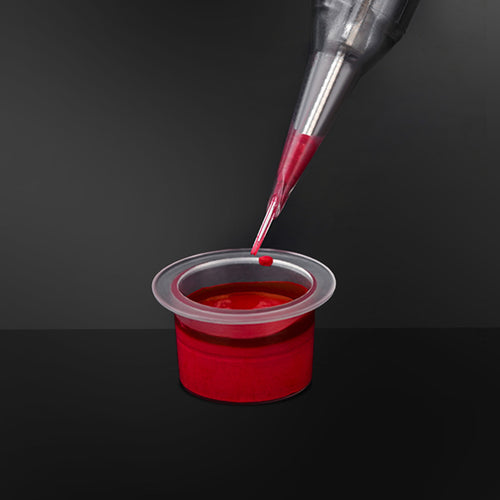
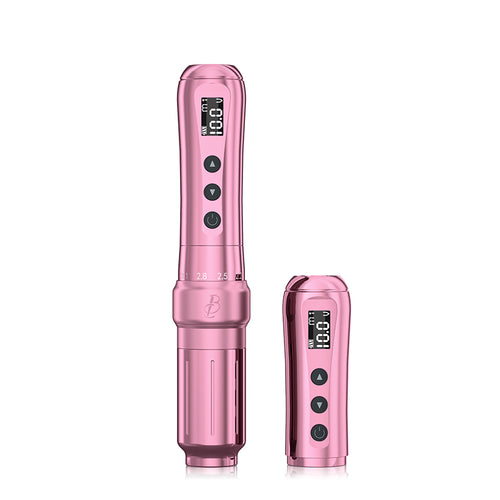
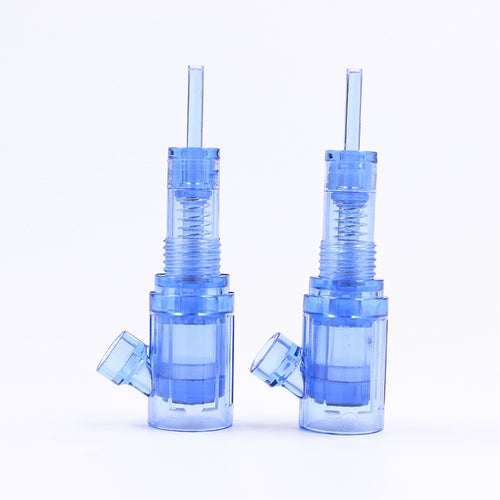
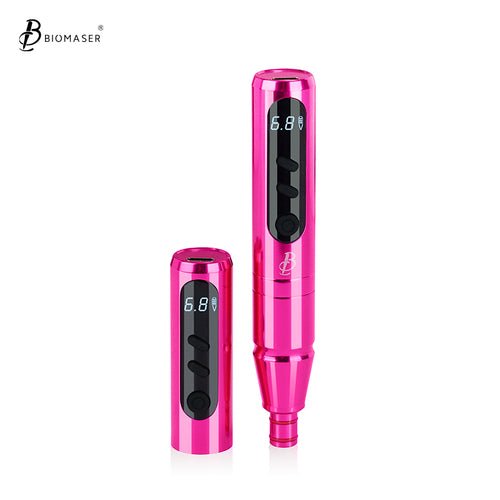
For fine-line or PMU work on compatible rotary pens, Biomaser Pinky Pro 1R cartridges provide a disposable single-needle round liner option with a full safety membrane designed to help prevent ink backflow toward the machine.
What should you send the manufacturer when the pattern is unclear?

Send the cartridge manufacturer the lot number, cartridge size, packaging photos, and a close-up of the visible damage if you can obtain it without handling the sharp. Distinguish a visible tear, a membrane that came loose, and fluid at the rear in your description. State whether you saw the damage before removal or found the fluid afterward; these observations give support different starting points for inspection.
Send the machine manufacturer the exact model, stroke, extension, operating setting, and the comparison pattern. Include when the failure appeared and whether the pattern changed after an adjustment. Avoid opening the drive assembly to supply an internal diagnosis.
A useful request is: “This cartridge size from these lots has repeated membrane failures on this machine at these settings. Here is the comparable successful use, if any. Is this combination supported, what stroke and extension limits apply, and what comparison or inspection should happen next?”
If the failures point to one lot, request a lot investigation. If they point to one machine across lots or cartridge types, request a machine assessment. If the evidence still overlaps, ask both manufacturers to review the same record before committing to either explanation.
FAQs
Do repeated membrane tears prove that a cartridge batch is defective?
No; several failures from one box on one machine do not separate a batch problem from a machine-cartridge problem. The batch becomes a stronger lead when another lot of the same cartridge size has worked on the same machine under comparable settings, but that pattern still does not prove a manufacturing defect.
Are needle extension and machine stroke the same setting?
No; needle extension is how far the needle projects beyond the cartridge tip, while stroke is the distance the machine travels during each cycle. Record them separately when investigating repeated membrane tears, and use the instructions for your exact machine and cartridge when checking permitted settings.
