





Why doesn't my eyebrow pencil color match my natural brows?

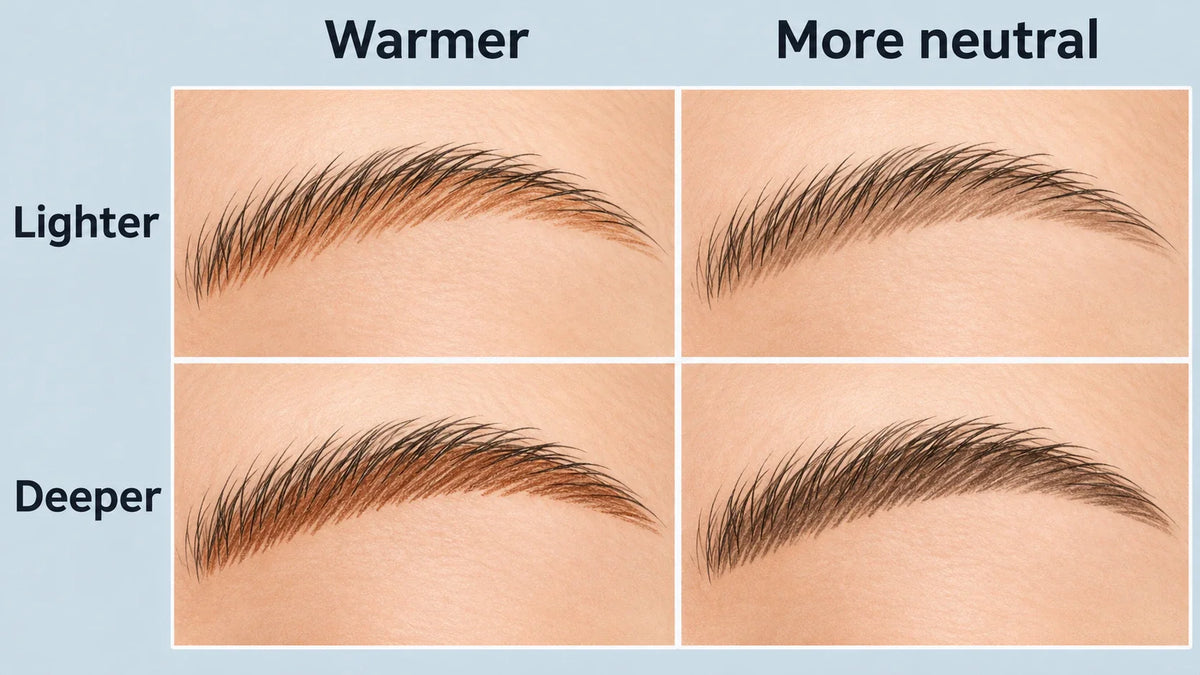
Your eyebrow pencil may look wrong because its undertone—its relative warmth or coolness—and its depth—how light or dark it looks—do not match your natural brows. You also judge the applied mark alongside visible skin and existing brow hairs, rather than as an isolated color. A small trial in your actual brow area can help you decide whether to apply less pencil, compare a different depth or change the undertone.
Separate the color cast from the darkness
Warmth or coolness and lightness or darkness are separate color attributes. For brow makeup, that distinction gives you two useful questions: does the pencil look too dark, and does its color lean in an unwanted direction beside your brow hairs?
An undertone mismatch means the color cast looks wrong. For example, a pencil might look noticeably reddish or orange beside your natural brows, even when its darkness seems close. Another candidate might look too cool or gray for the result you want. These are comparisons with your own brows, not fixed meanings attached to shade names.
A depth mismatch means the pencil looks too light or too dark. A shade can have a convincing color cast yet create a darker, more solid-looking brow than you intended.
The distinction matters because the fixes differ. A lighter version of an unwanted warm cast may still look too warm. Likewise, changing to a cooler shade will not necessarily solve excess darkness. If both qualities look wrong, compare candidates for both rather than assuming one change will resolve everything.
Why a promising swatch can look wrong in your brows
Surrounding colors can influence how a color appears. That makes visual context a useful part of understanding brow color: a mark on your hand has a different setting from pigment placed among brow hairs and the skin between them. It does not predict that every pencil will become warmer, cooler or darker in the brow area.
A hand swatch can help you narrow your options, but the applied brow answers a different question: how does this color look beside the hairs you want it to blend with? Where skin shows between hairs, you can see the pencil mark directly. Where hairs overlap it, you judge the combined appearance.

The amount applied also matters. Filling many gaps with repeated marks can create a more continuous area of color. If the cast looks close but the finished brow feels too heavy, compare a lighter application before deciding that the shade itself is wrong.
Compare a small trial and change the relevant variable
-
Start with a light mark in the brow area. Apply a small amount where you want a little filling, leaving nearby natural hairs visible for comparison. Keep the trial small enough that you can remove it and try again.
-
Keep the viewing conditions consistent. Use the same lighting for each candidate, then step back to your normal mirror distance. Look closely to compare the mark with individual hairs, and from farther away to judge whether the filled area looks more prominent than you want. Changing lighting between trials makes the comparison harder to interpret.
-
Name the mismatch before adjusting. If the color cast looks close but the brow is too dark or solid, remove the trial and repeat with less pencil or fewer marks. If even a light application remains too dark, compare a lighter depth. If the trial looks too reddish, orange or gray beside your hairs, compare a different undertone. When both cast and depth are wrong, check both in the next candidate.

-
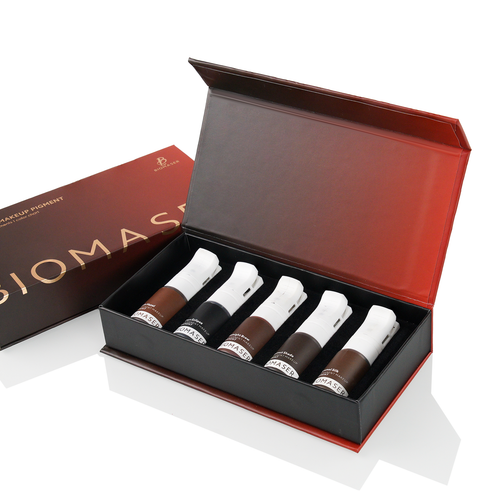
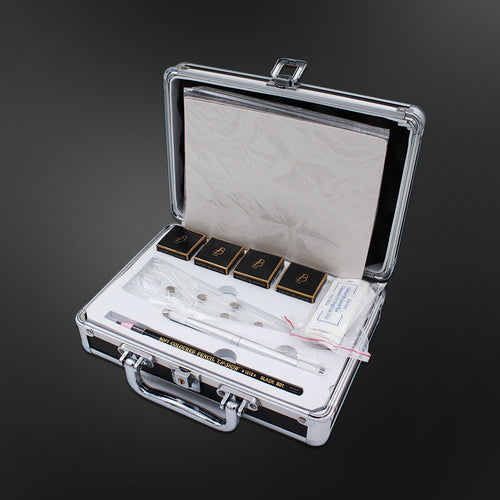
Compare colors by their applied appearance. Shade names are labels, so do not assume that a name identifies its undertone. For cosmetic drawing and filling, the Biomaser Eyebrow Pencil Set offers brown coffee, coffee, gray, dark coffee, black and light coffee options to compare. Try candidates with similarly light applications so that a heavier mark does not obscure the color difference.
Keep your existing brow hairs as the immediate reference when your goal is a natural match. Your preferred level of definition can guide how much filling you want; judge that separately from whether the pencil's color blends with your brows.
FAQs
How can I tell whether my eyebrow pencil is the wrong undertone or just too dark?
If the pencil looks too reddish, orange or gray beside your brow hairs, the undertone may be the mismatch; if the color cast seems close but the brow looks too dark or solid, the depth or amount applied may be the issue. A lighter shade with the same unwanted cast may still look wrong, so compare undertone and depth separately.
Why does an eyebrow pencil look different on my hand than in my brows?
A hand swatch is seen against different surroundings than a mark among brow hairs and visible skin, and color context can affect how it appears. Use a swatch to narrow options, then judge a light application in your brow area under consistent lighting.
What should I change first if my eyebrow pencil looks too heavy?
If its color cast looks right but the brow appears too solid, try fewer or lighter marks; if a light application still looks too dark, compare a lighter depth. If the cast itself looks wrong beside your natural hairs, compare a different undertone instead.
