





Long vs. Medium Taper PMU Needles: What Changes in Practice?
Key Takeaways
- Long Taper needles have a longer, more gradual point and generally support controlled pigment delivery and fine detail work.
- Medium Taper needles have a shorter point and offer a balance between pigment delivery and precision.
- Taper length can affect skin interaction, pigment saturation, and the number of passes needed.
- Needle diameter, configuration, pigment viscosity, and machine settings also influence performance.
- The right choice depends on the procedure, skin condition, and artist's working technique.
Choosing the right PMU needle can affect how pigment is deposited, how precisely artists work, and how the skin responds during a procedure. Long Taper and Medium Taper needles may look similar, but their different tip structures can create noticeable differences in practice. Knowing how long vs. medium taper PMU needles compare can help artists select suitable cartridges for different techniques, skin conditions, and working preferences.
What Is Needle Taper in PMU Cartridges?
Needle taper is a key specification in permanent makeup cartridges.
What Does Needle Taper Mean?
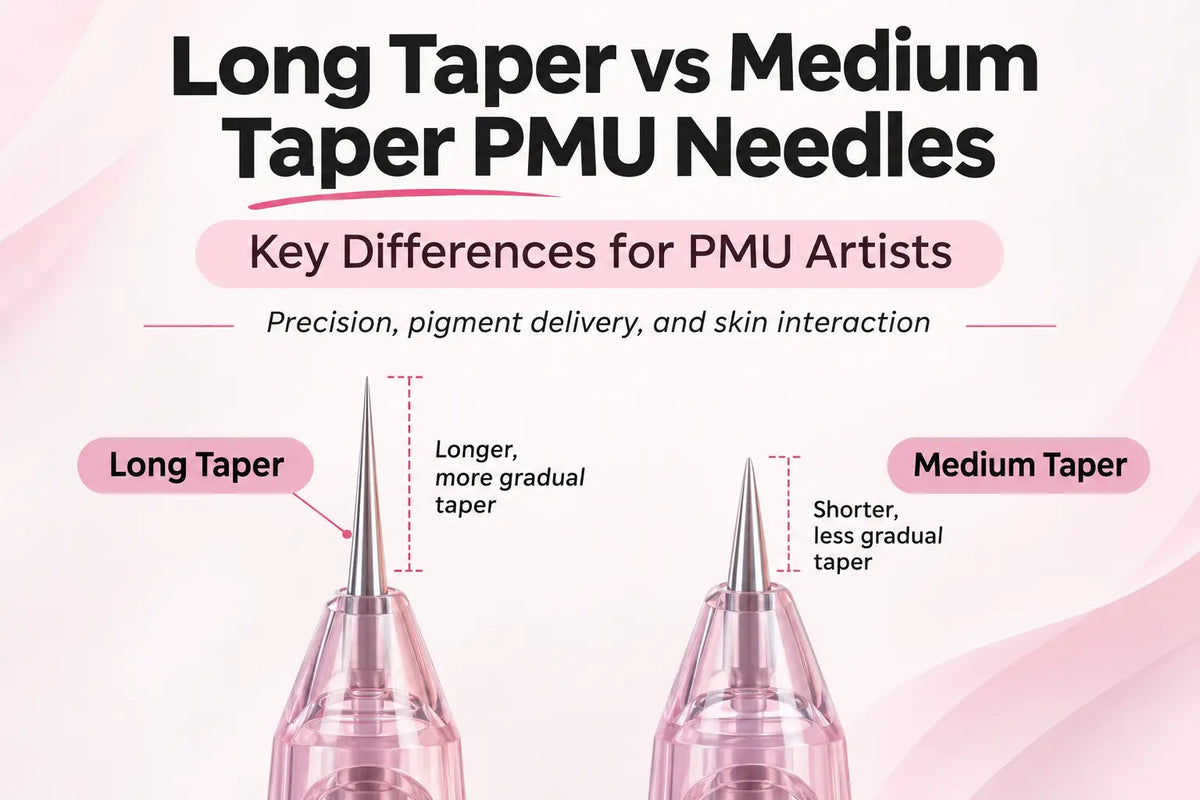
Needle taper refers to the length of the section that narrows from the full needle diameter to its pointed tip. A longer taper creates a more gradual point, while a medium taper has a shorter transition.
The exact measurements vary by manufacturer. Some product lines classify a 3.5 mm point as Medium Taper, while others use different measurement ranges. Artists should check the listed millimeter specifications rather than rely only on product labels.
Taper Length vs. Needle Diameter and Configuration
These three specifications serve different purposes:
- Taper length: Describes the length and shape of the pointed section.
- Needle diameter: Describes the thickness of each individual needle.
- Needle configuration: Describes how multiple needles are grouped, such as Round Liner (RL) or Round Shader (RS).
For example, two 0.30 mm Round Liner needles can have different taper lengths. Their diameter and grouping are the same, but their tip geometry and pigment delivery may differ.
Long vs. Medium Taper PMU Needles: Key Differences
Both taper types can be used in permanent makeup, but their different tip structures create noticeable differences in pigment delivery and working characteristics.
| Comparison | Long Taper | Medium Taper |
|---|---|---|
| Tip shape | Longer, gradual point | Shorter, less gradual point |
| Pigment delivery | Generally more restrained | Generally more direct |
| Color building | Gradual | Relatively efficient |
| Skin interaction | Smaller puncture tendency | Relatively larger puncture tendency |
| Common focus | Fine details and soft shading | Balanced lining and shading |
| Working style | Controlled, gradual passes | More direct pigment deposition |
These are general tendencies under comparable conditions, not guaranteed results. Needle diameter, grouping, machine performance, and artist technique can change the actual experience.


How Does Taper Length Change the PMU Working Experience?
The structural difference becomes more useful when artists consider what happens during a procedure. Pigment flow, stroke definition, skin response, and working efficiency all deserve attention.
Pigment Flow and Color Building
Long Taper needles generally deliver pigment more gradually. Their longer, narrower points can support controlled color building, making them worth considering for soft shading and delicate work.
Medium Taper needles have a shorter point and generally provide more direct pigment delivery. This can help artists build color more efficiently in some applications.
The choice also depends on pigment consistency and cartridge design. A thicker pigment, for example, may behave differently from a more fluid formula in the same cartridge.
Precision and Stroke Definition
Fine linework requires a stable needle and consistent hand movement. Long Taper needles can support delicate strokes because their gradual points offer a different contact profile.
Medium Taper needles provide a balance between point geometry and pigment delivery. They may suit artists who prefer a more direct working response.
Still, a longer taper does not automatically produce sharper lines. Diameter, needle count, grouping, machine stability, and hand control all contribute to the final result.
Skin Interaction and Recovery
Taper length can affect the size and shape of the puncture created by a needle. Under comparable conditions, a longer taper generally creates a smaller puncture tendency than a shorter taper. This may make Long Taper worth considering for procedures that call for delicate, controlled work. Medium Taper needles may create a relatively wider puncture and deliver more pigment per pass.
Repeated passes can increase cumulative skin trauma with either type. Artists should assess skin condition, avoid unnecessary repetition, and follow appropriate professional hygiene and safety practices.
Working Efficiency and Pass Requirements
Long Taper needles may require additional controlled passes to build the desired color intensity. This can be useful for gradual shading but may take more time. Medium Taper needles can provide more direct pigment deposition, potentially reducing the passes needed for certain applications.
Neither type guarantees a shorter procedure. Working area, pigment, skin response, machine settings, and artist experience all affect appointment time.
Which Taper Should You Choose for Different PMU Procedures?
Different procedures call for different levels of detail and pigment coverage. Matching taper characteristics with the intended result can help artists make more suitable cartridge choices.
Nano Brows and Hair-Stroke Techniques
Nano Brows require controlled movements and consistent, fine strokes. Long Taper needles are worth considering for artists who want gradual pigment delivery and delicate linework.
Needle diameter and configuration also matter. A fine single-needle cartridge setup can offer a different working result from a larger grouping, even when both use Long Taper points.
Powder Brows and Ombre Brows
Powder Brows and Ombre Brows rely on controlled pigment placement and gradual shading. Long Taper can support soft color building and delicate transitions. Medium Taper may suit artists who prefer more direct pigment deposition while maintaining control over their shading technique.
The desired pixel size, needle grouping, and hand movement should also influence the selection.
Lip Blush
Lip Blush requires even pigment distribution and careful attention to skin condition. Both taper types may be considered, depending on the artist's technique and cartridge configuration.
Long Taper can support gradual color building, while Medium Taper may offer more direct pigment delivery. Neither should be selected solely to speed up saturation, as excessive skin trauma can affect healing and the final appearance.
Eyeliner PMU
Eyeliner procedures require precise movements in a delicate area. Needle geometry, diameter, grouping, and machine compatibility all need careful consideration.
Both taper types may have applications in professional eyeliner work, depending on the specific technique. Artists should use suitable equipment, follow professional training, and maintain strict safety practices around the eye area.
What Other Factors Affect PMU Needle Performance?
Taper length is only part of the cartridge specification. Several other factors influence how a needle performs, so artists should assess the complete setup rather than focus on a single measurement.
Needle Diameter
Common needle diameters include 0.25 mm, 0.30 mm, and 0.35 mm.
Thinner needles generally support finer detail and can carry less pigment per individual needle. Thicker needles offer greater rigidity and may provide more direct pigment delivery. The same diameter can be manufactured with different taper lengths, creating different tip characteristics.
Needle Configuration and Grouping
Common configurations include:
- RL (Round Liner): Tightly grouped needles commonly used for lines and fine details.
- RS (Round Shader): More loosely grouped needles used for small shading areas and fills.
- Flat: Needles arranged in a straight row for specific lining and filling techniques.
- Magnum: Multiple rows of needles used for broader shading and coverage.
Needle count also affects the working area and the amount of pigment that can be deposited during a pass. Artists should match the grouping to the procedure and their preferred technique.
Pigment Viscosity
Pigment consistency affects how easily color moves through a cartridge. More fluid pigments and thicker formulas may behave differently under the same working conditions.
Artists should consider pigment compatibility and avoid assuming that changing taper alone will correct inconsistent flow.
PMU Machine and Artist Technique
Machine stroke length, operating speed, needle protrusion, hand speed, and working pressure can all affect pigment deposition. A cartridge that performs well with one machine or technique may feel different with another setup. Artists should follow equipment specifications and use controlled professional practice when testing a new combination.
How to Choose Between Long and Medium Taper PMU Needles
After comparing their working characteristics, artists can narrow their choices by looking at procedure requirements, skin condition, and the complete cartridge specifications.
Start With Your Intended PMU Technique
Consider Long Taper for fine details, delicate hair strokes, and gradual shading. Medium Taper may suit artists who prefer more direct pigment delivery and a balance between precision and coverage.
The needle configuration should match the intended result rather than being selected by taper alone.
Assess the Client's Skin Condition
Consider skin thickness, elasticity, sensitivity, and previous PMU work during the consultation. A delicate skin area may call for a more controlled approach, but Long Taper does not guarantee less trauma in every situation. The artist should assess the complete working setup and avoid unnecessary passes.
Check the Complete Cartridge Specifications
Use this checklist when selecting PMU cartridge needles:
- Exact taper length in millimeters.
- Needle diameter and configuration.
- Needle count and tip quality.
- Compatibility with the PMU machine.
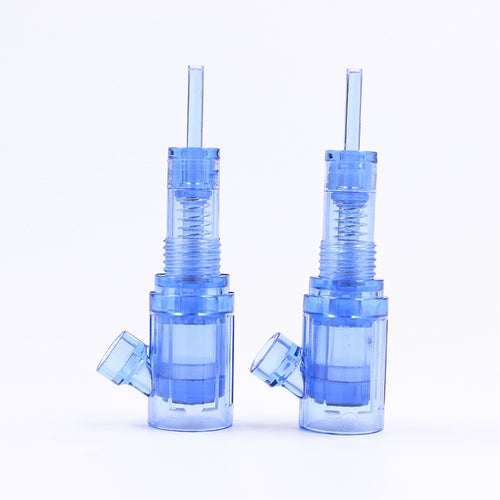
- Membrane design and cartridge construction.
- Sterile packaging and expiration date.
For professional use, check packaging integrity and follow the manufacturer's single-use instructions.
Keep Different Taper Options Available
Artists who perform several PMU techniques may benefit from keeping both Long and Medium Taper cartridges in their supplies.
A range of suitable configurations allows artists to select tools based on the procedure instead of forcing every technique into the same setup. Recording cartridge specifications and working observations can also help maintain consistency.
Match PMU Needle Taper to Your Working Goals
Long and Medium Taper needles offer different approaches to pigment delivery and skin interaction. Long Taper generally supports gradual color building and delicate work, while Medium Taper offers more direct pigment deposition and a balance between control and efficiency. Artists should consider needle diameter, configuration, pigment consistency, machine compatibility, and skin condition together.
FAQs About Long and Medium Taper PMU Needles
Q1: How Can I Identify the Taper Length of a PMU Needle Cartridge?
Check the cartridge box, individual packaging, or manufacturer's specification sheet. LT and MT commonly refer to Long Taper and Medium Taper, but the exact millimeter measurements should always be verified.
Q2: Can Two PMU Needles With the Same Diameter Have Different Taper Lengths?
Yes. Needle diameter and taper length are separate specifications. Two 0.30 mm needles can have different taper lengths and therefore different tip geometries and working characteristics.
Q3: Are PMU Needle Taper Measurements Standardized Across Brands?
No universal measurement system applies to every manufacturer. Taper categories and millimeter ranges can differ, so compare the actual measurements rather than relying only on LT or MT labels.
