




How Many PMU Cartridges Do You Really Need to Start Practicing?
Key Takeaways
- Most beginners do not need a large collection of PMU cartridges to start practicing.
- Start with 2–3 cartridge configurations that match your current training goals.
- Separate the number of cartridge types from the number of individual cartridges you need.
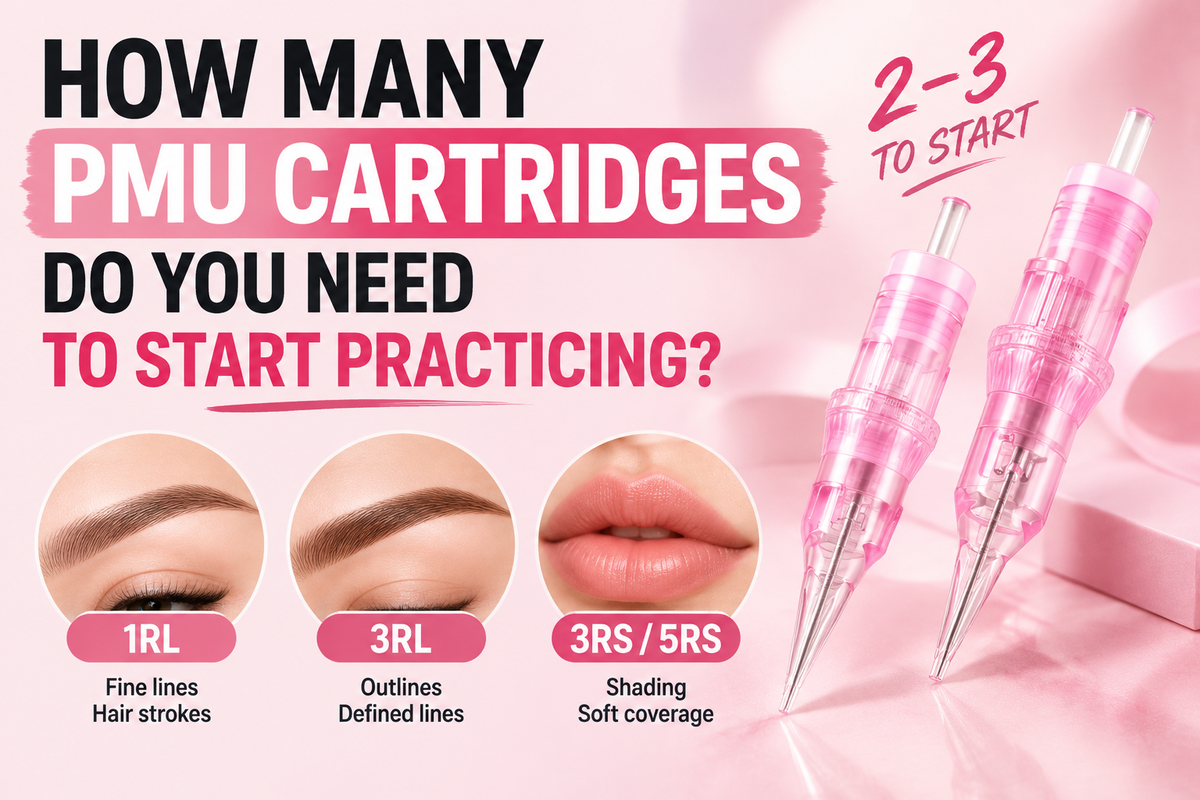
- 1RL and 3RL can cover basic line-control practice, while an RS configuration can add shading practice.
- Add new PMU needle configurations as your training expands instead of buying every size at once.
Starting PMU practice can feel confusing because cartridge packages come with many codes, sizes, and configurations. A beginner may see 1RL, 3RL, 5RL, RS, different diameters, and several taper options and assume a complete set must be necessary.
It usually is not. The better approach starts with the techniques you plan to practice. A small selection of PMU cartridges can give you repeated practice without filling your supply drawer with configurations you rarely use. Your cartridge needs can then grow as your training covers more techniques.
How Many PMU Cartridges Do You Actually Need to Start?
A beginner can usually start with 2–3 PMU needle configurations that match the skills being practiced. The total number of individual cartridges depends on how often you practice and how many you use during each session.
That distinction matters. Asking "how many PMU cartridges do I need?" can refer to two different things:
- How many types or configurations should I have?
- How many individual cartridges should I purchase?
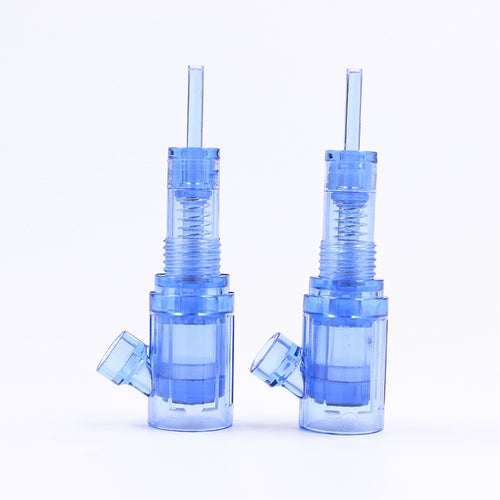
For example, a beginner could start with 1RL and 3RL for basic line-control practice. Adding a 3RS or 5RS configuration can provide another option for shading exercises. By design, RL cartridges cluster needle pins tightly toward a single point for detailed linework, while RS cartridges space the pins farther apart to distribute pigment gently across larger areas.
This small starting selection gives you several ways to practice without requiring a large beginner PMU kit.
| Training need | Possible starting configuration | Main practice use |
|---|---|---|
| Fine line control | 1RL | Fine lines and detailed work |
| More defined lines | 3RL | Broader line work and outlines |
| Shading practice | 3RS or 5RS | Soft shading and small-area coverage |
These examples are starting points rather than fixed rules. Your training program, machine, practice material, and technique should also guide the final choice.
Start With the PMU Techniques You Plan to Practice
Your training goals should determine your first PMU cartridge selection. This keeps your supplies focused and makes it easier to repeat the same exercises.
If You Are Starting With Brow Practice
Brow practice often includes fine strokes, outlines, and shading. A smaller RL configuration can help you focus on line control and consistency.
A 1RL uses a single needle, while a 3RL groups three needles together. In daily practice, artists rely on 1RL cartridges to etch crisp hair strokes and delicate lines, while switching to a 3RL when they need a slightly broader stroke or a bolder contour.
For a beginner focusing on brow practice, a simple starting selection could therefore include:
- 1RL for fine-line exercises
- 3RL for slightly broader lines
- 3RS or 5RS if the training also includes shading
This gives you a chance to practice different movements without buying a large range of PMU needle types.
If You Are Practicing Powder or Shading Techniques
Shading requires a different cartridge setup from fine-line work. Round Shader configurations have a more open needle grouping than Round Liners, which can distribute pigment across a broader area.
A 3RS or 5RS can therefore give beginners a way to practice shading techniques. The exact choice should follow the method taught in your training program.
Do not judge a cartridge by its needle count alone. Diameter also changes how a cartridge performs. In practice, the same configuration is available in several wire gauges—typically 0.20 mm, 0.25 mm, 0.30 mm, and 0.35 mm.
If You Plan to Practice Brows and Lips
Brows and lips can require different techniques, but that does not automatically mean you need a completely separate cartridge collection for each area.
A small liner selection can cover certain fine-line exercises, while a suitable shading configuration can add practice for broader pigment work. A common workflow is using Round Liners (RL) to lock in brow frames and crisp lip borders, while reserving wider configurations or thicker diameters for the actual shading. Start with the techniques included in your training instead of buying every permanent makeup cartridge available.


How Many Cartridges of Each Configuration Should You Buy?
After choosing your configurations, the next question becomes the actual number of cartridges. There is no single quantity that fits every beginner because practice schedules and training methods vary.
Think about four factors:
- How many practice sessions you plan to complete
- How many cartridges your training method uses per session
- How often you repeat the same exercise
- How cartridges are packaged by the supplier
A simple planning method can help:
Estimated cartridges needed = planned practice sessions × cartridges used per session + a small reserve
For example, someone practicing several times each week may need more cartridges than someone who practices occasionally. Someone comparing several configurations may also need more pieces during the early training stage.
Three Simple PMU Cartridge Starter Setups
Different beginners need different starting kits. These examples show how a small selection can match different training goals.
Basic Line-Control Setup
1RL + 3RL
This setup can work for beginners who are mainly practicing:
- Machine control
- Fine-line exercises
- Stroke consistency
- Brow or lip outline practice
The two configurations also let you compare single-needle and multi-needle line work. Current PMU references describe 1RL as a fine-detail configuration and 3RL as a broader line option.
Brow-Focused Setup
1RL + 3RL + 3RS or 5RS
This adds a shader configuration to the basic liner selection. It can support practice involving:
- Fine brow strokes
- Brow definition
- Shading exercises
- Comparing line and shading techniques
This setup gives a beginner more range without requiring a large PMU cartridge starter kit.
Brow and Lip Practice Setup
For brow and lip training, start with a small liner selection and add a shading configuration that fits the techniques taught in your course. For example, a training setup could include:
- A fine RL for detailed line practice
- A broader RL for outlines
- An RS or another appropriate shading configuration
The exact combination should follow your training curriculum and machine specifications. Cartridge selection also changes with diameter and taper, so a simple code such as "3RL" does not describe every characteristic of the cartridge.
Why Buying a Complete PMU Cartridge Set May Not Be Necessary
Large assortment packs can look attractive because they put many PMU needle configurations in a single purchase. For a beginner, though, more choices can create more unused supplies and more variables during practice.
A large set may contain configurations you rarely use during your current training. You may also spend time switching between cartridge sizes instead of repeating the same exercise with a consistent setup.
Focused practice has a practical advantage: you can compare your results more easily when fewer variables change.
That does not make a complete set useless. It can make sense for someone whose training already covers several techniques. A beginner simply does not need every available cartridge size on day one.
In simple terms: More PMU cartridges do not automatically create better practice. The better starting point is a small group that matches your current training.
When Should You Add More PMU Cartridges?
Your cartridge collection can expand as your training becomes broader. Adding another configuration makes sense when you have a clear reason for it. Consider adding a new cartridge when:
- Your training introduces a new technique.
- Your current configuration cannot provide the type of practice you need.
- Your instructor recommends a different configuration.
- You need a different needle count, diameter, or taper for a specific exercise.
- You regularly use a configuration that needs to be kept in your supply.
This approach also helps control spending. Instead of guessing which PMU cartridges for beginners might become useful later, you can make each new purchase based on a real training need.
Check PMU Cartridge Specifications Before Buying
Configuration is only part of the selection process. Two cartridges can have the same basic configuration and still differ in other specifications.
PMU Needle Configuration
Codes such as 1RL, 3RL, and 5RL describe the needle count and arrangement. For example, 1RL has one needle in a Round Liner arrangement, while 3RL has three needles in that arrangement. RS refers to Round Shader configurations.
PMU Cartridge Sizes and Diameter
PMU cartridge sizes can also refer to needle diameter. Current product documentation lists PMU cartridge diameters ranging from about 0.18 mm to 0.35 mm across different configurations.
That detail matters because needle count alone does not tell you how a cartridge will perform. A 3RL with one diameter can produce a different result from another 3RL with a different diameter.
Taper
Taper describes the shape and length of the needle point. It can affect the way the needle enters the practice surface and how pigment is delivered.
For that reason, do not choose PMU needle cartridges from the configuration code alone. Check the full product specification.
Machine Compatibility
Your cartridge must also fit your PMU machine. Check the machine and cartridge specifications before purchasing.
A cartridge described as "universal" generally refers to compatibility with a standard connection, but you should still confirm the specific connection used by your machine.
Build Your PMU Cartridge Kit Gradually
You do not need a large collection of PMU cartridges to start practicing. For many beginners, 2–3 configurations can provide a practical starting point: a fine RL, a broader RL, and a suitable shading configuration if shading forms part of the training.
The right answer to "how many cartridges for PMU practice?" depends on your practice schedule, techniques, and cartridge use per session. Start with the configurations you actually need, buy enough for repeated practice, and add new sizes as your training expands.
