





Virtual Consultations for PMU: What Translates, What Doesn't

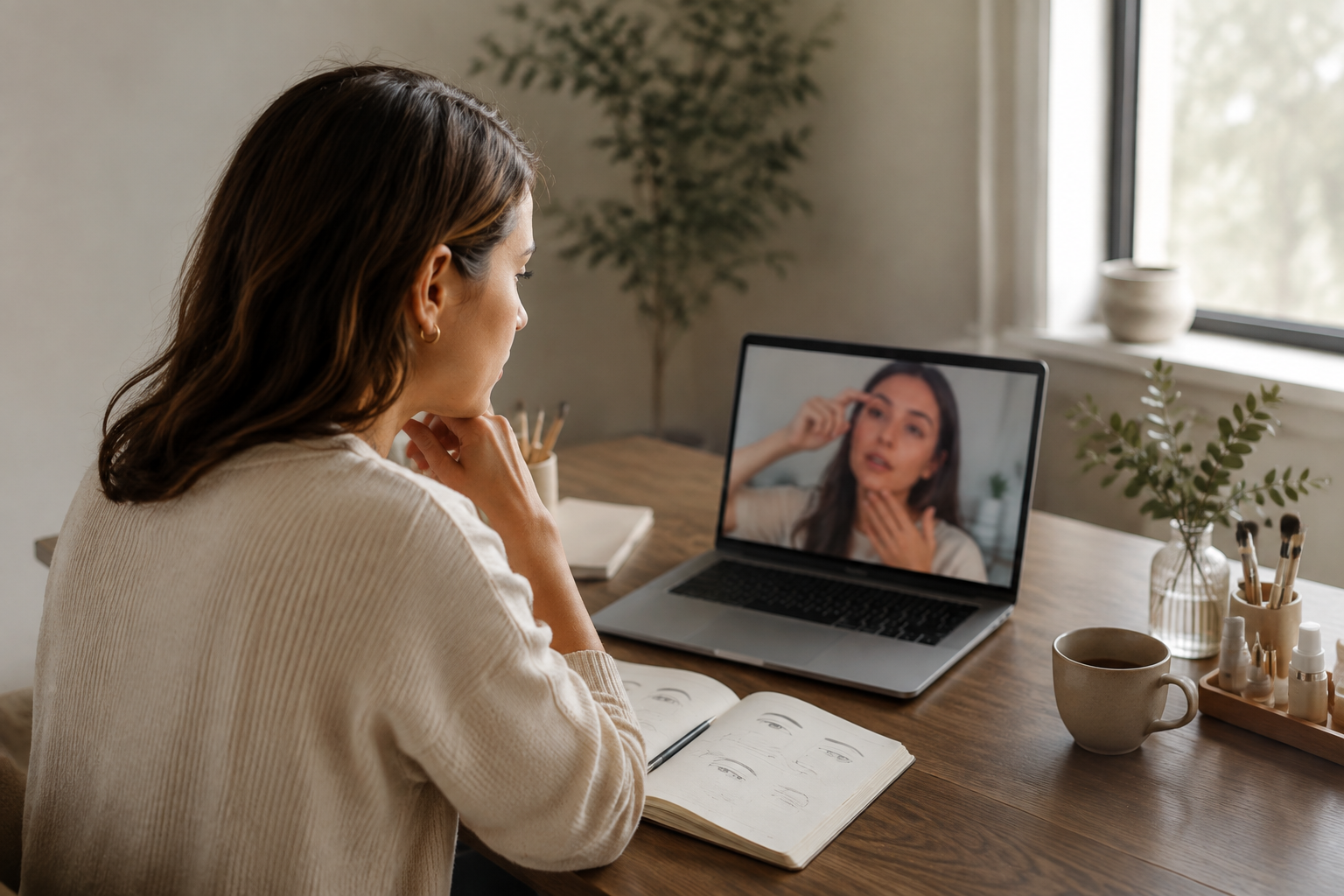
A virtual PMU consultation should be a preliminary screening, education, and booking stage---not final treatment clearance. It can help an artist understand a client's goals, collect history, explain policies, and identify questions that need follow-up. Final skin and treatment-area assessment, mapping, pigment and design approval, treatment-day eligibility review, and any required authorization should remain in person under the studio's local rules and written policy.
That boundary matters. PMU involves more than choosing a brow style or lip shade: infection risk can arise from unsterile equipment or contaminated inks, and permanent makeup may involve concerns such as allergic reactions, granulomas, keloid formation, and rare MRI-related swelling or burning. Those possibilities cannot be diagnosed, predicted, or ruled out through a call or client photographs alone. The FDA's tattoos and permanent makeup fact sheet also notes that tattooing practice, including permanent makeup application, is regulated locally in the United States rather than by the FDA.
Define the Remote Consultation's Job

Video calls, audio discussion, screen-sharing, and uploaded images can make a PMU consultation more efficient. Their value is communication: the artist and client can discuss goals in real time, review reference images, and clarify the studio's process before a treatment date is reserved.
They do not turn a remote conversation into a reliable assessment of skin, healed pigment, scarring, undertones, texture, facial asymmetry, or candidacy.
| What Translates Well Remotely | What Must Remain Provisional |
|---|---|
| Service goals and aesthetic preferences | Skin condition and treatment-area suitability |
| Desired treatment area and general style references | Natural skin tone, undertone, and pigment selection |
| Previous PMU, tattooing, removal, or procedure disclosures | The extent, depth, and behavior of prior pigment |
| Education about the process, healing expectations, and studio policies | Final brow mapping, lip outline, eyeliner placement, or SMP hairline design |
| Price ranges, deposits, cancellation terms, and scheduling | Final treatment eligibility and authorization |
| Preparation instructions and treatment-day expectations | Predictions about retention, healed color, symmetry, or session count |
A useful remote-consult outcome is not "approved for PMU." It is one of three operational decisions:
- Proceed to an in-person assessment and provisional booking.
- Pause until the client provides clarification or documentation required by studio policy.
- Reschedule or decline under the studio's written policy.
This language protects both sides. It tells the client that the conversation is meaningful while making clear that the treatment decision has not yet been made.
Build a Pre-Booking Intake That Supports Better Decisions

A virtual consultation works best when the artist receives structured information before the call. Do not rely on scattered messages, screenshots, or a client's memory during a video conversation.
Your intake can request information relevant to the service and the studio's decision process, such as:
- The service requested: brows, lips, eyeliner, scalp micropigmentation, or another PMU treatment.
- The client's desired outcome and reference images.
- Previous PMU, tattooing, removal, correction work, or relevant procedures in the treatment area.
- Current medications and health-history disclosures required by the studio's policy.
- Current concerns or changes the client believes may affect the appointment.
- Photographs or short videos of the untreated area, requested according to your studio's photo instructions.
- Acknowledgment of pricing, deposits, cancellation terms, communication expectations, and rescheduling triggers.
Ask for photos that help you prepare for the conversation, but label them correctly in your workflow: preliminary visual references, not diagnostic evidence. Makeup, filters, lighting, camera processing, screen settings, and image angles can all change how a treatment area appears remotely. A client's photo may show that prior work exists, for example, but it cannot settle how that pigment should be approached in treatment.
Use a Clear Client-Facing Notice
Add a short statement before the client submits photos or books a call:
This virtual consultation is for preliminary discussion, education, and booking preparation. Images and video cannot confirm treatment suitability, final shape, pigment selection, healed results, or eligibility. All services remain subject to an in-person assessment and final review on the appointment day.
The wording does not replace required consent. It simply prevents the remote stage from being mistaken for a final approval.
Keep Health Questions Within Scope
Remote intake can collect disclosures that help the studio decide whether more information, an in-person review, postponement, medical clearance, referral, or refusal may be appropriate under its policy. It should not become a diagnosis service.
Avoid telling a client what a skin condition is, interpreting medical records beyond your scope, or giving medical advice. If a disclosed concern is unclear or falls outside your policy, stop treating the video call as a booking decision. Explain the next procedural step instead: an in-person review, a request for required documentation, a reschedule, or a decline.
Handle health information, photos, and consultation records through a process appropriate to your location. Tell clients why information is collected, obtain any authorization your process requires, and set a consistent retention and access practice.
Discuss Design and Pigment Without Making Digital Promises

Clients often want reassurance about shape, color, and realism before they commit. A virtual consultation can provide useful education here, especially when the artist distinguishes concepts from final decisions.
You can discuss:
- The client's preferred brow, lip, eyeliner, or SMP style.
- Reference images and the difference between inspiration and a treatment plan.
- The studio's approach to prior PMU or corrective work.
- General factors that may affect the discussion of healed results.
- Why a treatment may require an in-person review before a design direction is confirmed.
- The expected appointment flow, including mapping and final approval.
Do not present a digital brow outline, color preview, or edited client photo as the final design. It is a communication aid. The client should understand that design placement, pigment discussion, and symmetry decisions must be revisited under in-person lighting, with the actual treatment area visible and assessed.
This is especially important with previous pigment. A remote image can begin the conversation, but it cannot establish the final treatment approach. Set the expectation early: "We will review your existing work in person before confirming whether we can proceed as planned."
For a stronger client conversation structure, use the same plain-language principles you would apply when communicating with PMU clients: explain what is known, what remains to be assessed, and what the next decision point will be.
Make the in-Person Appointment the Final Gate
The treatment-day consultation is where preliminary information becomes an actual studio decision. It should be documented as a distinct checkpoint, not treated as a formality because the client has already spoken with you online.
Before proceeding, review:
- Whether the client's disclosures, requested service, and treatment-area condition have changed.
- The intended treatment area in person.
- Prior PMU, scars, texture, or other visible factors that require an artist decision under studio policy.
- Final mapping and placement.
- The final design and pigment discussion.
- Client questions about the process, expectations, aftercare, and studio terms.
- Required consent and procedure records under applicable rules.
- Any condition that calls for clarification, postponement, referral, or refusal according to the studio's policy.
A treatment-day review should be capable of changing the plan. If the in-person assessment does not match the remote discussion, do not force the appointment to fit the original booking. A reschedule or refusal may be the more disciplined outcome.
That approach also prevents avoidable conflict. The client was told from the start that a virtual call does not guarantee treatment, a particular healed color, perfect symmetry, a set number of sessions, or a final pigment choice.
Launch the Workflow Only After Checking Local Requirements
Virtual consultations sit at the intersection of business operations, records, privacy, payment, consent, and body-art regulation. Do not assume that one online form or electronic signature process works everywhere.
In the United States, local jurisdictions regulate tattooing practice, including permanent makeup application. Louisiana illustrates why a studio cannot rely on a universal checklist: cosmetic tattooing is treated there as commercial body art, and pre-opening documentation includes proposed aftercare instructions and consent or procedure record forms. That is a jurisdiction-specific example, not a template for every studio.
Before opening virtual consultation slots, verify:
- Local body-art, establishment, operator, consultation, recordkeeping, and consent requirements.
- Whether your planned remote intake and electronic-signature process is acceptable where you operate.
- Privacy and photo-storage obligations that apply to your client records.
- Deposit, cancellation, refund, and rescheduling terms in your written policy.
- Whether your insurance coverage addresses virtual screening, record handling, and the services you plan to discuss.
- Who can access intake forms, photos, call notes, and final treatment records.
- How the studio documents a changed plan, postponed appointment, or declined service.
Insurance acceptance and regulatory compliance are separate decisions. A tool, form, or call platform does not make a studio compliant, insured, or clinically appropriate by itself.
Use a Hybrid Consultation Checklist
A practical workflow can stay simple:
- Client submits intake: goals, service history, required disclosures, photos, and policy acknowledgments.
- Artist reviews for fit: identify unanswered questions or issues that need a different next step.
- Virtual consultation: educate, set expectations, discuss general options, explain pricing and policies, and confirm that all decisions remain provisional.
- Provisional booking: collect the deposit only under the studio's stated terms and send preparation instructions.
- In-person final gate: reassess the current situation, inspect the treatment area, map, confirm design and pigment direction, complete required consent, and decide whether to proceed.
- Document the outcome: record the final decision, any changed plan, and the treatment or rescheduling outcome.
BIOMASER supports PMU professionals who build disciplined, client-centered studio systems. Put this hybrid checklist into your booking process, review local requirements and insurance coverage before offering remote slots, and keep final treatment decisions where they belong: in the studio, with the client present.
