






PMU Color Modifiers vs. Correctors: What's the Difference?

Key Takeaways
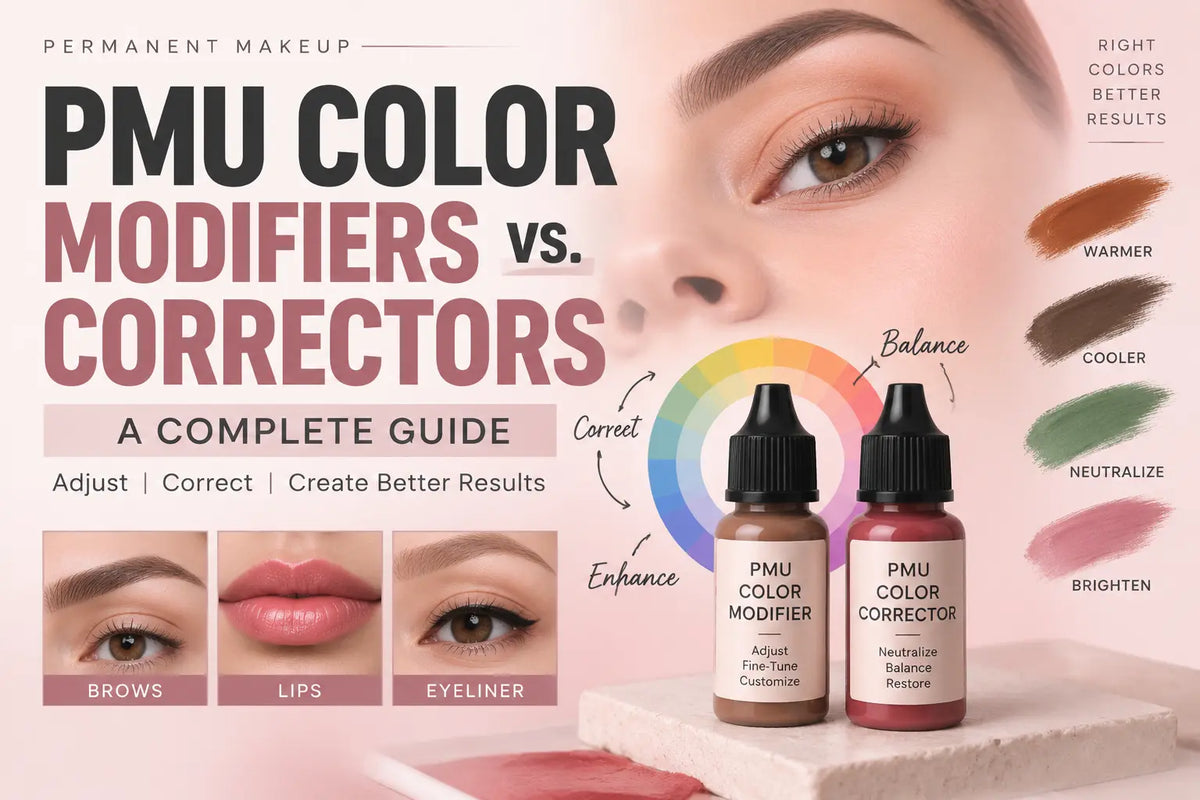
- PMU color modifiers generally adjust the warmth, coolness, or undertone of a pigment.
- PMU color correctors generally help balance an unwanted existing tone.
- Both can be used across PMU procedures, including brows, lips, and eyeliner, but pigment choices vary by treatment area.
- Color theory helps identify a correction direction, but skin undertone, existing pigment, saturation, and the desired healed result also matter.
- There is no universal correction formula that works for every client.
Choosing the right pigment is a major part of permanent makeup. A single color may look different after implantation because skin tone, undertone, existing pigment, technique, and healing can all affect the final appearance.
This is where modifiers and correctors become useful. Although the two terms are sometimes used interchangeably, they generally serve different purposes. A modifier helps adjust a pigment formula, while a corrector is typically selected to balance an unwanted color that is already present.
Knowing this difference can help PMU artists make more controlled pigment choices for brows, lips, eyeliner, and other procedures.
What Is a PMU Color Modifier?
A PMU color modifier is generally used to adjust the characteristics of another pigment. It can shift a formula warmer, cooler, or toward a different undertone without completely replacing the base color.
How PMU Color Modifiers Work
Modifiers can help artists fine-tune a PMU pigment according to the client’s skin and the intended healed shade. Depending on the pigment system, a modifier may be used to:
- Add warmth to a cool formula
- Reduce excessive warmth
- Shift an undertone
- Fine-tune a brown, pink, or other base shade
- Create a more suitable custom formula
For example, an artist may have a brown pigment that is close to the desired brow shade but slightly too cool. A compatible warm modifier can shift the formula in a warmer direction.
The goal is controlled adjustment. A modifier should not automatically be added simply because a client has a certain skin tone. Skin undertone, pigment characteristics, and the desired healed result should all be considered.
When Should PMU Artists Use a Modifier?
Modifiers are particularly useful during color formulation and customization. An artist may consider a modifier when:
- Creating a new pigment blend
- Fine-tuning an existing PMU pigment
- Adjusting warmth or coolness
- Compensating for a visible undertone
- Preparing a shade for a specific client
Some modifiers can also be used during correction work. This is why the line between “modifier” and “corrector” can become less clear in professional pigment systems. The product instructions for the specific pigment line should always take priority.

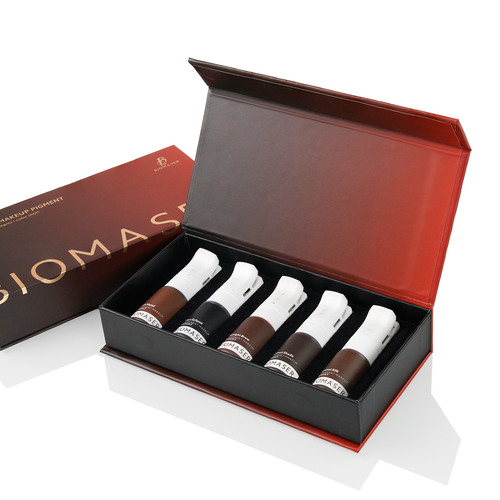
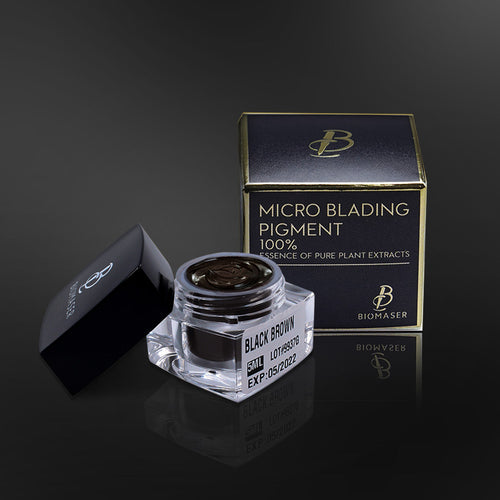
Biomaser Blend PMU Pigment - Brow & Eyeliner Ink for Light to Medium Skin Tones
What Is a PMU Color Corrector?
A PMU color corrector is generally used to address an unwanted color that already exists. This is especially common in healed PMU that has shifted toward a red, orange, blue, gray, or violet appearance.
Color correction uses complementary color relationships as a starting point. Red sits opposite green, blue opposite orange, and yellow opposite violet on a traditional color wheel. These relationships can help artists select a direction for balancing an unwanted tone.
How PMU Color Correctors Work
A typical PMU color correction process starts with identifying the dominant visible tone. The artist then considers its intensity, saturation, apparent depth, the condition of the tissue, and the desired final shade. For example:
- Blue or blue-gray may call for a compatible warm or orange direction.
- Red or red-orange may call for a compatible green or olive direction.
- Violet or purple may call for a yellow or golden direction.
- Cool or violet lip tones may require an appropriate warm corrective shade.
These are color-theory directions, not fixed recipes. A faint gray tone and a dense blue-gray brow may need very different approaches.
Common PMU Color Correction Examples
Brows are a common correction area because older brow pigment can develop visible red, orange, blue, gray, or violet tones as it fades. Lips and eyeliner can also show unwanted shifts that require a different corrective strategy.
The key is to identify the actual color rather than relying on a label such as “dark” or “faded.” A dark lip, for example, does not automatically have the same undertone as every other dark lip.
PMU Color Modifier vs. Corrector: Key Differences
The simplest distinction is to think of a modifier as a tool for adjusting a planned color and a corrector as a tool for balancing an unwanted color that is already present.
| Color Modifier | Color Corrector | |
|---|---|---|
| Primary purpose | Adjust a pigment | Balance an unwanted color |
| Typical starting point | Planned pigment formula | Existing unwanted tone |
| Main focus | Warmth, coolness, undertone | Neutralization and color balance |
| Common use | New PMU color customization | Previous or healed PMU correction |
| Main question | “How should I adjust this color?” | “What unwanted tone needs to be balanced?” |
Why the Terminology Can Overlap
PMU terminology is not fully standardized across pigment systems. Some products are called modifiers but are also used for correction, while other systems separate modifiers, correctors, and neutralizers into distinct categories.
For this reason, artists should not rely on the product name alone. Check the pigment’s intended application, formulation, instructions, and training materials.
The practical distinction remains useful: modification usually changes the direction of a planned color, while correction usually addresses an unwanted existing color.

How Color Theory Guides PMU Color Modification and Correction
Color theory gives artists a starting point for pigment selection, but it should be combined with client assessment. The color wheel shows relationships between hues; it does not provide a universal formula for every procedure.
Understanding Complementary Colors
Three common complementary color relationships are:
- Red and green
- Blue and orange
- Yellow and violet
In PMU color correction, these relationships can help reduce the visual dominance of unwanted tones. For example, a suitable orange-based pigment may help balance a blue-gray brow, while an olive or green-based pigment may help balance certain red brow tones.
Why Color Theory Is Only the Starting Point
The color wheel cannot tell an artist exactly how much pigment to use or guarantee a particular healed result. Other factors include:
- Skin undertone
- Skin depth
- Natural lip or brow color
- Existing PMU
- Pigment saturation
- Pigment composition
- Implantation technique
- Tissue condition
- Desired healed color
This is why two clients with a similar visible color may still require different pigment strategies.
How to Choose Between a Modifier and a Corrector
A simple assessment can help determine which approach makes sense for a particular procedure.
Start With the Existing Color
Ask:
- Is this a new PMU procedure or a correction?
- Is there existing pigment?
- What color is actually visible?
- How strong and saturated is the color?
- Is the existing PMU suitable for another layer?
A new brow procedure may need a modifier to fine-tune the selected shade. A healed blue-gray brow may need a corrective approach instead.
Define the Desired Healed Result
The target color matters just as much as the current color. Consider:
- Desired hue
- Desired warmth or coolness
- Color intensity
- Skin undertone
- Treatment area
- Expected healed appearance
A corrector is usually not the final target color. Its role may be to reduce an unwanted tone so the artist can later achieve a more suitable final shade.
Adjust or Neutralize
A practical rule is:
- Adjust the formula → consider a modifier.
- Neutralize an unwanted existing tone → consider a corrector.
In some cases, both may have a role. The exact approach should follow the pigment system and the client’s individual assessment.

How Modifiers and Correctors Work Across Different PMU Procedures
Modifiers and correctors are not limited to eyebrow procedures. The same basic color principles can apply to brows, lips, eyeliner, scalp micropigmentation, areola pigmentation, and scar-related work, but pigment selection must match the treatment area.
Brows
Brows are one of the most common areas for PMU color correction. PMU brow pigments are often brown-based, and artists may need to manage warm, cool, red, orange, blue, or gray undertones.
A modifier may help fine-tune a new brow formula. A corrector may help balance an unwanted healed tone from previous microblading, powder brows, or another brow procedure.
The artist should assess the existing pigment’s color and saturation rather than automatically choosing the opposite color on the color wheel.
Lips
Lip PMU requires a different approach because the natural lip color contributes to the final appearance. Natural lips may contain pink, red, brown, blue, violet, or gray characteristics, sometimes in uneven patterns.
A modifier can help adjust a lip pigment’s warmth or tone. A corrector may help balance certain cool or dark areas as part of a neutralization plan.
A pink pigment placed over naturally purple-toned lips, for example, may appear cooler than expected after healing. This is why the natural lip color needs to be included in the pigment assessment.
Eyeliner
Eyeliner uses a different pigment strategy from brows and lips. Dark black or brown pigments are common, and color shifts can become visible as the pigment fades.
Some healed eyeliner may develop blue or green tones. In selected cases, a warm corrective direction may help balance that shift. Product formulation and safe application are especially important around the eyes. Use correctors cautiously around eye tissue. Avoid high-concentration corrective blends for eyeliner work whenever possible.
Other PMU Applications
Color modification and correction principles can also apply to areas such as:
- Scalp micropigmentation
- Areola pigmentation
- Scar camouflage
- Scar correction
These applications have different anatomy, pigment requirements, and healed-result goals. Pigments should therefore be selected for their intended use rather than treated as interchangeable products. Professional pigment catalogs commonly separate brow, lip, eyeliner, scalp, areola, and scar pigment categories.
Common Mistakes When Using PMU Modifiers and Correctors
Small color adjustments can have a large effect, so controlled decision-making matters.
Treating Color Rules as Universal Formulas
“Blue needs orange” is a useful color-theory starting point, but it is not a complete treatment plan.
The artist still needs to assess how blue the pigment is, how saturated it is, how deep or dense it appears, and if another pigment layer is appropriate.
Overusing a Modifier or Corrector
Too much corrective color can create another unwanted tone. A strong warm modifier, for example, may push a healed result too warm if the original cool tone was mild. Concentrated modifiers may require especially small amounts.
Covering Instead of Correcting
Adding a darker pigment over an unwanted color does not necessarily solve the color problem. It may simply add more pigment to an already saturated area.
A correction plan should first consider the existing color, saturation, tissue condition, and desired result.
Ignoring Existing PMU
Old PMU should be assessed for:
- Color
- Saturation
- Apparent depth
- Age
- Shape
- Scarring
- Tissue condition
- Previous correction work
Dense, very dark, deeply implanted, misplaced, or scarred PMU may not be a good candidate for another pigment layer.
When PMU Color Correction May Not Be the Right Approach
Color correction can be useful, but adding more pigment is not appropriate for every case. Some clients need a different plan after a full assessment of the existing work.
Consider Additional Assessment When PMU Is
Extra caution is needed when existing PMU is:
- Extremely saturated
- Very dark
- Deeply implanted
- Heavily layered
- Significantly scarred
- Poorly positioned
- Uneven in texture
Adding a corrective color without assessing these factors can make future work more difficult.
When Lightening or Removal May Be More Appropriate
If the existing pigment is too dense, too dark, or otherwise unsuitable as a base, lightening or removal may need to be considered instead of adding another color.
This decision should be made by a qualified professional after assessing the skin and existing PMU. Not every correction can be completed in one session, and some cases may require staged work and healed-result evaluation.
Choose the Right PMU Color Strategy for Every Client
The most useful approach is to treat color selection as a step-by-step assessment rather than a fixed recipe. This keeps pigment choices specific to the client and procedure.
Assess → Identify → Decide → Select → Adjust or Neutralize → Apply → Heal → Reassess
If the goal is to change the direction of a planned pigment, a modifier may be appropriate. If the goal is to reduce an unwanted existing tone, a corrector may be more appropriate.
For brows, lips, eyeliner, and other PMU procedures, the same basic color theory can provide direction, but the pigment and application strategy should match the treatment area.
FAQs
Q1: Can PMU Modifiers and Correctors Be Used for Brows, Lips, and Eyeliner?
Yes. Color modification and correction principles can apply to multiple PMU procedures, including brows, lips, and eyeliner. The pigment selection and correction strategy should be adapted to the treatment area and the client’s natural and existing color.
Q2: What Color Should Be Used to Correct Blue, Gray, or Red PMU?
A blue or blue-gray tone may call for a compatible warm or orange direction, while certain red tones may call for a green or olive direction. These are starting points from color theory, not universal formulas. Saturation, depth, skin characteristics, and the desired healed shade must also be assessed.
Q3: Can the Same PMU Pigment Formula Be Used for Every Client?
No. Pigment choices should be adjusted to the client’s skin, natural color, existing PMU, treatment area, pigment characteristics, technique, and desired healed result. A formula that works well for one client may not produce the same result for another.
