






Scar Alopecia SMP Visual Restoration: Pigment Density Matching and Scar Tissue Protocols

Introduction
After a car accident, a surgical procedure, or a burn, many clients' most persistent concern isn't the scar itself — it's the hair that will never grow back. Scar alopecia is secondary hair loss: the follicles were destroyed when the skin was damaged, and they lack the capacity to regenerate because the follicle stem cell population in the bulge region was eliminated along with the tissue.
For these clients, the traditional hair restoration options don't apply. Hairpieces are natural-feeling solutions that require constant maintenance and create their own social management burden. Hair transplant requires viable donor follicles and adequate blood supply in the recipient site — typically has neither. Medications like finasteride and minoxidil work by preserving living follicles and encouraging growth; they have nothing to offer where the follicles are already gone.
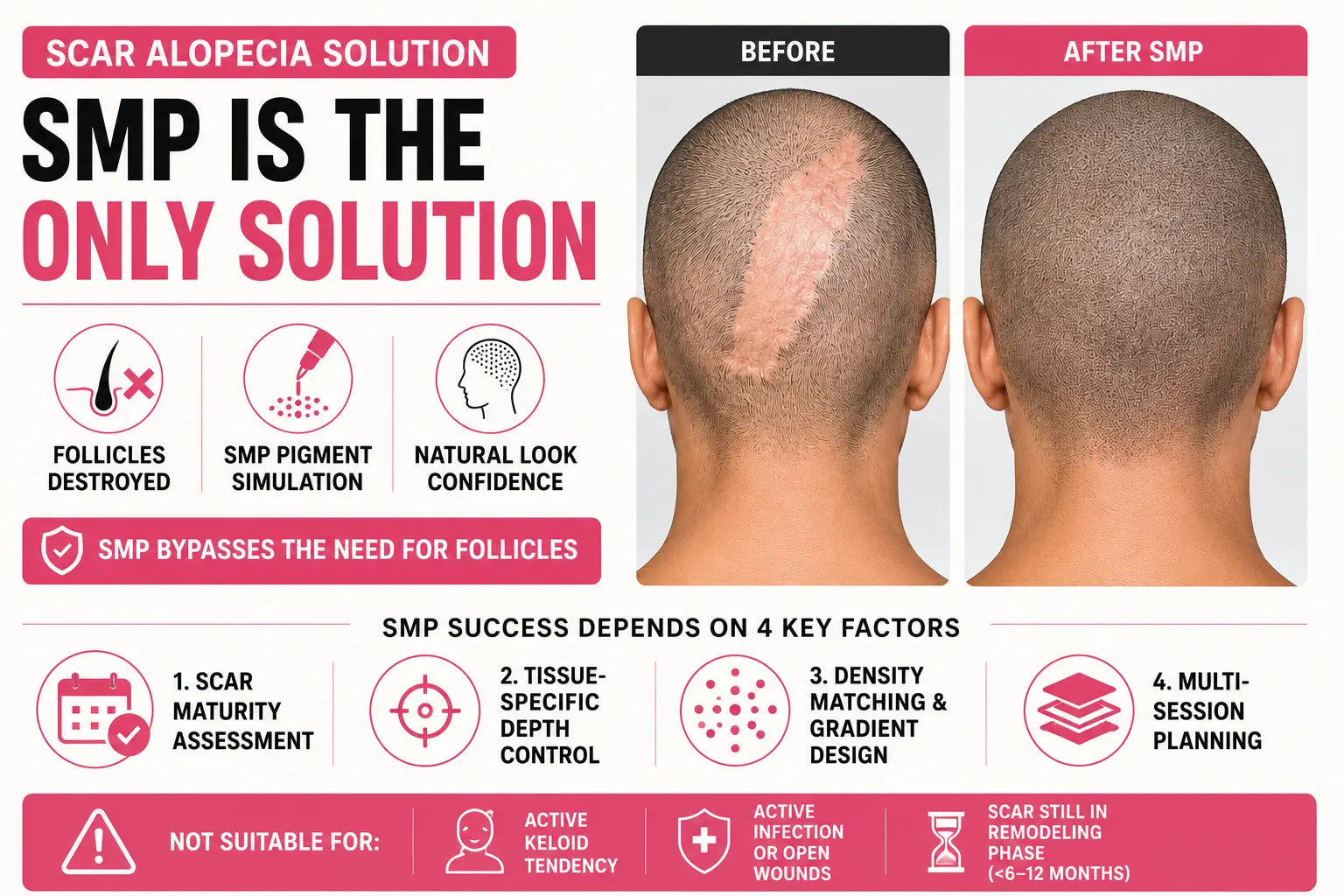
These clients face what we call the "solutions but no good solutions" dilemma — they know something can be done, but none of the available options feel adequate. SMP is the option that most directly addresses the core problem: visual appearance, not biological restoration. It doesn't make hair grow back. It makes the scar area look like it has hair, using the brain's own pattern recognition against it.
This article covers the technical framework that separates successful scar SMP from failed attempts: scar classification, tissue-specific protocols, pigment density matching, and the contraindications that must be respected without exception.
Scar Classification: Understanding What You're Working With
Traumatic Scars — The Most Common Category
Traumatic scars result from cuts, lacerations, blunt force impact, or surgical incisions where the skin was breached and healed with fibrous tissue replacement. The defining characteristic is that the original follicle-bearing skin structure has been replaced by dense, disorganized collagen fiber bundles that lack follicular openings.
The texture of a mature traumatic scar can range from soft and pliable to hard and rigid, depending on the degree of fibrous tissue proliferation during healing. The scar may contain areas of both hyperpigmentation (darker than surrounding skin) and hypopigmentation (lighter or scar-white), which complicates pigment color selection. The skin surface is typically smooth, shiny, and clearly demarcated from the surrounding normal scalp.
These scars are the most straightforward SMP candidates — once mature (typically 6–12 months post-injury), they have adequate structure to accept and retain pigment when properly treated.
Burn Scars — The Highest Difficulty Category
Burn scars are SMP's most technically demanding category. Deep second-degree burns that penetrate the dermis and into the subcutaneous layer destroy not just follicles but the entire skin infrastructure — sebaceous glands, sweat glands, hair follicles, and the vascular network that supports them. Superficial burns that only damage the epidermis will heal with normal follicle function intact.
Burn scars present compounding challenges:
- Large, irregular surface areas: Burn scars are rarely contained — they spread across the scalp in unpredictable patterns
- Contraction and distortion: The healing process pulls the surrounding skin toward the burn center, changing the scalp's surface tension topology and creating areas of both excessive tightness and loose, rippled tissue
- Variable depth: Different areas of the same burn may have healed at different depths, creating zones with radically different tissue characteristics within the same scar field
- Reduced sensation: Nerve damage in the burn zone means some areas are numb while others may be hypersensitive — both conditions affect how the client experiences the procedure and how the tissue responds to needling
- Vascular compromise: The damaged blood supply affects how the tissue heals after SMP and how consistently pigment integrates
Burn scar SMP should only be attempted by technicians with specific scar tissue training and experience. The risk of tissue damage from improper technique is significantly higher in burn scars than in traumatic or surgical scars.
Surgical Scars — Most Predictable, But Variable
Surgical scars from hair transplant extraction (FUE punch marks), facelift procedures, neurosurgery, or tumor resection tend to be more geometrically regular than traumatic or burn scars. This regularity makes them both easier to assess and easier to treat with SMP — the boundaries are predictable, and the tissue characteristics within the scar tend to be more uniform.
The primary variable is depth. A hair transplant FUE extraction site is superficial (the punch removes a small tissue core but the surrounding dermis and subcutaneous tissue remain intact). A neurosurgical skull reconstruction flap, however, involves deeper tissue layers and potentially altered bone-skin relationships that affect how the overlying scalp tissue behaves.
Surgical scars from transplant procedures are among the most common SMP applications — the FUE extraction dots are immediately visible when the donor area is shaved, and SMP treatment effectively "erases" them by matching the pigment dots to the surrounding stubble.
The Fundamental Principle: Why Normal Scalp Protocols Fail on Scar Tissue
The Structural Difference That Changes Everything
Normal scalp skin has a specific mechanical profile: moderate elasticity, moderate vascularization, consistent thickness, and a well-organized dermal matrix with regular fiber orientation. Scar tissue has a fundamentally different profile:
- Collagen fiber orientation: Normal scalp has a regular pattern of collagen and elastin fibers oriented along natural skin tension lines. Scar tissue has disorganized, randomly oriented fibers that lack the regular structure of healthy dermis
- Vascular supply: Normal scalp has a rich vascular network that delivers nutrients and immune cells and maintains tissue health. Scar tissue, particularly in burn and deep traumatic scars, has reduced and disorganized vascular channels
- Elasticity: Scar tissue has reduced elastic fiber content and higher tensile strength than normal skin — it resists deformation but also has less "give," which changes how it responds to needle penetration
- Thickness: Scar tissue may be thicker (hypertrophic) or thinner (atrophic) than the surrounding normal skin — often both in different zones of the same scar
These structural differences mean that a needle parameter that works perfectly on normal scalp — producing clean, consistent pigment dots at the correct depth — will produce completely different results on scar tissue. A needle that penetrates to 0.8mm in normal scalp may penetrate to 1.2mm in a firm hypertrophic scar or only 0.3mm in a thin atrophic scar. The depth variability within a single scar field can be extreme.
Why Pigment Retention Behaves Differently in Scars
The scar tissue's fibroblast cells — the cells that encapsulate pigment particles and create stable long-term retention — behave differently in scar tissue than in normal dermis. The collagen-dense scar matrix has a different physical density, which affects how pigment particles settle and how evenly they're distributed within the tissue.
Dense, fiber-rich scars (hypertrophic) tend to absorb pigment quickly and may appear darker than expected immediately after the procedure — but this is often a false positive. The pigment is sitting in a high-density fibrous matrix that may not integrate uniformly with the fibroblast encapsulation process that normally stabilizes PMU pigment. The actual long-term retention in dense scars is often lower than in normal skin, and multiple touch-up sessions should be planned from the start.
Thin, atrophic scars have the opposite problem: they absorb pigment poorly and require more passes to achieve target saturation, with higher risk that the pigment will fade unevenly over time. The reduced tissue depth means pigment particles are closer to the skin surface, which can cause premature shedding.
The practical implication is that scar SMP is always a multi-session process, and the first session should always be understood as a diagnostic session — establishing how this specific scar responds to pigment deposition so the subsequent sessions can be planned appropriately.
Technical Protocol: The Four-Phase Scar SMP Framework
Phase 1 — Professional Assessment and Contraindication Screening
A thorough pre-procedure scar assessment should evaluate:
- Scar maturity: Is the scar at least 6–12 months old and no longer in the active remodeling phase? Active scars are still changing shape and color — SMP on an unstable scar produces results that won't match the eventual healed appearance
- Texture and thickness: Firm/hard versus soft/pliable; thick versus thin — these tissue characteristics directly determine the needle depth and pressure parameters for each zone of the scar
- Pigmentation profile: Does the scar have areas of hyperpigmentation, hypopigmentation, or mixed tones? This affects pigment color selection — the scar SMP color may need to be darker or lighter than the surrounding normal scalp to match the overall visual density
- Sensation: Does the client have normal sensation, reduced sensation, or hypersensitivity in the scar zone? Numb zones risk over-treatment (no pain feedback to limit the technician's pressure); hypersensitive zones may require pre-procedure anesthetic protocol
- Keloid tendency: Is there a personal or family history of keloid or hypertrophic scar formation? This is an absolute contraindication for scar SMP — the needling trauma can trigger severe keloid formation that may worsen with each session
- Active inflammation or infection: Is there any current redness, swelling, warmth, or drainage in the scar zone? Active inflammation is a temporary contraindication — SMP should be postponed until fully resolved
Contraindications that require postponement or rejection:
- Active keloid history — do not proceed
- Scar still in active remodeling (less than 6–12 months) — postpone
- Active infection or open wounds in the scar zone — postpone until healed
- Chronic ulceration in the scar zone — dermatology referral required first
Phase 2 — Treatment Planning
The assessment data feeds into a written treatment plan that specifies:
- Pigment color selection: Scar tissue often requires a slightly different pigment tone than the surrounding normal scalp. Dense scars with hyperpigmentation may need a lighter SMP pigment; pale, hypopigmented scars may need a slightly darker tone to match the surrounding hair density. The goal is that the SMP dots match the surrounding hair stubble color, not that they match the surrounding skin color
- Session count: Most scar SMP requires 2–3 sessions minimum, with some severe burn cases requiring 4 or more. The first session is always diagnostic
- Density gradient design: The transition zone between normal scalp and scar SMP is the most technically demanding area — it requires a carefully planned density gradient where pigment dot frequency gradually increases from normal scalp toward the scar center. A sharp boundary between normal scalp dots and scar-area dots is immediately obvious and breaks the illusion
- Zone-specific depth parameters: Each distinct tissue zone within the scar should have its own depth and pressure specification documented before the procedure begins
Phase 3 — Multi-Session Implantation
The first session establishes the foundational coverage and provides the critical feedback needed to plan the second and subsequent sessions:
Session 1 goals: Apply the base pigment layer across the entire target zone at conservative density — lower than the target final density. Observe how each zone of the scar responds: which areas accepted pigment evenly, which areas resisted, which areas went darker than expected. This data shapes the Session 2 plan.
Session 2 (typically 6–8 weeks after Session 1): Based on the observed healing and retention from Session 1, increase density in the areas that under-responded and adjust pigment tone if any areas went darker than the target. This session moves toward the final target density.
Subsequent sessions (if needed): Fine-tuning of density, tone matching, and transition zone refinement. Each subsequent session is smaller in scope than the previous because the bulk of the coverage work has already been completed.
Phase 4 — Post-Procedure Care for Scar Tissue
Scar tissue heals more slowly than normal scalp skin — the reduced vascular supply and altered fibroblast activity extend the inflammatory and remodeling phases of healing. Specific aftercare for scar SMP:
- 48 hours of no water contact with the treated zone
- No picking, rubbing, or scratching of scabs — allow natural shedding
- Minimum one week without swimming, steam rooms, or heavy sweating
- Sun exposure avoidance for 4–6 weeks — UV accelerates pigment oxidation in scar tissue more than in normal scalp
- No topical products on the scar zone until scab shedding is complete
Pigment Selection: Why Batch Consistency Matters More in Scar SMP
The Multi-Session Consistency Requirement
Normal scalp SMP typically uses the same pigment formulation across 2–3 sessions. Scar SMP — which may require 3–5 sessions for adequate coverage on complex burn scars — is at risk of pigment tone inconsistency if the brand doesn't maintain rigorous batch-to-batch consistency.
Switching pigment batches between sessions on a complex scar can produce visible tonal differences between sessions — the Session 3 dots may be slightly warmer or cooler than the Session 1 dots, creating a visible patchwork effect that defeats the purpose of the SMP. This is not a theoretical risk; it's an observed outcome in scar SMP cases where batch continuity wasn't maintained.
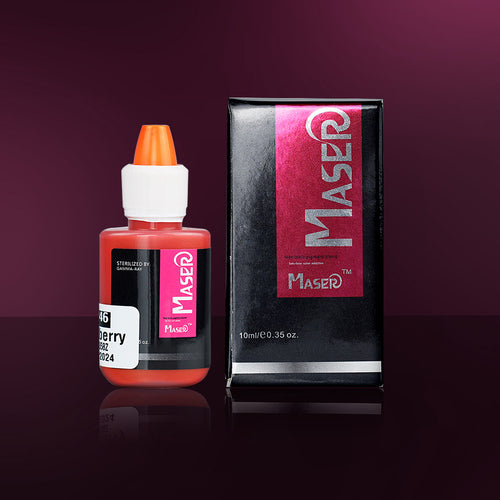
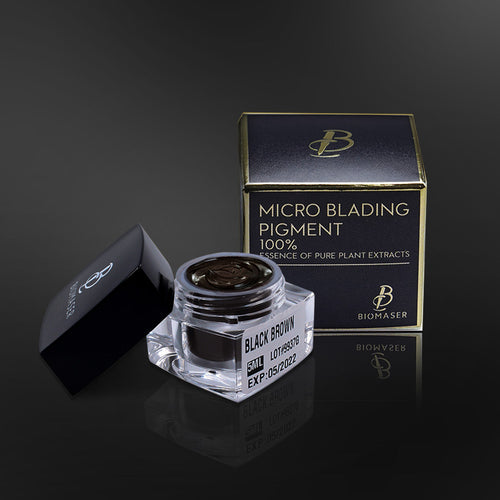
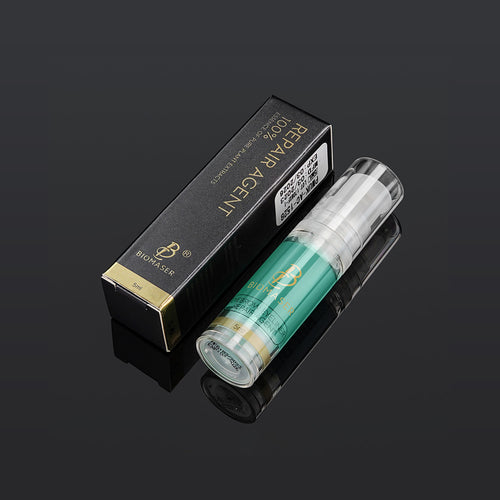
Professional-grade pigment brands like Biomaser maintain batch traceability documentation and heavy metal content control standards that ensure each batch of pigment performs within the same parameters as the previous batch. For scar SMP specifically, this batch-to-batch consistency is a functional requirement, not a cosmetic preference. The technician should verify that the same batch code is used across all sessions for a given client — or that the brand's batch consistency documentation is available to confirm no tonal shift will occur.
Transition Zone Technique: The Most Critical Element for Natural Results
Why the Boundary Is the Hardest Part
The scar area itself, if properly pigmented, can look entirely natural — the challenge is the transition zone where scar-area SMP meets normal scalp SMP. Any technician can produce consistent dots within a uniform tissue zone; the mark of an experienced scar SMP technician is in the transition zone, where the density gradient must create a boundary so gradual that an observer's eye has no reference point to detect where normal scalp ends and scar SMP begins.
The transition zone technique requires:
- Progressive density reduction: As the needle moves from the scar center toward normal scalp, reduce dot frequency rather than dot size. The dots themselves should remain the same size — reducing their size (rather than their density) creates an obvious dot-size gradient that looks like intentional shading rather than natural hair density variation
- At least 2cm of transition width: A narrow transition zone is always visible. A wide, gradual gradient is invisible because the brain's pattern recognition system cannot identify a boundary that doesn't exist
- Matching the surrounding follicle density: The SMP dot density in the transition zone should match the estimated follicle density of the surrounding normal scalp — if the surrounding hair is thick and dense, the transition zone needs higher SMP density; if it's thin, lower SMP density
FAQ
My scar is less than six months old — can I still get SMP done?
Waiting for scar maturity is not optional — it's the most important pre-procedure decision point. A scar that is still in the active remodeling phase (less than 6–12 months post-injury, depending on scar type and depth) is changing color, texture, and sometimes even shape. SMP applied to an unstable scar will shift as the scar changes underneath it, potentially producing color or density results that are visibly wrong once the scar fully matures. The patience required to wait for scar maturity is a non-negotiable element of successful scar SMP.
Will the SMP pigment look different on my scar than on my normal scalp?
Almost certainly yes — and this is why professional assessment before the procedure is essential. Scar tissue accepts and retains pigment differently from normal scalp. Some scars go darker than expected; others go lighter. An experienced technician accounts for this by selecting a pigment color that will match the surrounding hair stubble after the scar's particular retention behavior is factored in, rather than assuming the scar will behave identically to normal scalp.
I have a keloid scar from a previous surgery — does that mean I can't get SMP?
Keloid history is a contraindication for scar SMP and should be taken extremely seriously. Keloid formation occurs when the body over-responds to skin trauma — the needling from SMP is skin trauma. For clients with a keloid tendency, even a small number of needle punctures can trigger a significant keloid response that may worsen with each subsequent SMP session. The responsible approach is to decline SMP for clients with keloid history and refer them to a dermatologist for evaluation of alternative scar management options.
How long does scar SMP take to fully heal?
Scar tissue heals more slowly than normal scalp — full healing from an SMP session typically takes 4–6 weeks rather than the 2–4 weeks for normal scalp SMP. Complete resolution of all post-session scabbing, redness, and initial color settling generally requires 6–8 weeks before the next session should be scheduled. Attempting to rush the session schedule on scar tissue risks poor pigment integration and unnecessary tissue trauma.
My burn scar is very large and irregular — can SMP handle it?
SMP can address large burn scars, but the treatment strategy must account for the scar's irregular nature. Large burn scars typically have zones of widely varying tissue quality — areas of normal-thickness scalp adjacent to areas of thin atrophic tissue, tight contracted zones adjacent to loose rippled areas. Each zone requires its own depth and pressure parameters, and the transition between zones must be managed individually. This level of complexity requires an experienced technician and a realistic treatment plan that spans4–6 sessions rather than the standard 2–3. Not all technicians are qualified for complex burn scar SMP — asking specifically about burn scar experience before committing is essential.
Key Takeaways
- Scar alopecia is permanent because the follicle infrastructure is gone — SMP is a visual reconstruction, not a biological restoration. It makes the scar area look like it has hair, without actually growing hair
- Scar tissue is structurally, mechanically, and biologically different from normal scalp — it requires tissue-specific depth parameters, multi-session protocols, and pigment color selection that accounts for its different retention behavior
- Scar maturity is a non-negotiable requirement: at least 6–12 months of stable healing before SMP is attempted. Active scars are still changing, and SMP on active scars produces unpredictable results
- Keloid tendency is an absolute contraindication — the needling trauma can trigger severe keloid formation, which may worsen with each subsequent session
- Batch consistency in pigment matters more in scar SMP than in standard scalp SMP — complex multi-session scar protocols require the same batch across all sessions to avoid tonal patchwork effects
- The transition zone between scar SMP and normal scalp SMP is the most technically demanding element — it requires a density gradient over at least 2cm of transition width, not a sharp boundary between two different dot densities
