




Eyeliner PMU Pigment Migration: Causes, Prevention, and Best Practices for Artists

Key Takeaways
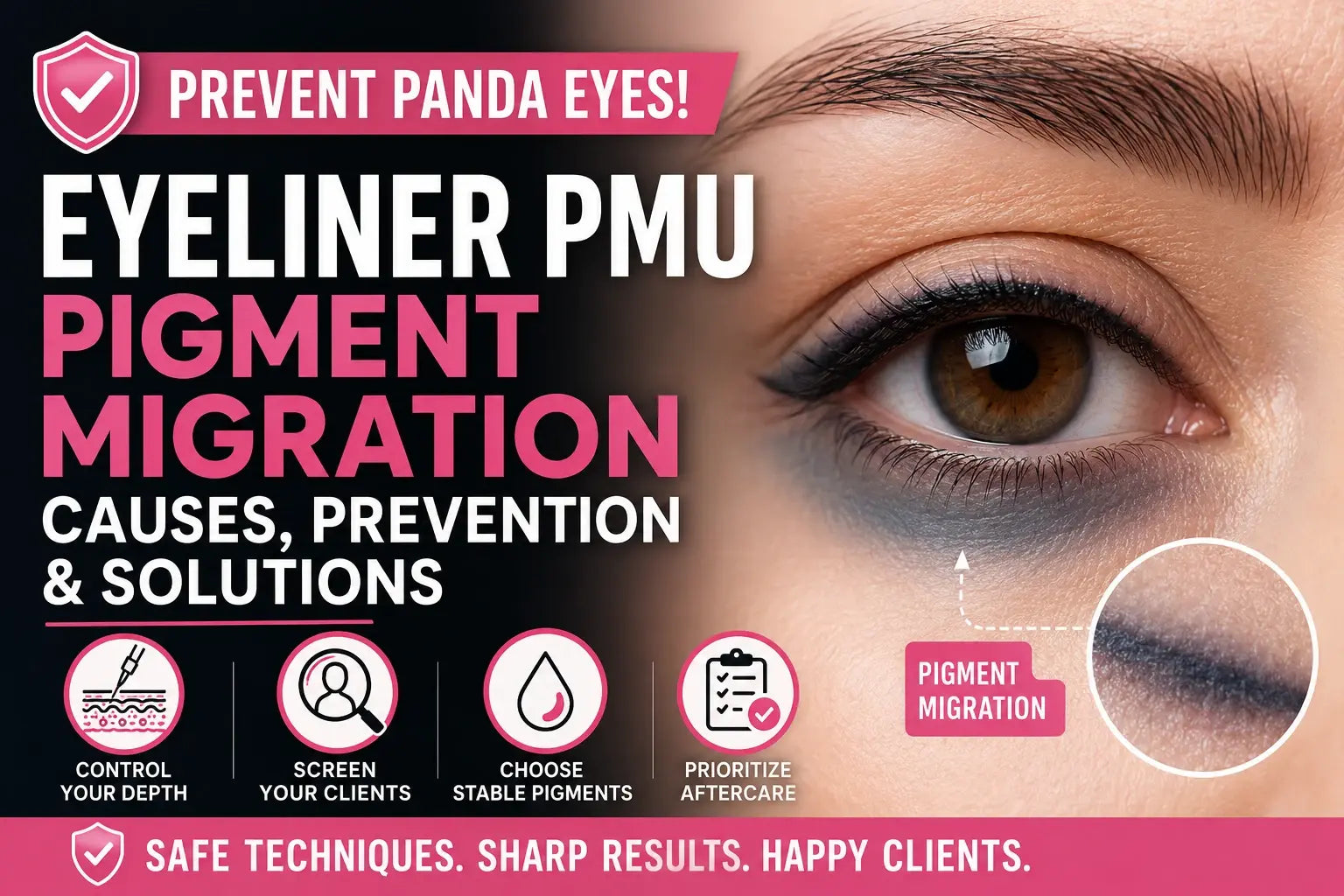
Most eyeliner pigment migration is preventable with the right choices. Safety in this procedure is about restraint and precision.
- Control Your Depth: Shallow, controlled implantation in the superficial dermis is much safer than chasing "one-pass saturation" with heavy pressure.
- Screen Your Clients: High-risk clients, like those with very thin, "crepey" skin, heavy vascularity, or prior eyelid surgery, should be approached with extreme caution or declined.
- Choose Stable Products: Use stable, eyeliner-specific PMU pigments and avoid over-diluting them into hyper-liquid formulas that run easily.
- Prioritize Aftercare: Clear instructions, which means there's no rubbing, no pressure, and no steam, are critical to keeping the pigment exactly where you placed it during the first few days.
Pigment migration, or "blowouts," creates a messy blue shadow around the eyes instead of a sharp line. Because eyelid skin is thinner than paper, PMU ink can easily slip into deeper tissue or blood vessels if you aren't careful. This differs from normal fading; it's a permanent mistake caused by hitting the wrong layer. Learning depth and anatomy is the only way to stop "panda eyes" and keep your work crisp and professional.

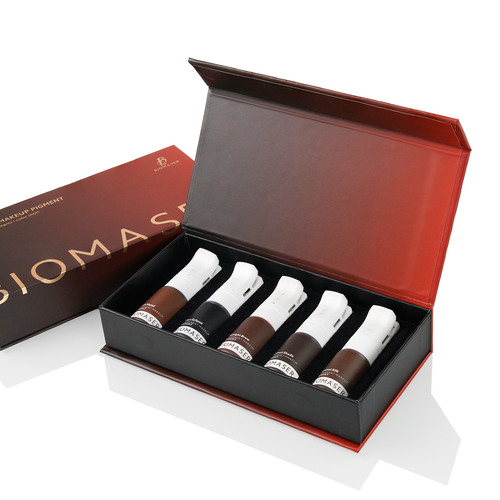
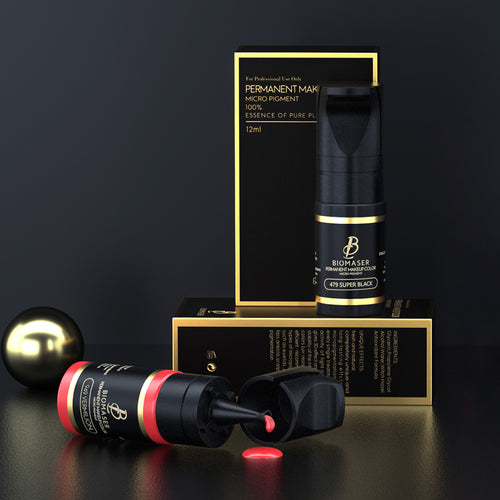
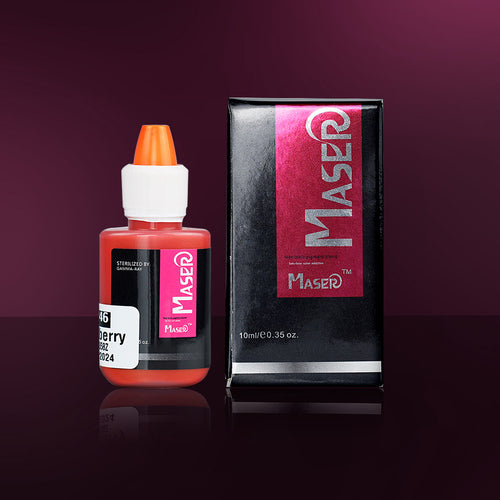
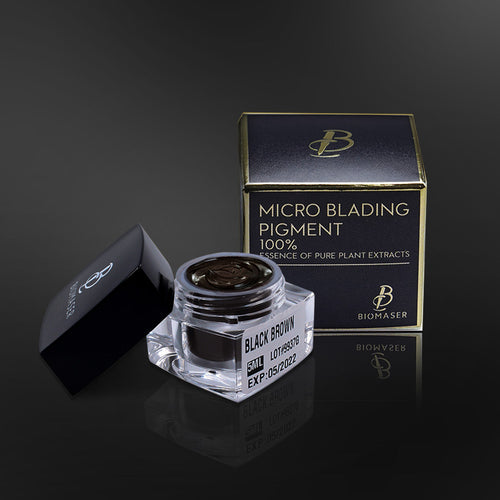
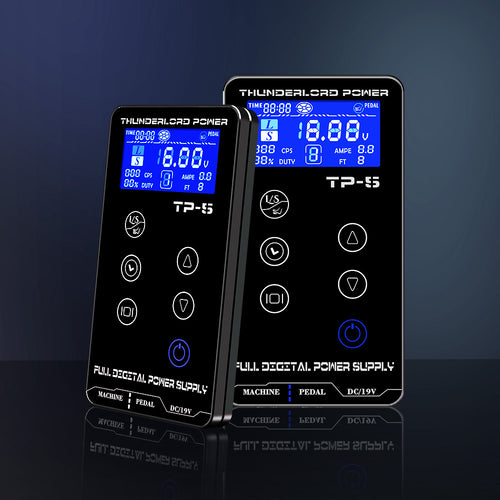
Biomaser Blend PMU Pigment - Brow & Eyeliner Ink for Light to Medium Skin Tones
What Eyeliner PMU Pigment Migration Looks Like
Visual signs include blurry edges, grey or blue halos, and ink pooling in the corners of the eye. You must be able to differentiate migration from normal spreading or simple swelling. While swelling disappears in a few days, a blowout remains. If you see color "blooming" like a drop of ink on a wet paper towel, the pigment has likely entered a deeper tissue plane.
Why Eyeliner Is High-Risk
The eyelid anatomy consists of very thin skin and fat pads. Because the tissue is so loose, there is no "barrier" to stop liquid from moving if it gets past the dermis. If your permanent makeup machine pushes the needle into the subcutaneous fat or the vascular layer, the pigment will follow the path of least resistance and spread far from the lash line.

Biomaser Claro Wireless Tattoo & PMU Machine with RCA
Main Causes of Pigment Migration in Eyeliner PMU
Most technical mistakes happen because the person doesn't know how to use the tools properly or doesn't know what the skin's limits are. You can check your own process better if you know these reasons.
Technical Causes
The most common mistake is going too deep. Using excessive pressure, too many passes, or "scratching" the skin instead of using precise implantation creates trauma. If your permanent makeup machine is set to a voltage that is too high, or if your hand speed is unstable, the needle can "hook" the tissue and deposit ink into the wrong layer.
Client-Related and Product Causes
Mature clients with thin, mobile eyelids are at the highest risk. History of eyelid surgery or periorbital fillers can also alter the tissue planes, making migration unpredictable. Additionally, using a PMU ink that is too watery or over-diluted can cause the color to "wick" into the skin's natural creases. High-quality, viscous pigments stay put much better than thin, runny alternatives.
Aftercare and Early Trauma
Rubbing, scratching, or sleeping face-down in the first few days can physically push the pigment out of the intended area. Excessive swelling also creates fluid accumulation that can displace the ink particles before the skin has finished closing.
Client Assessment: Who Is (and Isn't) a Good Candidate?
A thorough consultation is your best defense against a bad result. You need to look at the skin and decide if it can hold the design.
Perform a visual and tactile assessment. Gently stretch the eyelid to check for thickness and "laxity" (how much it sags). If the skin feels like tissue paper or shows a heavy web of purple veins, the risk of a blowout is significantly higher.
Red flags include a history of blepharoplasty, recent LASIK, or fillers close to the lash line.
When a client's anatomy is too risky, suggest a conservative lash enhancement instead of a thick wing. Communicating these risks honestly builds trust. It is better to decline a service than to deal with a permanent complication that could damage your reputation.
Technical Best Practices to Prevent Pigment Migration
Your physical technique is the most important factor in a clean heal. Precision is more valuable than speed when working on the eyes.
Depth and Pressure Control
The safe target is the superficial dermis, not the fat or muscle beneath. Look for practical cues: the color should appear "airy" and soft during the first pass. If the color looks dark and solid immediately, you are likely too deep. Remember, "less is more." Multiple light passes are always safer than one heavy, deep pass.
Needle Choice and Machine Settings
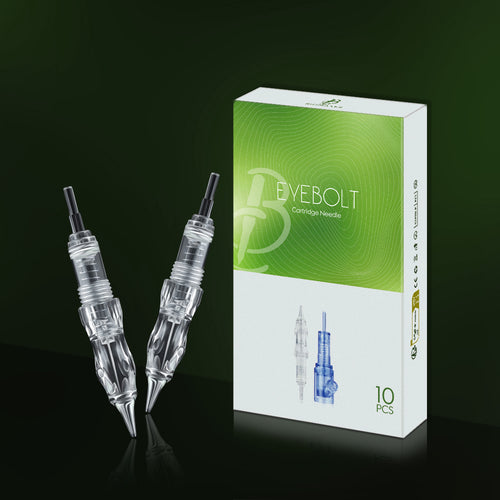
Many artists prefer specialized PMU needles like a 1RL (single needle) for detail, but for beginners, slightly larger groupings like a 3RL or 5RL are often safer because the pressure is distributed across multiple needles and you're less likely to accidentally "dip" too deep. Keep your voltage in a moderate range and your stroke length short. Always maintain a solid rest point for your hand to avoid accidental jabs if the client flinches.
Stretching and Mapping
Use a gentle, balanced stretch to keep the tissue flat without over-tightening it. If you pull the skin too hard, you may lose track of the natural planes. Work in small sections along the lash line to maintain consistent control. Your mapping should respect the anatomy; avoid placing thick lines or heavy wings in fragile, "crepey" areas.
Pigment Selection and Handling for Eyeliner PMU
- Choose high-quality PMU pigments specifically formulated for eyeliner. These usually have a higher viscosity, meaning they are thicker and less likely to run.
- Avoid ad-hoc mixing or over-diluting with water or thinners, as this increases the fluidity and makes the ink unpredictable.
- Also, consider the color: deep blacks are standard, but softer dark browns may be more forgiving on very mature, thin-skinned clients.
- Always maintain strict hygiene and decant your pigments into clean caps to prevent contamination.
Aftercare Instructions That Reduce Migration Risk
Proper PMU eyeliner aftercare ensures the skin heals quickly and tightly.
- Advise the client to use immediate cooling and keep their head elevated to minimize swelling.
- Give them strict "do and don't" rules: no rubbing, no pressing, and no lash curling for at least ten days. They should avoid steam, saunas, and heavy eye makeup during the initial healing phase.
- Make sure they know exactly when to contact you, such as in the case of excessive swelling or unexpected pain, so you can monitor the situation.
How Can You Spot Migration Early and What Are the Next Steps?
You can better handle the client's expectations if you tell them the difference between a normal healing response and a technical error. In the first few weeks, it's important to observe.
During the first 14 days, it can be hard to tell a blowout from a bruise. Bruising usually changes color and fades, while migration stays dark and hazy. If you see a blue shadow that isn't going away, wait and observe for at least 6 weeks until the skin is fully healed.
Document everything with photos. Do not attempt to "fix" it immediately; the tissue needs time to recover before any corrective plan can be discussed.
What Are the Options for Fixing Migrated Pigment?
Fixing a blowout is harder than preventing one. If the shadow is faint, a skilled artist might use camouflage colors, but this often looks heavy or fake. Most cases require removal:
- Laser Removal: The best choice for dark black ink. It must be done by a specialist.
- Saline Lightening: A gentler option that lifts pigment out of the skin.
- Medical Help: Rare cases may need surgical care if ink reaches deep tissues.
Be honest with clients. These fixes take months, cost more than the original tattoo, and might not offer 100% clearing.
Stopping Eyeliner Pigment Migration for Good
You need to be patient and careful to get sharp, clean eyeliner. You can avoid most blowouts by carefully screening clients and keeping your depth shallow. To keep your work in place, use good PMU ink and make sure you do the right care afterward. Staying cautious and light with your technique protects your reputation and ensures your clients leave with beautiful, safe results.
FAQs About Eyeliner PMU Pigment Migration
Q1: How can I tell if my eyeliner PMU has started to migrate, not just bruise?
Look at the color and the timing. Bruising usually turns yellow or green and fades within a week. Migration appears as a blue or grey "haze" that stays put and may even look more obvious as the redness of the procedure fades.
Q2: Are some clients simply too high-risk for eyeliner PMU?
Yes. Clients with extremely thin, "vascular" eyelids or those with active eye conditions should often be declined. Safety is more important than a sale.
Q3: Can migrated eyeliner pigment be fully removed?
Results vary. Laser removal is often very successful for black ink, but it takes time and multiple sessions. Prevention remains the best "treatment."
