




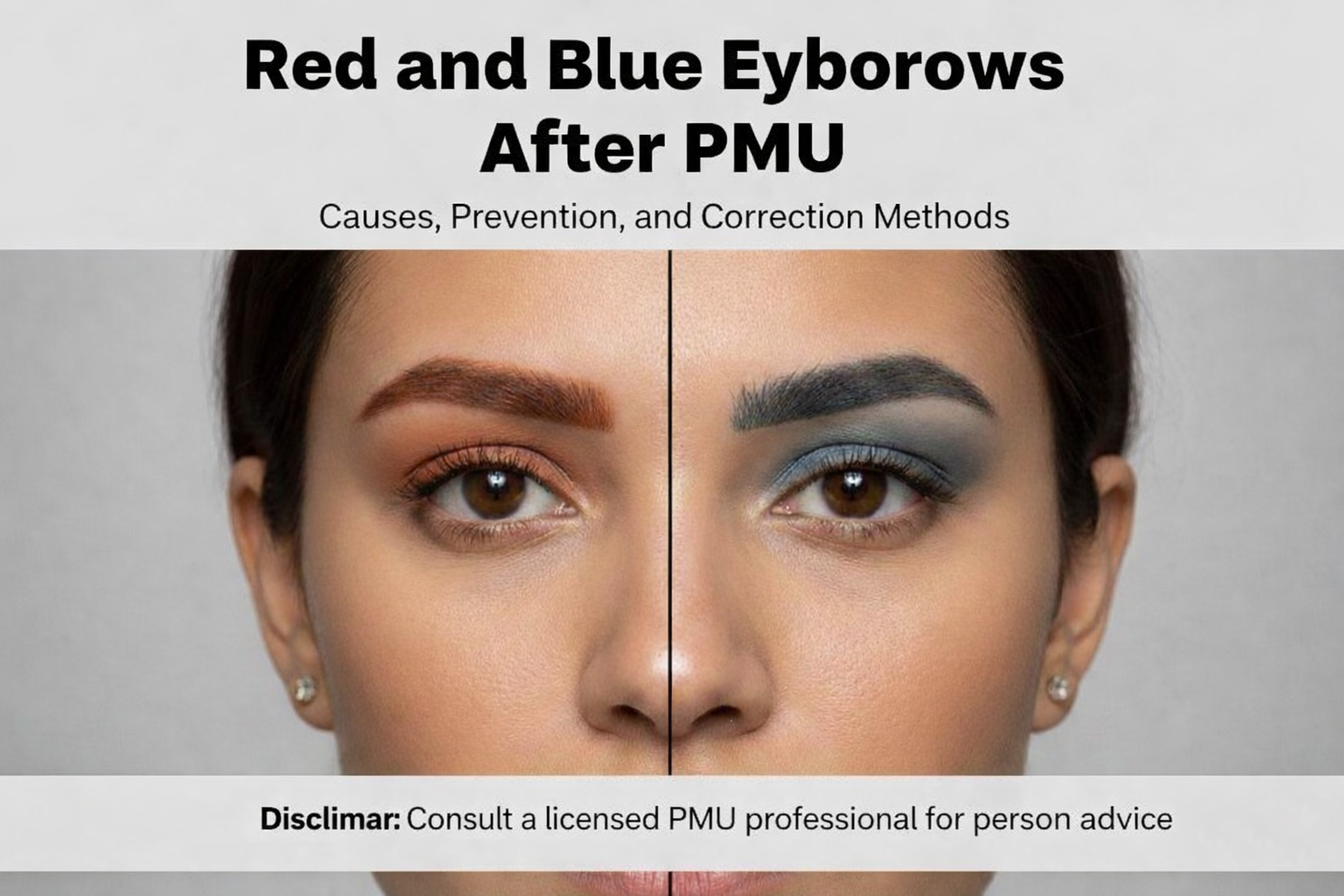
Red and Blue Eyebrows After PMU: Causes, Prevention, and Correction Methods

Disclaimer: This article provides general information about PMU eyebrow discoloration. Individual results vary based on skin type, pigment quality, and artist technique. Always consult a licensed PMU professional for personalized advice
PMU Eyebrows give you perfect arches every morning without the daily pencil routine. But many people worry when their brown brows shift into odd shades of red, blue, or gray. This change happens because of your skin chemistry and skincare ingredients, needle depth, or the quality of the ink. You can prevent these shifts or fix them with the right techniques. Here's how to keep your pigment looking natural and fresh for years.
Why Permanent Makeup Eyebrows Change Color Over Time
Seeing your eyebrows turn an unexpected color can be frustrating, but it usually happens because of specific technical reasons. From the chemistry of the PMU pigments to the way your skin heals, several factors play a role in how the color settles and fades.
Color changes can occur at different stages. During initial healing phase (weeks 3–4) (weeks 3-4), temporary color shifts are normal as the skin regenerates. However, permanent discoloration typically becomes noticeable 6-18 months after the procedure as the pigment oxidizes and breaks down.
Pigment Depth and Skin Layers
The skin has different layers: the epidermis (top) and the dermis (middle). For PMU to look right, the artist must place the pigment in the upper part of the dermis. If the needle goes too deep, the light reflects off the pigment differently through the skin. This often creates a "Tyndall effect," where the color looks much cooler, ashier, or even blue-toned than intended.
Chemical Makeup of Pigments
Not all PMU pigments are the same. Some are organic, while others are inorganic. Organic pigments often contain carbon, which is very stable but can leave behind a blue or grayish tint as other colors fade. Inorganic pigments often use iron oxides. While these look very natural at first, the yellow and black tones often fade faster than the red tones. This is why many older eyebrow tattoos eventually look rusty or pink.
Picking the Wrong Color for Your Skin
An artist might pick a color based only on your hair, but your skin's undertone is actually more important. If someone has cool-toned skin and the artist uses a cool-toned brown, the result will likely turn gray or blue. Similarly, using pure black ink is a mistake for eyebrows. Most black inks have a blue base, which becomes very obvious as the skin heals and ages.
Technical Skills and Equipment
The way the artist works matters just as much as the ink. If an artist uses too much pressure or the wrong needle for your skin type, it causes trauma. This trauma can lead to scarring or uneven healing after PMU, which alters the final color. Experienced artists know how to adjust their hand speed and pressure to keep the color true.
Sun Exposure and Skincare Products
Your lifestyle after the appointment affects the color too. UV rays from the sun can break down the pigment molecules, causing them to fade or shift in color. Using strong skincare ingredients like retinol, glycolic acid, or vitamin C directly on your brows can also speed up the fading process and change the hue of the remaining color.
How to Avoid Discolored Eyebrows Before Your Appointment
Prevention is the best way to ensure your PMU eyebrows stay the color you want. By doing a bit of research and following the right steps, you can greatly reduce the chances of ending up with red or blue tones in the future.
Finding a Skilled Artist
Look for a professional who shows "healed results" in their portfolio, not just photos from the day of the procedure. Ask them about their training and if they know how to work with your specific skin type. A good artist will explain why they are choosing a certain shade for you.
Selecting the Best Pigment Colors
You want a professional-grade pigment that is stable and high-quality. Instead of using a single "dark brown," a skilled artist might mix colors to balance out your skin's natural undertones. For example, if you have cool skin, they might add a drop of warm orange to the mix to prevent the brows from turning gray later.
Mastering the Proper Depth
During the procedure, the artist should use a light touch. If you feel a lot of pain or see excessive bleeding, the pigment might be going too deep. A proper application feels like a light scratch. Staying in the shallow part of the dermis ensures the color stays vibrant and doesn't take on that "ink pen" blue look.
Following Your Aftercare Instructions
The first two weeks after your appointment are critical. Proper permanent makeup aftercare involves keeping the area clean and avoiding moisture for the first several days. Do not pick at any flakes or scabs, as this pulls the pigment out prematurely. Once healed, the most important thing you can do is apply SPF to your brows every single day to protect the color from the sun.
Effective Ways to Fix Red and Blue Eyebrows
If you already have discolored brows, you don't have to live with them. There are several ways to fix the issue using color theory or removal techniques.
Using Color Theory to Neutralize
Color correction works by using the "opposite" color on the color wheel to cancel out the unwanted tone. This technique is known as PMU color correction.
- For Blue or Gray Brows: An artist will use a warm orange or pumpkin-colored corrector. This cancels out the cold tones and brings the brow back to a neutral base.
- For Red or Pink Brows: An artist uses an olive or green-based pigment. Green sits opposite red on the color wheel, so it "kills" the redness and creates a brown foundation.
The Correction Process
Fixing the color usually takes more than one session. In the first session, the artist applies the color-correcting shade. At first, the brows might look a bit strange (like a light orange or olive). Once that heals, they can go over the area with a traditional brown pigment that matches your desired look. This layering technique creates a more natural result.
When You Need a Permanent Makeup Pigment Remover
Sometimes, the old pigment is too dark, too deep, or the shape is too far off to fix with color correction alone. In these cases, you might need a permanent makeup pigment remover.
- Saline Removal: A special salt solution is tattooed into the skin to lift the old pigment to the surface. It is gentle but often takes several sessions.
- Laser Removal: This uses light energy to break down the pigment particles so your body can wash them away. It is usually faster for very dark or deep blue brows.
Keeping Your Results Fresh with Regular Maintenance
PMU is "permanent," but the color is actually semi-permanent because it lives in the skin, which is a living, changing organ. Maintenance is part of the process if you want your brows to stay looking their best year after year.
Knowing When to Get a Touch-Up
Most people need a PMU touch-up every 12 to 24 months. You will know it is time when the hair strokes look blurry or the color starts to look significantly lighter or warmer/cooler than it was. Catching these changes early makes the touch-up process much easier and keeps the shape crisp.
Protecting Your Investment
Keep your brows out of the sun as much as possible. If you use anti-aging creams or chemical peels, make sure to keep them at least half an inch away from your eyebrows. These products are designed to speed up cell turnover, which will make your brow pigment disappear much faster.
FAQs About Brow Discoloration
Q1: Can I fix red or blue eyebrows at home?
No. You should never try to tattoo your own brows or use "home bleaching" kits. This can lead to permanent scarring or infections. Color correction should only be performed by a trained professional who understands skin anatomy and color chemistry to avoid complications.
Q2: Will my eyebrows turn red or blue every time I get PMU?
No, this is not a guaranteed side effect. If you go to a high-quality artist who uses modern pigments and the correct technique, your brows should fade into a lighter version of the original color rather than changing into a different hue.
Q3: How much does PMU eyebrow color correction cost?
Because it requires specialized knowledge and often multiple visits, color correction can cost between $300 and $800. While it might seem expensive, it is a highly skilled service that saves you from having to get total removal.
