






Healed-Result Portfolios: Why They Convert Better Than Fresh Photos

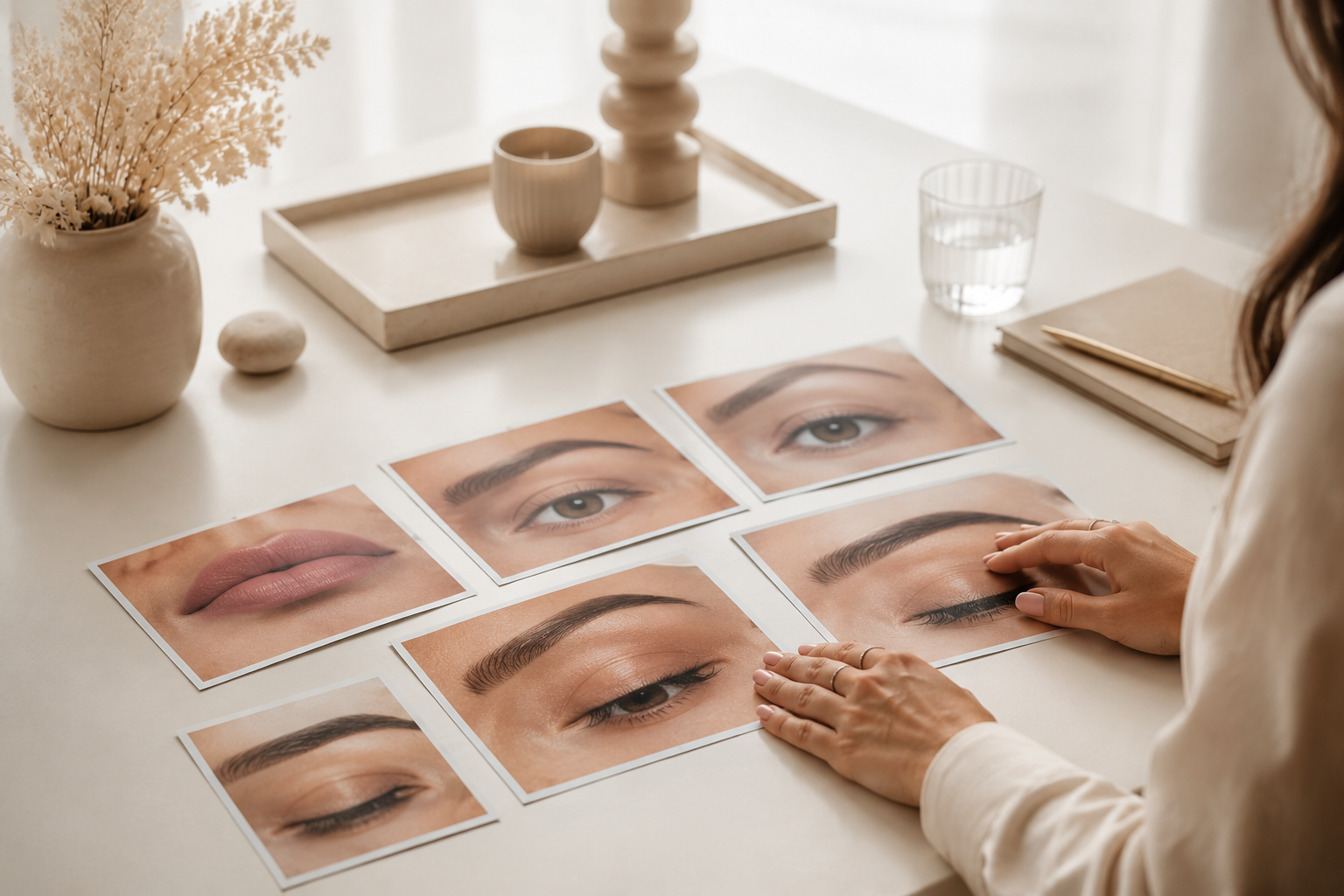
A healed-first PMU portfolio is more useful for booking decisions because it shows clients a documented later-stage result rather than inviting them to treat an appointment-day image as the final outcome. Fresh photos still have a place, but their status should be unmistakable. Lead with healed work, label every case clearly, and use the gallery to support realistic consultations---not to imply that every client will heal, retain color, or wear the result in the same way.
"Healed" does not mean "guaranteed." It means the image is presented with enough timing and treatment context for a prospective client to understand what they are viewing.
Make Healed Results the Main Evidence

Fresh PMU images can be visually compelling. They document the work completed at the appointment and can help show shape design, placement, or immediate detail. But they are not the same as a later documented result.
A client deciding whether to book is usually trying to assess more than the appointment-day appearance. They want to understand the type of result your studio produces after the service process, including whether the image was taken before or after a touch-up and whether prior PMU or correction work was involved.
Organize the gallery accordingly:
- Healed results first --- the primary proof point for each service.
- Fresh results second --- useful as process documentation when clearly marked.
- Touch-up results separately labeled --- never let a viewer assume a post-touch-up image is an untouched initial result.
- Longer-term images, when available --- useful context when the date and treatment history are stated.
A simple gallery card might read:
Powder Brows --- Healed Result Photo taken at a later follow-up appointment. Touch-up status: completed. Prior PMU: none reported. No makeup or beauty filter visible.
If you also show the appointment-day image, place it beside or below the healed image:
Fresh Result --- Immediately After Procedure This is not presented as the final healed result.
This approach reduces the chance that a dramatic fresh image is interpreted as a promise. Client images, likenesses, testimonials, and social posts can function as endorsements when viewers are likely to understand them as reflecting another person's experience. Endorsements cannot communicate an express or implied claim that would be deceptive if the studio made that claim directly, according to the endorsement rules in eCFR.
Label Each Result so It Cannot Promise More Than It Shows
A good PMU portfolio does not rely on a vague "results may vary" note hidden in a profile bio. It gives viewers the context needed to interpret the individual image in front of them.
Before publishing a case, confirm that the caption or gallery card states:
- Service performed: brows, lips, eyeliner, or the specific technique used.
- Photo stage: fresh, healed, post-touch-up healed, or longer-term follow-up.
- Timing: the actual timing of the photograph relative to the procedure or touch-up.
- Touch-up status: whether a touch-up occurred before the image was taken.
- Prior work: whether previous PMU, tattoo work, or correction work is relevant to the case.
- Visible alterations: makeup, filters, retouching, selective lighting, or other meaningful image changes.
- Permission status: confirm that the image is being used with appropriate client authorization.
- Incentives or relationships: disclose relevant compensation, discounts, free services, employment, family relationships, or other material connections where applicable.
For example:
Lip Blush --- Healed Result Photo captured at follow-up on [date]. Post-touch-up result. Previous lip tattoo work: none reported. No lipstick or beauty filter. Published with client permission. Service was provided at a discounted model rate.
The point is not to make every caption long. It is to avoid leaving out details that change how a prospective client would evaluate the image.
If a client received an incentive to participate, post, review, or provide images, consider whether that connection could affect how viewers interpret the endorsement. FTC guidance says a material connection should be disclosed clearly and conspicuously when consumers would not expect it and it could affect their evaluation of the endorsement. The same guidance also addresses advertising that presents above-average results as though they were ordinary outcomes; studios should not present an exceptional case as typical without adequate support or a clear explanation of generally expected performance. Review the FTC's endorsement guidance before building an incentive-based content program.
When a disclosure is needed in digital content, keep it with the image, video, or testimonial it qualifies. Do not bury it in a distant caption block, a profile page, or a string of unrelated hashtags.
Build a Follow-up System, Not a One-Time Photo Request
A healed portfolio is difficult to grow if documentation depends on clients remembering to send a selfie months later. Make follow-up capture part of the studio workflow from the start.
Set Permission Before You Need the Image
Use a separate, plain-language image permission process that explains the intended uses of photographs: portfolio, website, organic social content, paid advertising, or consultation education. Permission to perform the service is not automatically the same thing as permission to publish identifiable client images.
Keep the approved authorization with the client record, and protect client privacy when storing images and notes. Verify local privacy, licensing, health, advertising, and consent requirements before finalizing your process.
Schedule the Documentation Moment
At the original appointment, explain that you may request a follow-up image or visit after an appropriate healing period for that service and client. Avoid promising a universal timeline. Instead, schedule or request the check-in according to your studio's treatment and follow-up process.
If the client does not return, send a concise request that explains:
- what photographs you need;
- how to take them in plain, even lighting;
- whether makeup should be avoided for the image;
- whether the image is for clinical records, portfolio use, or both; and
- that publication remains subject to the client's authorization.
Capture Comparable Images
Consistency makes a portfolio easier to interpret. Use the same basic approach across cases where possible:
- similar angle and framing;
- comparable lighting;
- a clear view of the treated area;
- minimal visual distractions;
- no beauty filters or undisclosed retouching; and
- notes on makeup, lighting differences, and touch-up status.
The goal is not to manufacture identical-looking cases. It is to make the presentation honest enough that prospective clients can compare documented work without confusing photography choices for treatment outcomes.
Keep a Case Record
For every portfolio-ready image, retain a simple internal record:
| Record Item | Why It Matters |
|---|---|
| Procedure date | Establishes treatment history |
| Photo date | Supports the stated result stage |
| Touch-up status | Prevents a post-touch-up image from being misread |
| Prior PMU or correction work | Adds relevant interpretation context |
| Image adjustments or makeup | Supports accurate disclosure |
| Permission record | Confirms authorized use |
| Client quote, if used | Helps preserve original context |
If you use a testimonial, quote it accurately. Do not shorten, rewrite, or pair it with imagery in a way that changes what the client's experience appears to mean.
Use the Portfolio During Consultations
The strongest healed gallery is not a wall of "best work." It is a consultation tool.
Show prospective clients cases that are relevant to the service they are considering, then explain what the caption establishes: treatment stage, touch-up history, prior work, and any meaningful presentation details. This keeps the conversation anchored in documented examples rather than visual promises.
A useful consultation phrase is:
"This is a healed case photographed after the stated follow-up point. It shows this client's documented result and treatment history; your own result will need to be discussed in relation to your individual circumstances and service plan."
That language is clearer than claiming that a new client will achieve the same appearance. It also gives you a reason to retain representative cases---not only the most visually dramatic ones---for consultation education where authorization and privacy allow.
Create One Healed Case This Month
Shift the purpose of your portfolio from maximizing appointment-day impact to helping the right client make an informed booking decision.
This month, choose one completed case and follow the full workflow: schedule or request a follow-up, obtain appropriate image permission, capture consistent photographs, record the treatment context, and publish a transparent caption. Then repeat the process until healed documentation---not fresh photos---becomes the standard your studio is known for.
Legal Disclaimer
This article is provided for general informational and educational purposes only and does not constitute legal, tax, insurance, regulatory, or professional advice. Requirements may vary by jurisdiction and change over time. Consult a qualified local attorney, licensed insurance professional, accountant, or relevant regulator for advice tailored to your studio and circumstances.
