




Can You Cover an Old Tattoo with Permanent Makeup?

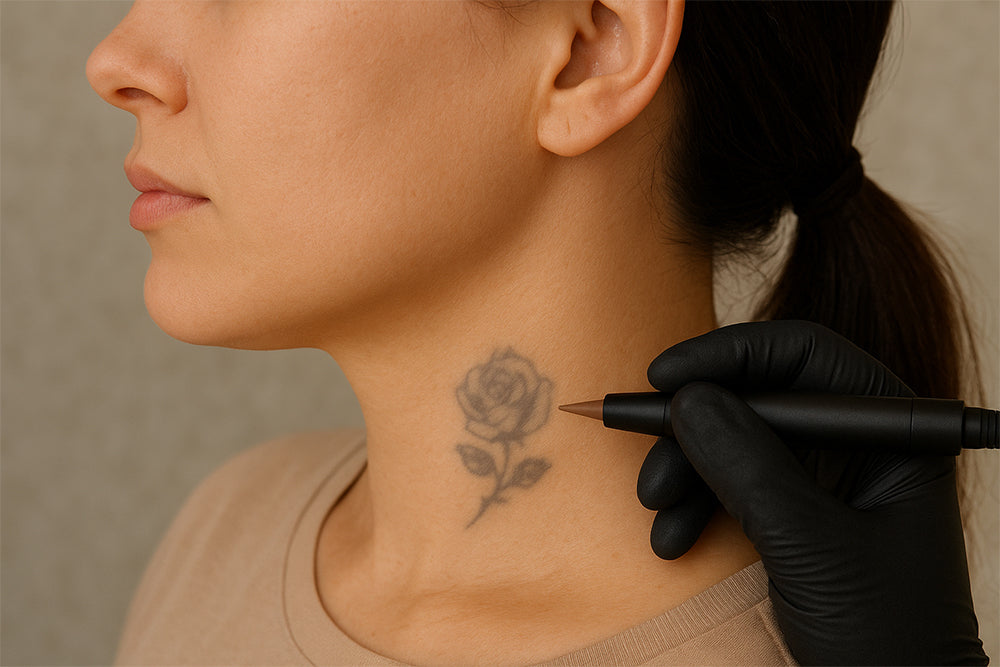
Staring at an old tattoo you no longer love? You might wonder if you can simply "paint over" it with skin-colored permanent makeup to avoid laser removal. It sounds like a perfect shortcut, but unfortunately, the reality of how skin and ink interact makes the answer complicated. Cosmetic ink is usually too sheer to hide bold body tattoos effectively. Here is why using permanent makeup as a cover-up often fails and what simpler options will actually help you get clear skin again.
How Does Permanent Makeup Differ From Traditional Tattoos?
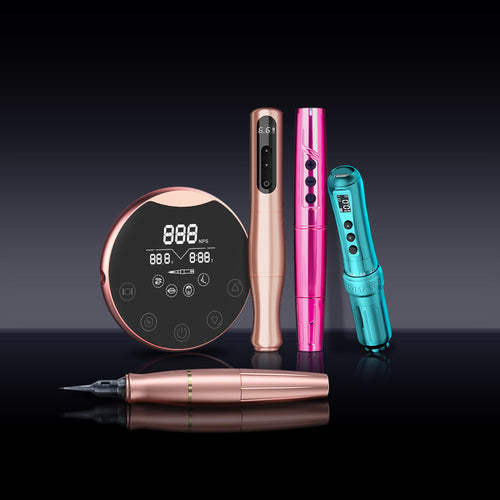
Both procedures involve putting color under the skin, but the tools, depth, and materials used are very different. Temporary makeup artists use a tattoo machine that is much softer and has a different frequency than the strong coils or rotaries used for body art. The structural differences in these two industries explain why one can't easily cover the other.
| Feature | Permanent Makeup (PMU) | Traditional Body Tattoo |
| Depth | Superficial (upper dermis). Designed to fade over 1-3 years. | Deep dermis. Designed to stay permanently. |
| Pigment Base | Often iron oxide or organic based. Translucent and natural. | Carbon or chemical based. Opaque and dense. |
| Particle Size | Smaller particles. The body breaks them down faster. | Large particles. The body's immune system cannot move them easily. |
| Purpose | To enhance natural features (brows, lips) with soft shading. | To create bold, visible art or text that stands out. |
It's important to know these differences because you can't cover a deep, dark material with a thin, clear one. When you try to cover up bold body ink with soft makeup pigment, it's like putting beige watercolor paint over a black marker line, and the black line will always show through.
Can Permanent Makeup Actually Cover an Old Tattoo?
The short answer: No. PMU pigments aren't strong enough or thick enough to hide existing tattoos.
The Pigments Are Too See-Through
PMU pigments are made to look natural on skin, which means they're semi-transparent. They blend with your skin tone instead of blocking it out. If an artist puts a skin-colored PMU layer over a black or blue tattoo, the dark ink underneath will show right through.
To get real coverage, they'd need to pack in so much pigment that it would look like a thick, plastic patch on your skin, which is not natural at all.
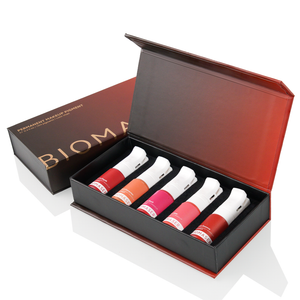
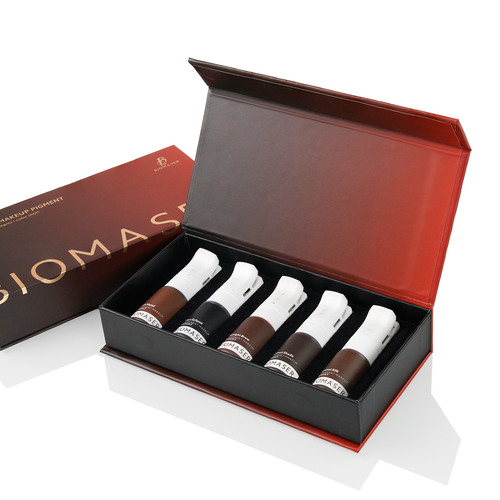
Biomaser Lips Pigment Collection
The Layers Don't Line Up
Body tattoos sit deep in your skin. Adding PMU on top doesn't remove or block that deeper ink, as it just adds another layer above it. As the top PMU layer fades over time (which is what it's designed to do), the old tattoo shows through again. The result often looks muddy or blurry.
Dark Tattoos Are Impossible to Neutralize
PMU methods can't neutralize dark or heavily saturated tattoos. The old ink is simply too strong. What you end up with is a slightly hazier version of the original tattoo, and that is not the clean slate most people want.
Most clients who try this approach find they still see the old tattoo, just with an extra layer on top that doesn't fix the problem.
Limited Situations Where a PMU Machine Might Help
A skilled artist might use a PMU machine to make an old tattoo look better in very specific situations. However, these are the exceptions, not the rule. In these situations, the goal is generally to correct other cosmetic work rather than hide a normal body tattoo.
- Faded Cosmetic Tattoos: If you have old microblading that has faded by 70% or more, a new PMU application can refresh the shape and color.
- Color Correction: If an old brow tattoo has turned salmon pink or cool gray, an artist can use corrective colors to neutralize the tone, though this does not "cover" the tattoo in the traditional sense.
- Tiny Imperfections: extremely small, faint dots or lines might be camouflaged, but this requires a very specific technique known as paramedical tattooing, not standard beauty PMU.
Unless your situation falls into these narrow categories, standard permanent makeup is not strong enough to act as a concealer.
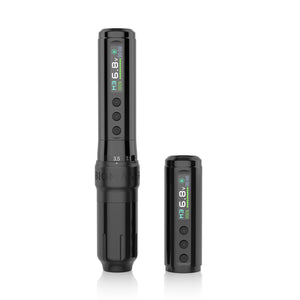
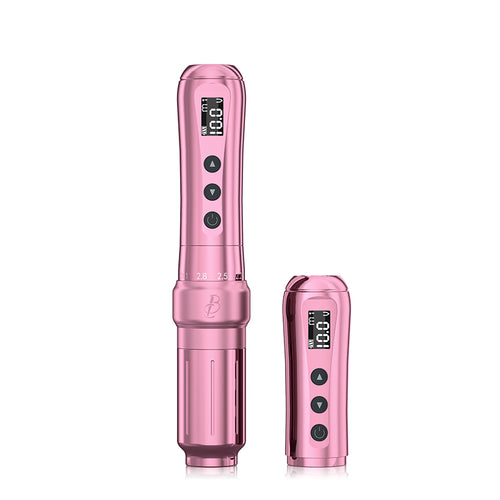
Biomaser Plenilune U1 Pro Wireless Tattoo & PMU Machine With Adjustable Stroke
Why Most Tattoo Cover-Ups Fail with Permanent Makeup
Trying to use PMU to cover a tattoo usually makes things worse, not better. Many people end up spending more money to fix the problem than if they'd chosen the right method from the start.
The Ink Sits Too Deep
As mentioned earlier, tattoo ink lives deep in your skin. PMU pigments sit closer to the surface. You can't cover something deep with something shallow—the old tattoo will always show through.
PMU Fades in Strange Ways Over Tattoos
PMU pigments are designed to fade naturally over time. But over tattoo ink, they fade unpredictably. The area can turn patchy, with some spots fading faster than others. The result looks uneven and messy.
You'll Likely See Weird Colors
Putting light pigment (like beige or white) over dark tattoo ink creates a blue, gray, or greenish tint. Instead of looking like normal skin, the area looks bruised or muddy. This discoloration is hard to fix because some PMU pigments contain titanium dioxide, which can turn black if you try laser removal later.
Texture Changes Make It Worse
Packing in thick layers of PMU to get coverage can damage your skin. The area may become raised, shiny, or waxy. This texture change makes the spot more noticeable than the original tattoo, which is the opposite of what you wanted.
The Financial Risk
Most people who try this method still need professional tattoo removal or a real tattoo cover-up later. You end up paying for the failed PMU attempt, then paying again for the proper fix. That's double or triple the cost for a worse starting point.
Better Alternatives to Covering an Old Tattoo Instead of PMU
If you really want to get rid of a tattoo, you need to use methods that are made for that purpose. Any of these methods needs proper PMU aftercare and patience, but the effects are much better than with cosmetic pigments.
Laser Tattoo Removal
This is the most effective way to actually remove the ink. The laser breaks down the pigment particles so your body can flush them out. You do not always need full removal; a few sessions can fade the tattoo enough to make a nice cover-up easy.
Traditional Tattoo Cover-Ups
A body art tattooist uses dense, opaque inks and complex designs to hide old work. They use color theory and placement to trick the eye, effectively making the old tattoo disappear into a new, beautiful design. This is the most reliable way to hide unwanted ink without removal.
Paramedical Camouflage
This is not the same as a normal PMU. To hide scars or stretch marks, skin-tone pigments are used. It's sometimes used for very small tattoos that stay in place, but it has its limits. It works best with ink that is already very light. Skin tone tattoos don't change color the same way your natural tan does, so the "camouflage" could turn yellow or gray as you age.
Choosing the correct method prevents wasted money and ensures your skin stays healthy.
How to Decide What Is Right for You
Before booking an appointment, take a close look at your tattoo and be honest about what you want.
Check Your Tattoo's Details
- Size and color: Small, light tattoos have more options than large, dark ones.
- How saturated it is: Dark, bold, or black tattoos can't be covered with PMU. You'll need laser removal or a traditional tattoo cover-up.
- Location on your body: Areas that move a lot or have thick skin don't hold PMU pigments well.
Think About Your Skin
Your skin tone affects how pigments look. If you scar easily or have sensitive skin, some methods may not work for you.
Know What You Want
- Complete removal: Laser is your only real option for making it look like the tattoo was never there.
- Concealment: Makeup or specialized camouflage products can hide it temporarily.
- Redesign: A skilled tattoo artist can turn your old tattoo into something new.
Prepare Questions to Ask During a Consultation
- "Can you show me photos of similar cover-ups you've done?"
- "What method do you recommend for my specific tattoo?"
- "What are the risks and realistic outcomes?"
Taking time to evaluate these factors helps you choose a solution that actually works.
Book a Consultation for Professional Advice
The best way to save yourself from a botched procedure is to speak with a specialist who understands both skin and ink depth. Permanent makeup is a great way to look better, but it's not a magic fix. Before you go through with a procedure, talk to a professional to make sure you'll get the clean, beautiful results your skin needs.
FAQs
Q1: Can microblading cover an old eyebrow tattoo?
Typically, microblading can't cover an old eyebrow tattoo unless the previous ink has faded a lot. Microblading makes very fine hair lines that are too see-through to hide a solid block of color. The new strokes will blur into the old tattoo if it is dark or saturated, giving the tattoo a messy, unfinished look instead of crisp hair lines.
Q2: Can PMU lighten or neutralize a tattoo?
Permanent makeup techniques can neutralize the undertones of faded cosmetic tattoos, such as correcting red or blue eyebrows, but they cannot lighten a dark body tattoo. "Lightening" usually requires saline removal or laser technology. Attempting to lighten a dark tattoo by tattooing light pigment over it fails because the darker pigment will always remain visible through the translucent upper layers of the skin.
Q3: What's the best method to hide a tattoo permanently?
The most effective method to hide a tattoo permanently is a combination of laser removal and a professional body art cover-up. Using laser treatments to fade the original ink creates a cleaner canvas, allowing a tattoo artist to cover the area with a new, high-quality design without being restricted by the dark, heavy lines of the unwanted tattoo.
