




Latex vs. Silicone PMU Practice Skins: Which One Is Better?

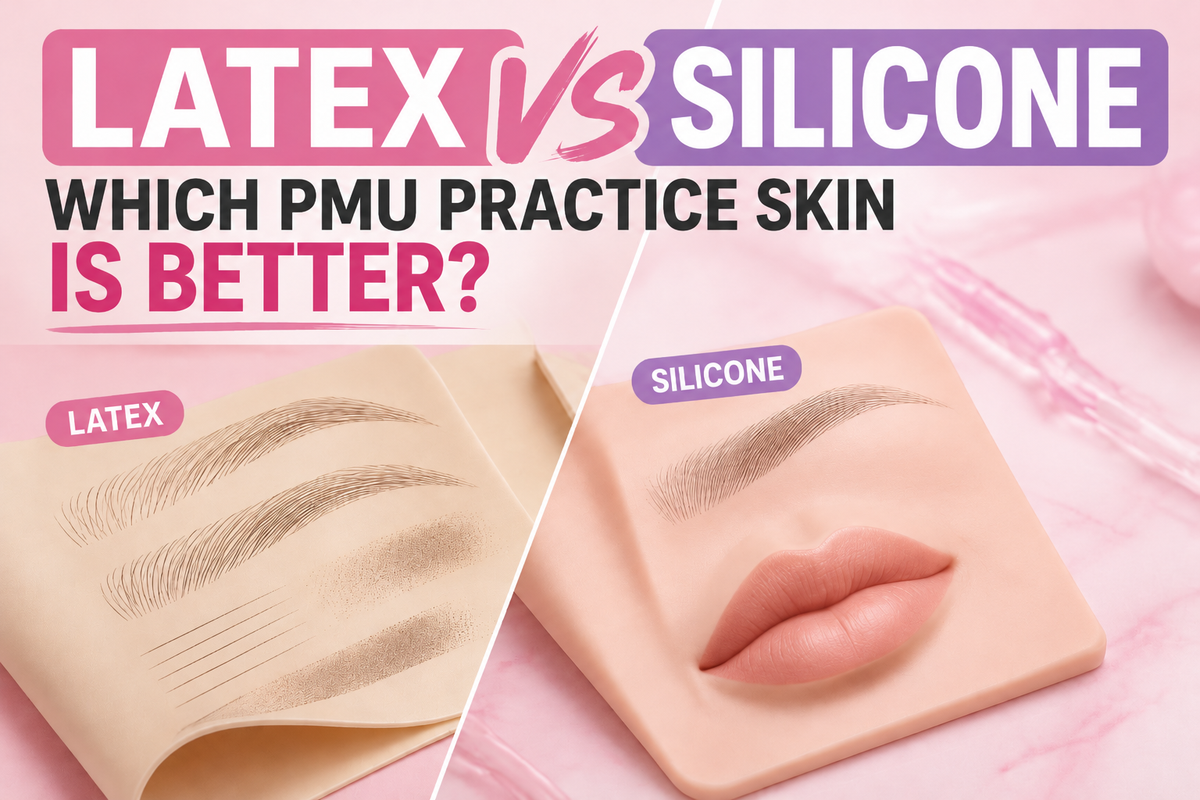
Latex and silicone PMU practice skins can both help artists improve hand control, pressure, strokes, shading, and machine technique. Latex works well for repeated foundational drills, while silicone can offer a softer feel and more options for curved or 3D practice. The right choice depends on your technique, skill level, practice surface, and budget. Neither material fully reproduces living human skin, so synthetic practice should support, rather than replace, proper PMU education and supervised training.
Choosing a PMU practice skin can feel simple until you see how many options are available. Latex and silicone can both support brow, lip, eyeliner, and microblading practice, but they do not always provide the same feel or training experience. Some surfaces work well for repeated basic drills, while others offer different textures, flexibility, or shapes for more advanced practice. Understanding these differences can help you choose a practice skin that fits the technique you want to improve, rather than simply choosing the most expensive option.
What Are PMU Practice Skins?
PMU practice skins give artists a controlled surface for practicing techniques before working on live models. The material, thickness, texture, and shape can all affect how a practice session feels and what skills you can develop.
What Can You Practice on Synthetic Skin?
Practice skins can support many types of permanent makeup training, including:
- Powder brows
- Ombre brows
- Nano brows
- Hairstrokes
- Lip blush
- Lip liner
- Eyeliner
- Shading
- Pigment saturation
- Machine control
- Pressure control
A synthetic surface can make small technique differences easier to see. Artists can compare line width, spacing, dot placement, stroke direction, shading density, and hand movement on the same type of surface.
Practice skin also gives beginners a place to repeat the same movement many times. For experienced artists, it can help test a new technique, machine setup, needle configuration, or pigment combination in a controlled setting.
What Practice Skin Cannot Reproduce
Latex and silicone can provide useful tactile feedback, but neither one behaves exactly like living skin.
Synthetic skin cannot reproduce factors such as:
- Blood flow
- Swelling
- Pores
- Natural healing
- Client movement
- Individual skin thickness
- Changes in living tissue
For that reason, a mark that looks clean on synthetic skin does not prove that the same pressure or movement should be used on a client. Practice skins work best for developing consistency, coordination, and technique rather than using them as a fixed reference for live-skin needle depth.
Latex PMU Practice Skin: What You Need to Know
Latex has long been used for PMU training because it can provide a flexible surface for repeated drills. It comes in blank, pre-printed, flat, and shaped formats, so the experience can vary from product to product.
Benefits of Latex Practice Skin
Latex practice skin can work especially well for foundational training. Artists can use it to practice:
- Straight and curved lines
- Hairstrokes
- Pixel patterns
- Brow shading
- Machine movement
- Pressure changes
- Brow mapping
- Symmetry exercises
Some latex practice skins are made specifically for brow and machine practice, with surfaces designed to show strokes clearly and provide enough thickness for repeated exercises.
Cost can also make latex practical for artists who need a large amount of practice material. If you are repeating the same drill dozens of times, using a simpler practice surface can make it easier to focus on technique instead of saving every inch of material.
Latex can also fit naturally into a broader collection of PMU supplies, especially for students building a basic training setup.

3D practice skin permanent makeup Tattoo Class A silicone
Limitations of Latex Practice Skin
Latex does not provide a single, consistent experience across every product.
Thickness, softness, texture, and elasticity can vary. A thin sheet may respond differently from a thicker pad, and a smooth surface may feel different from a textured option.
A flat latex sheet also has a clear limitation: it does not reproduce the curves of a brow bone, lip, or other facial area.
That does not make it unsuitable for PMU training. It simply makes it better suited to exercises where the main goal involves hand movement, consistency, pressure control, or pattern development.
Silicone PMU Practice Skin: What You Need to Know
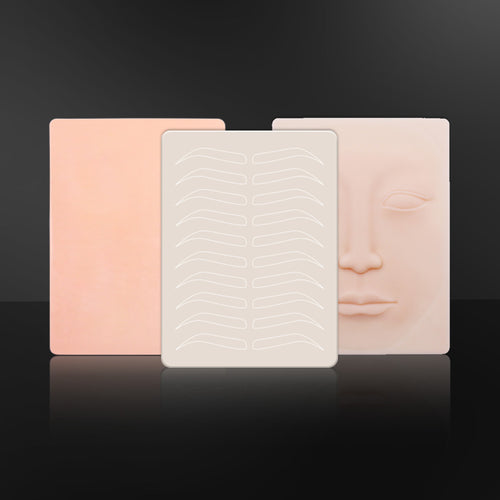
Silicone practice skin offers another training option, with products ranging from flat sheets to textured pads and three-dimensional lip forms. Its softness and flexibility can make it useful for more specialized PMU exercises.
Benefits of Silicone Practice Skin
Many silicone practice skins are designed to provide a soft, skin-like surface. They can support machine PMU, microblading, nano brows, powder brows, and lip techniques.
Silicone can be especially useful for artists who want to work on:
- Pressure control
- Hairstroke consistency
- Shading
- Pigment saturation
- Lip blush
- Curved surfaces
- More advanced technique drills
Three-dimensional silicone lips offer a particularly useful option for lip training. Their shape lets artists practice outlining, shading, color transitions, and hand positioning around a curved surface rather than working only on a flat sheet.
Limitations of Silicone Practice Skin
Silicone does not automatically provide a more realistic training experience simply because it feels soft.
Different silicone formulations can have very different levels of stretch, resistance, and surface texture. A highly flexible product may behave quite differently from another silicone pad.
Cost can also be higher for specialized silicone products, especially 3D practice forms.
Another point matters here: a flat silicone sheet still has the limitations of a flat sheet. If your main goal involves learning how to work around facial curves, choosing a three-dimensional practice form may matter more than choosing silicone alone.

Soft Silicone Eyebrow Tattooing/Microblading Practice Skin
Latex vs. Silicone PMU Practice Skins: Key Differences
The material comparison becomes more useful when you look at practical training factors. Instead of asking which material wins overall, consider what you need the practice skin to help you improve.
| Factor | Latex | Silicone |
|---|---|---|
| Feel | Flexible, with product-dependent resistance | Often soft and flexible |
| Elasticity | Varies by product | Varies by formulation |
| Cost | Often practical for repeated drills | Often higher for specialized options |
| Beginner training | Well suited to basic exercises | Also suitable, especially for tactile practice |
| Machine practice | Good for lines, pixels, and shading | Good for machine and pressure exercises |
| Microblading | Useful for strokes and hand control | Useful for hairstrokes and pressure practice |
| Lip practice | Useful for flat exercises and some shaped options | Strong option for 3D lip practice |
| 3D training | Available in some formats | More options for 3D forms |
| Repeated practice | Good for high-volume drills | Single-use with pigment; reusable only for dry runs |
| Main strength | Foundational and repetitive practice | Specialized and shaped practice |
These categories should not be treated as strict rules. Current products show that both materials can come in different textures, thicknesses, and shapes. Latex can even be available in 3D lip formats, while silicone can come as a simple flat sheet. The shape and construction of the practice surface can matter just as much as the material.
Which Practice Skin Is Better for Different PMU Techniques?
Different PMU techniques place different demands on your practice surface. Looking at each technique separately makes the choice much easier and helps prevent you from buying a surface that does not fit your training needs.
Powder Brows and Ombre Brows
Both latex and silicone can support powder brow practice. Latex can work well for:
- Pixel placement
- Shading patterns
- Machine movement
- Saturation drills
- Pressure comparisons
Silicone can also support these exercises while giving artists another type of tactile feedback. For basic powder brow drills, a clear, flat surface may be more useful than an expensive 3D model. Focus on consistent pigment distribution, smooth transitions, and controlled hand movement.
Nano Brows and Hairstrokes
Nano brows require close attention to stroke direction, spacing, pressure, and hand speed. Latex can be a practical choice for repeating individual strokes and comparing results. Silicone can also work well for hairstroke practice, particularly when the surface has a texture designed for stroke training.
For artists working with microblading tools or other manual PMU tools, the resistance of the specific practice surface matters more than simply choosing latex or silicone.
Lip Blush
Lip blush is where the shape of the practice surface becomes especially important. A flat sheet can help with basic:
- Color packing
- Shading
- Outlining
- Saturation
A 3D lip form adds curved surfaces, lip contours, and changes in hand position. Several silicone lip practice products are specifically designed for lip blush, lip liner, ombre lips, and related techniques.
Latex can also be found in 3D lip formats, so the material alone does not determine the training format.
Eyeliner
Both materials can work for eyeliner practice. The main skills include:
- Line control
- Symmetry
- Machine stability
- Pressure control
- Consistent movement
For this type of training, choosing a surface with a useful shape and enough resistance may matter more than choosing latex over silicone.
Microblading
Microblading practice focuses heavily on blade movement, stroke direction, spacing, pressure, and consistency.
Both latex and silicone practice skins can support these exercises. Some latex products are designed specifically for microblading pens and brow work, while silicone products can provide another type of flexible surface for hairstroke practice.
Your microblading supplies should also match the practice goal. The blade, holder, mapping tools, pigment, and practice skin work together, so the surface should be selected based on the technique you plan to practice.

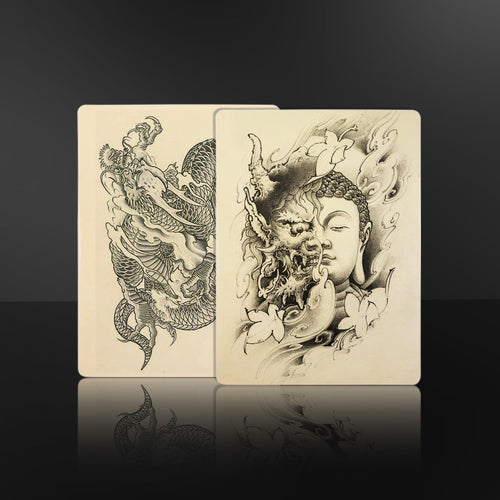
Tattoo Practice Skin Double Sides 8x6"
Which PMU Practice Skin Should Beginners Choose?
Beginners usually need a surface that makes repetition easy. The first goal should be developing stable hand movement and consistent technique rather than finding the most advanced practice material available.
Start With the Skills You Need to Build
Early practice can focus on:
- Hand stability
- Machine movement
- Stroke consistency
- Pressure awareness
- Basic shading
- Pixel placement
- Symmetry
A simple flat practice skin can provide enough space for repeated drills. It also makes it easier to compare several attempts side by side.
Why Latex Can Make Sense for Foundational Training
Latex can be a practical starting point for artists who need to repeat basic exercises frequently. Some products are specifically designed for brow, powder, ombre, and machine practice, making them suitable for early PMU training.
That does not make latex a beginner-only material. Experienced artists can also use it for drills and repeated practice.
When to Add Silicone
Silicone can become useful as your training needs become more specialized.
Consider adding silicone when you want to practice:
- Different surface textures
- More advanced pressure control
- Curved areas
- 3D lip techniques
- Specialized hairstroke exercises
- More realistic-feeling surfaces
A mixed practice setup can give you more flexibility than relying on a single material for every exercise.
What to Look for When Buying PMU Practice Skin
Material should be only the first filter when choosing a practice skin. Thickness, shape, texture, visibility, and intended use can have a major effect on your training experience.
Thickness
A very thin surface may provide limited resistance, while a thicker pad can feel different under a machine or blade. Check the manufacturer's specifications and choose thickness based on your intended technique instead of assuming thicker always means better.
Elasticity and Resistance
Pay attention to how much the surface stretches and how it responds to pressure. A softer surface can feel comfortable, but excessive stretch may not give you the resistance you want for a specific drill.
Surface Shape
- Choose a flat sheet for basic line and shading exercises.
- Choose a shaped brow or lip surface if you want to practice within a defined design.
- Choose a 3D form if you need to work around curves and adjust your hand position.
For some training sessions, this choice may matter more than latex versus silicone.
Pigment Visibility
A practice surface should make your strokes and shading easy to evaluate. High contrast can help during early technique drills, while skin-tone surfaces may provide a different reference for pigment selection. Some silicone practice products use colors specifically selected to make target areas easier to see.
Reusability and Durability
If you plan to practice frequently, check how the material handles repeated passes and cleaning. Keep in mind that once pigment is deposited into the material with a needle or blade, practice skin is permanent and cannot be wiped clean. Reusability is typically limited to dry-needle runs, machine speed drills without pigment, or surface brow mapping exercises.
Compatibility With Your PMU Tools
Think about the complete setup rather than the practice skin alone. Your permanent makeup tools, machine, needle or blade configuration, mapping products, and pigments should work with the surface you choose.
For artists building a larger collection of permanent makeup supplies, practice skin should fill a specific training need rather than simply add another product to the kit.
Can Latex or Silicone Practice Skin Replace Training on Real Skin?
Synthetic practice can build valuable skills, but it cannot reproduce every part of live-skin work. Knowing its limits helps you use practice material correctly and avoid carrying unrealistic expectations into client procedures.
Practice skin can help you develop:
- Hand coordination
- Consistent movement
- Stroke control
- Pressure awareness
- Shading technique
- Pattern consistency
- Machine familiarity
It cannot reproduce the full response of living tissue, including blood flow, swelling, healing, individual skin differences, and client movement.
For that reason, practice skin should be part of a broader training process. Proper PMU education, hygiene procedures, local licensing requirements, device instructions, and qualified supervision still matter.
It also helps to avoid using synthetic skin as a fixed measurement for live-skin needle depth. Different practice materials can respond very differently, so the result on a synthetic surface cannot provide a universal depth rule for clients.
Choose PMU Practice Skin Based on Your Training Goals
Latex and silicone can both serve as useful PMU practice materials, but they fit different training situations. Latex can be practical for repeated drills, basic machine control, strokes, pixels, and shading. Silicone can offer useful options for tactile practice, specialized textures, and 3D surfaces such as lips.
Your choice should come from the skill you want to practice, the shape of the surface, the level of resistance you need, and how often you plan to train. For a broader training setup, using both materials at different stages can give you more options than choosing a single material for every technique.
FAQs About Latex vs. Silicone PMU Practice Skins
Q1: Is Latex or Silicone Better for PMU Practice?
Neither material works best for every training situation. Latex can be a practical choice for repeated foundational drills, while silicone can offer useful options for tactile practice and specialized or 3D surfaces. The right choice depends on your technique and training goal.
Q2: Can You Use PMU Pigment on Latex and Silicone Practice Skins?
Many PMU practice skins are designed for pigment or ink practice, but compatibility varies by product. Check the manufacturer's instructions before using a particular pigment or cleaning product on the surface.
Q3: Is Silicone Practice Skin Better for Lip Blush?
A 3D silicone lip can be particularly useful for lip blush because the shaped surface lets you practice around curves and contours. Flat latex can still work well for basic shading, color placement, and machine-control exercises.
Q4: Can PMU Practice Skin Accurately Simulate Real Human Skin?
No synthetic surface can fully reproduce living human skin. Latex and silicone can help develop movement, pressure control, and consistency, but they cannot reproduce blood flow, swelling, healing, client movement, or individual skin differences.
